The Quiet Geography of Fog Nets
Fog nets show how mesh, wind, slope and maintenance can turn low clouds into useful water for dry hills and coastal communities.
Hana Meridian ·
Fog nets are quiet geography in the most literal sense. They do not drill an aquifer, desalinate seawater or command rain to fall. They wait in the path of low cloud and let wind do part of the work. In dry coastal hills and mountain margins, where fog is frequent but rainfall is scarce, a sheet of mesh can catch tiny droplets, let them merge into larger drops and guide the water into a gutter and tank. The result is modest, but for some settlements, schools, gardens or restoration sites, modest water in the right place can matter.
The idea is old in principle and modern in material. Fog collection has been tested and used in places such as northern Chile, Morocco, Eritrea, the Canary Islands and other landscapes where cold ocean currents, coastal upwelling, high ground and prevailing winds make fog more reliable than rain. The standard large fog collector is not complicated: posts, mesh, cables, a trough and storage. Its success depends less on the romance of cloud-catching than on exposure, droplet size, wind speed, cleanable mesh and a community willing to repair torn fabric and blocked pipes.
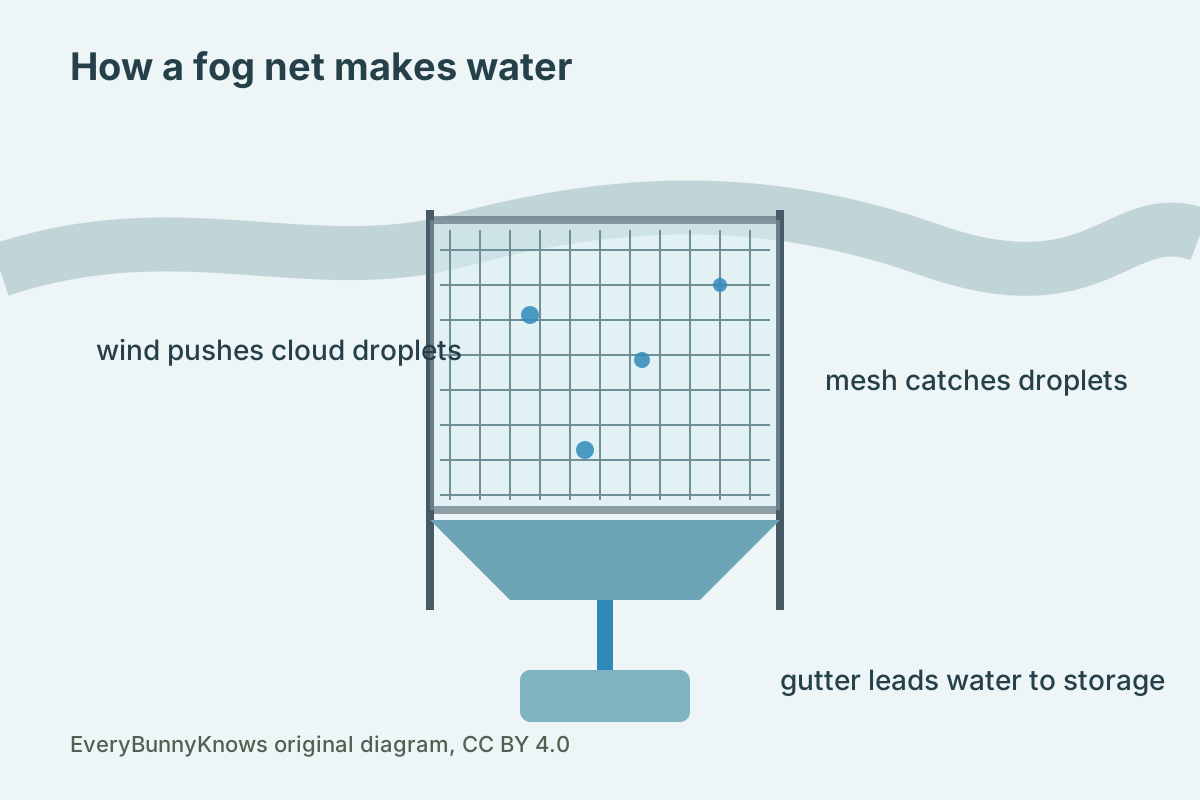
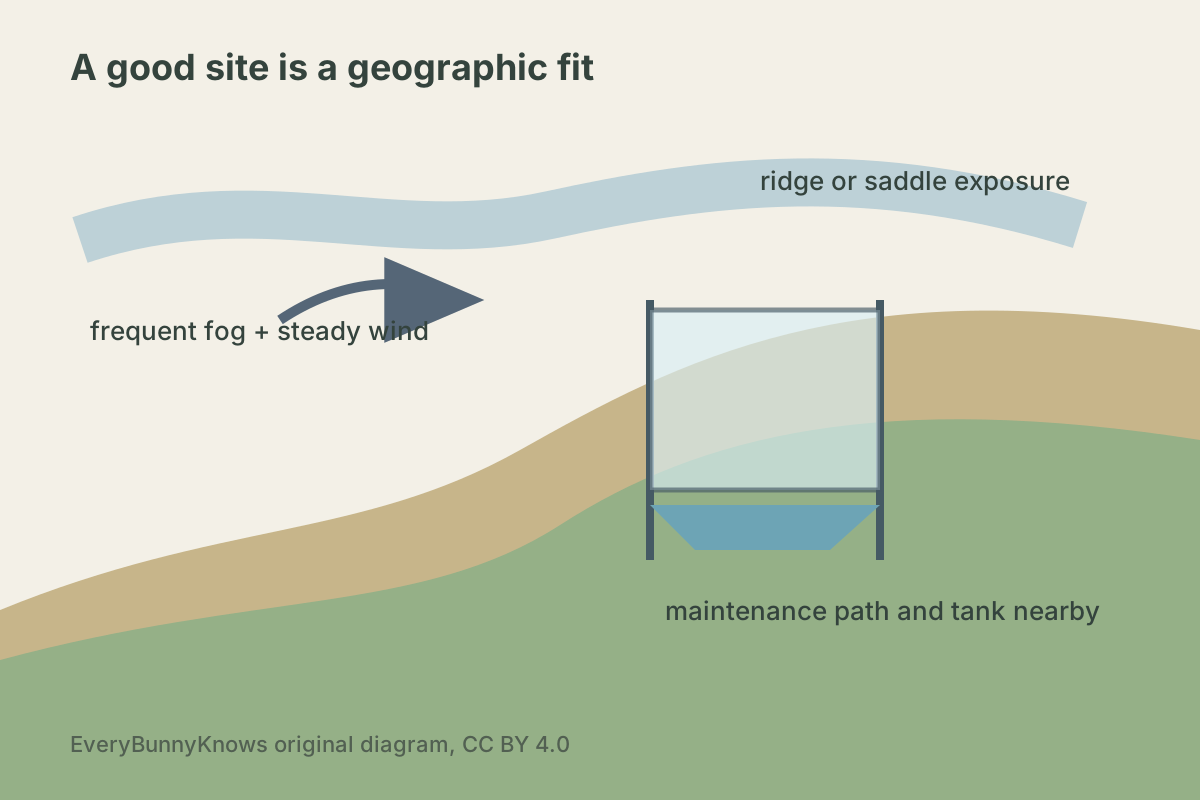
The mechanism is physical and local. Fog droplets are so small that they can remain suspended in air, but when moving air carries them into a vertical mesh, some collide with the fibers. Surface tension holds them until neighboring droplets combine and gravity pulls them downward. Mesh that is too fine may block wind; mesh that is too open may catch little water. A site that is too sheltered will underperform, while a site that is too exposed can suffer storm damage. This is why the map of a fog project is not simply a dot in a dry region. It is a careful reading of ridges, saddles, seasonal winds, maintenance paths and storage needs.
Fog water is not a universal solution to drought. Yields can vary dramatically between seasons and sites, and collected water may need treatment before drinking, depending on dust, animals, materials and local standards. Fog nets also do not replace watershed protection, groundwater management or climate adaptation. Their strength is narrower and more interesting: they can add a decentralized source where the atmosphere already delivers moisture but conventional infrastructure is expensive or absent.
That is why fog nets are a good geography lesson. They make visible the difference between average climate and usable water. A dry place can still have wet air. A cloudy place can still lack tanks, rights or maintenance money. A technology that looks simple can fail if it ignores who will clean it after dust storms or who owns the land beneath the cables. The hopeful lesson is not that every foggy hill should sprout mesh. It is that careful attention to microclimate can widen the menu of water choices, especially when local people treat the net not as a miracle device but as one small part of a larger water system.