Why Recovery Is Often a Calendar, Not a Switch
Recovery is rarely a single moment when illness ends. Rehabilitation science, public-health guidance and patient-reported outcomes all show why bodies often improve through measured weeks, setbacks and adjusted expectations rather than an instant return to normal.
Owen Pike ·

Medicine often sounds as if recovery should be a switch: diagnosis, treatment, cure, normal life. Many real recoveries behave more like a calendar. After surgery, infection, injury, a flare of chronic disease or a period of severe stress, the body may move through days and weeks of repair, reconditioning and adaptation. The progress can be genuine without being linear.
The mechanism begins with biology. Tissue irritation, inflammation, immune activity, sleep disruption, pain, medication effects and loss of conditioning all change how a person feels and functions. A test result may improve before walking, appetite or concentration return. A wound may look tidy while fatigue lingers. Rehabilitation medicine and public-health agencies such as the World Health Organization describe function, participation and support as part of health because recovery is not only the disappearance of one symptom.
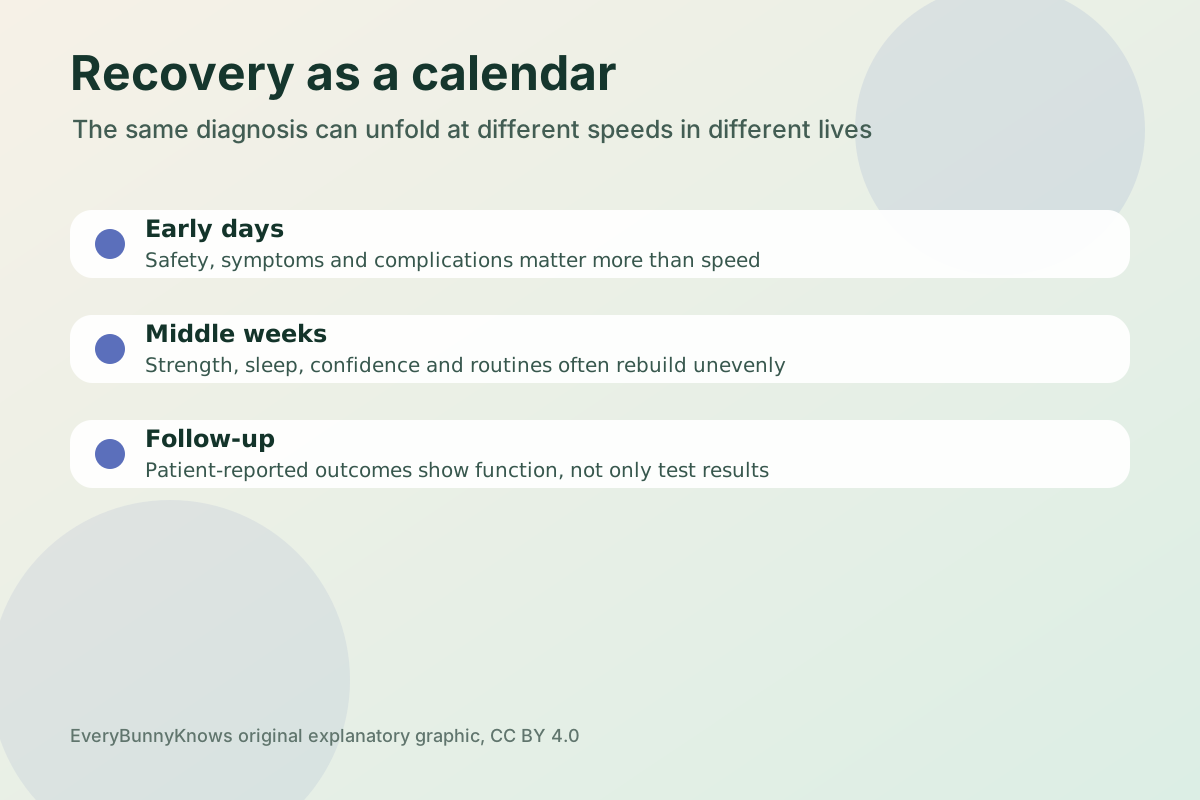
That calendar view also explains why people with the same label can follow different paths. Age, baseline fitness, work demands, caring responsibilities, housing, nutrition, mental health, access to physiotherapy, and the availability of follow-up all shape the pace. Patient-reported outcome measures exist because clinicians need to know whether a person can climb stairs, sleep, think clearly, return to work or manage daily tasks, not only whether a laboratory value has moved in the right direction.
The safety boundary is essential. This article is not a recovery plan and should not tell anyone to push harder, rest longer, stop medication or ignore symptoms. Some symptoms after illness or procedures are expected; others can signal complications. New chest pain, severe shortness of breath, signs of infection, neurological symptoms, heavy bleeding, thoughts of self-harm or any sudden severe change require local urgent medical guidance. The point is not to normalise danger, but to make room for measured recovery without pretending every slow week is failure.
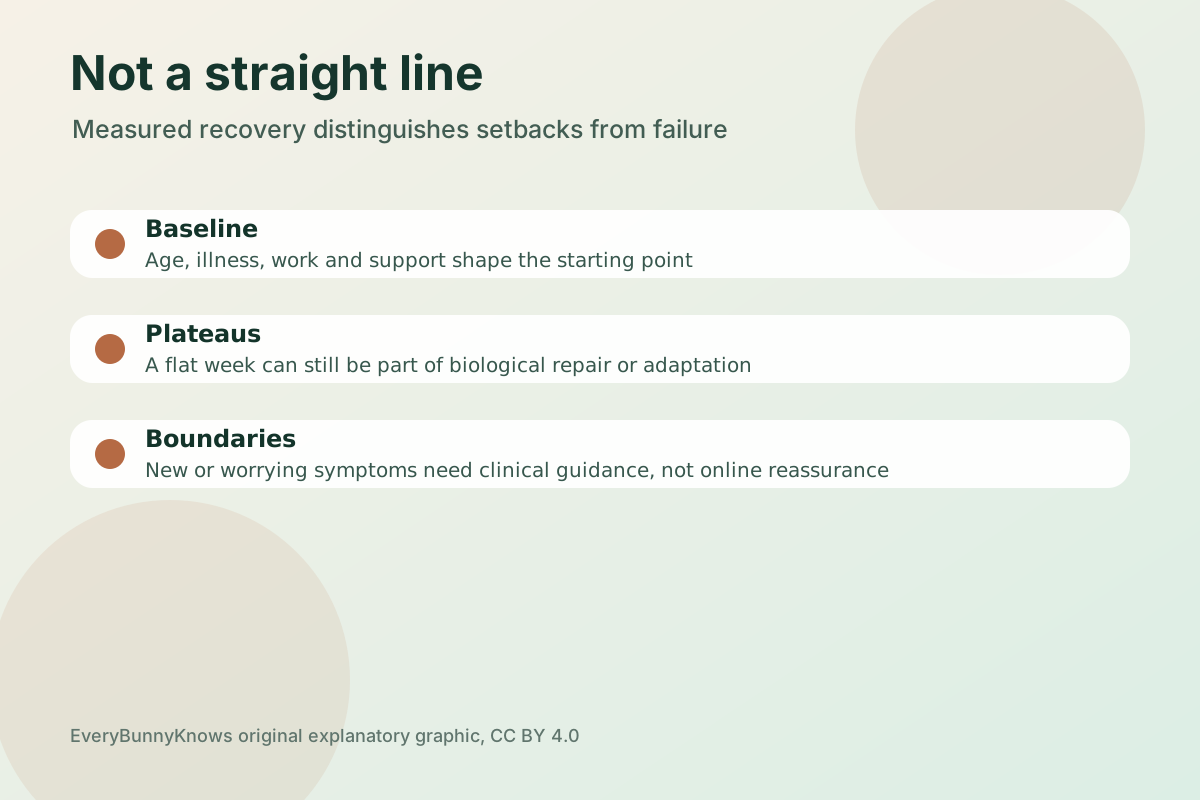
Research limits matter too. Studies often report averages: four weeks, twelve weeks, six months. Averages help plan services, but they do not describe every patient. Trials may exclude older or medically complex people; surveys may miss those without internet access; follow-up may end before the most patient-relevant outcomes appear. A careful recovery story therefore uses numbers as landmarks, not promises.
This is why follow-up conversations need more than a single yes-or-no question. A patient may be medically stable and still unable to cook, commute, remember instructions or sleep through the night. Naming those practical functions does not make recovery pessimistic; it makes support more accurate.
The hopeful part is practical. A calendar can hold small improvements, setbacks, appointments, questions and support needs in one place. For clinicians and health systems, it encourages follow-up that asks about function and daily life. For readers, it offers a safer mental model: recovery can be active and real while still needing time, observation and professional boundaries.