Safe blood is improving, but access is still the hard part
WHO’s 2026 blood-safety data show more voluntary unpaid donations and 120.4 million donations worldwide, yet donation rates, testing capacity, components and plasma medicines remain deeply unequal across health systems.
Tereza Field ·
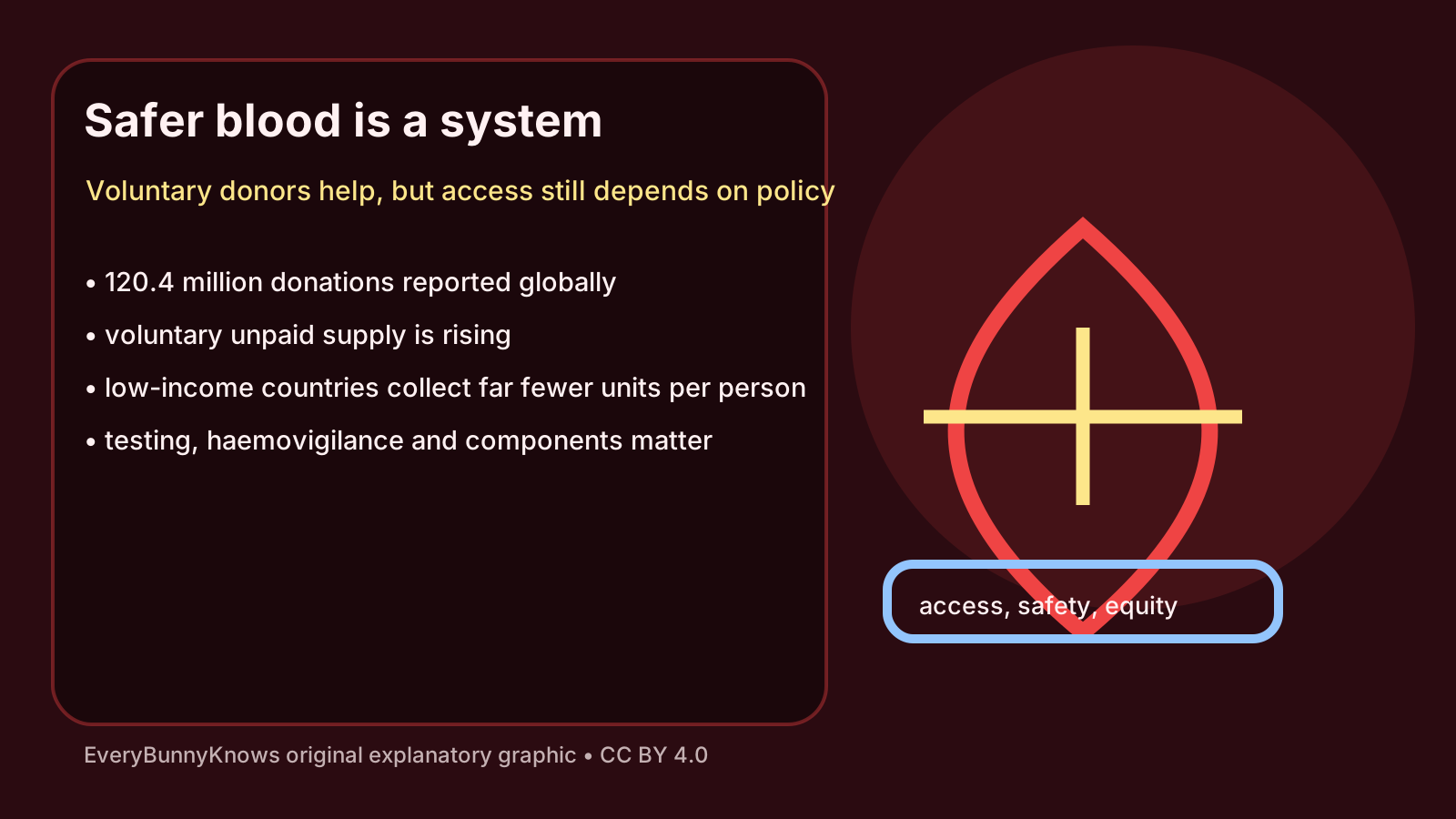
Blood transfusion is one of medicine’s quiet infrastructures. It matters during childbirth, trauma, surgery, cancer treatment, anaemia care, inherited blood disorders and emergencies, yet most patients meet the system only when a bag of blood is suddenly needed. WHO’s 2026 update gives a mixed but useful picture: global collections have grown, voluntary unpaid donation is supplying a larger share of blood, and the world is still far from equal access.
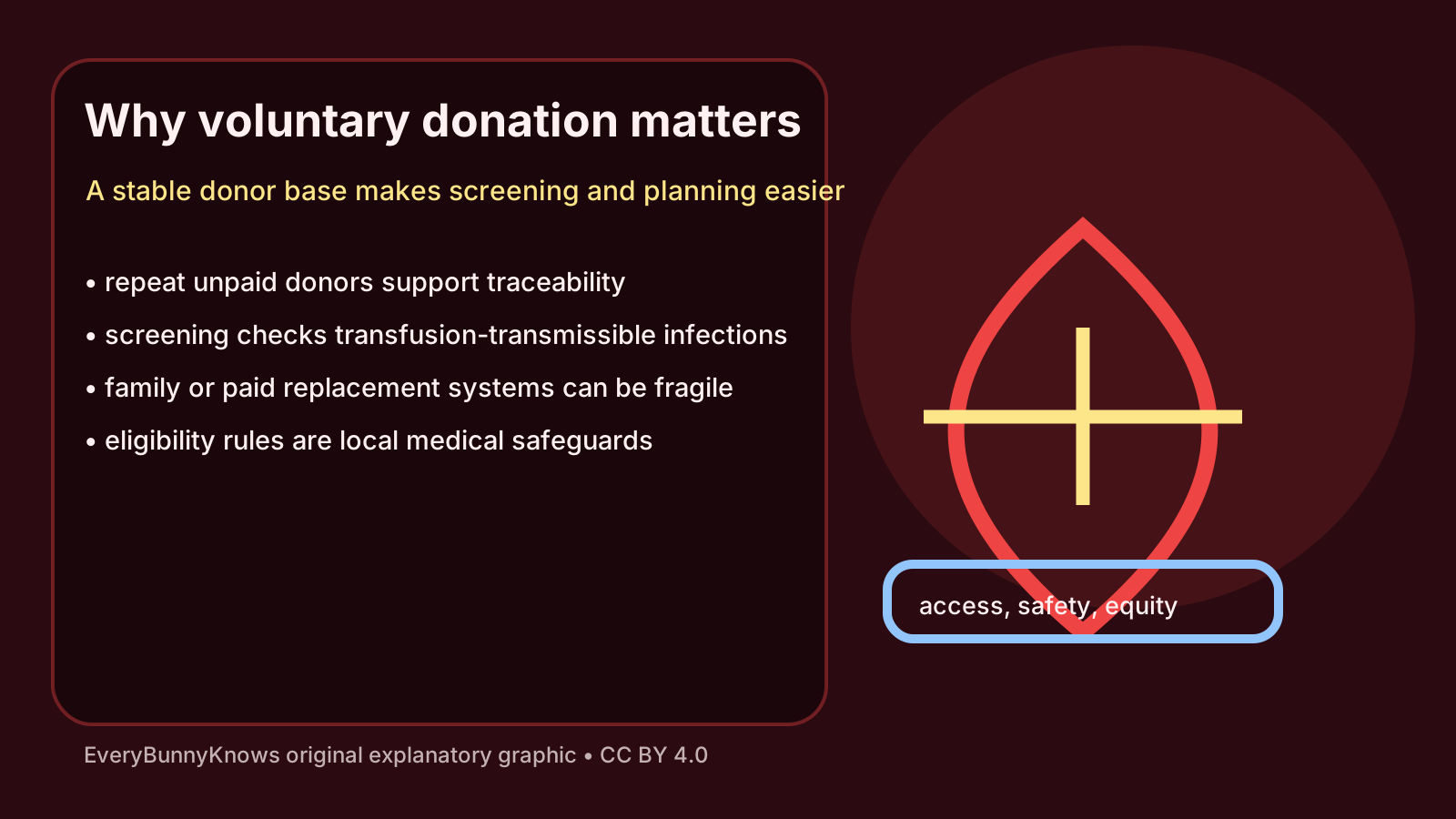
The mechanism is a chain, not a single act of generosity. A safe blood system recruits and retains eligible donors, screens donations for transfusion-transmissible infections, tests blood groups, stores units correctly, separates components when possible, matches blood to patients, records adverse events and uses transfusion only when it is clinically appropriate. Voluntary unpaid donors are central because repeat, traceable donors make planning easier and reduce reliance on emergency family replacement or paid donation systems that can be fragile.
WHO’s blood-safety fact sheet, updated on 12 June 2026, reports about 120.4 million blood donations collected worldwide. It also notes a stark access gradient: high-income countries, with about 15% of the world’s population, collect 36% of donations. Median donation rates per 1000 people are 28.9 in high-income countries, 18.2 in upper-middle-income countries, 8.5 in lower-middle-income countries and 4.5 in low-income countries. In practical terms, the same haemorrhage or operation can face very different odds depending on the health system around the patient.
The 85% voluntary-donation milestone is encouraging, but it should not be mistaken for completion. WHO also reports that 80 countries collect more than 90% of their blood supply from voluntary unpaid donors, while 59 countries still collect more than half from family/replacement or paid donors. Screening and quality systems vary as well. External quality assessment, haemovigilance, transfusion committees and national guidelines are the less visible tools that turn donated blood into safer care.
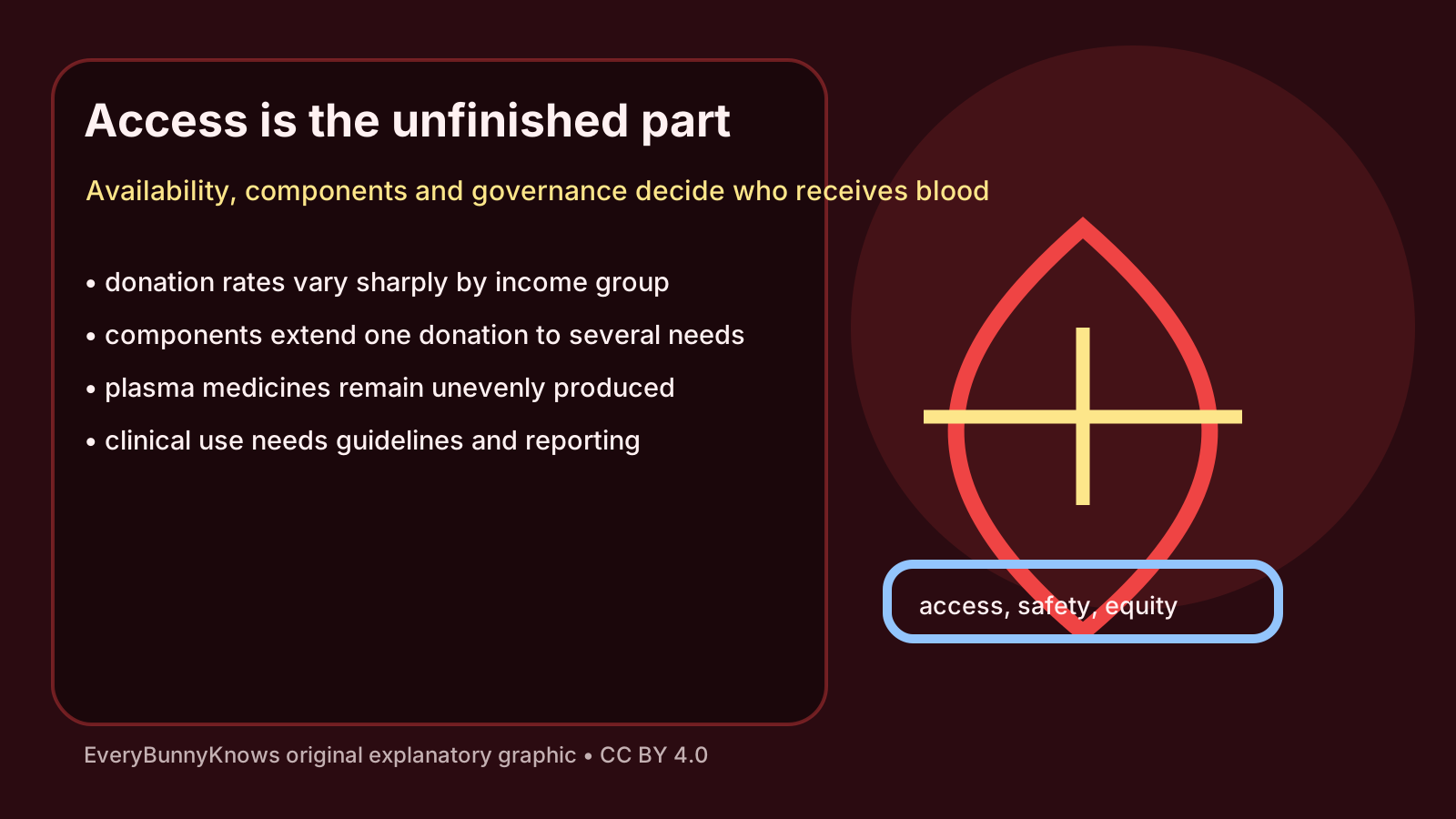
Equity includes what happens after collection. Blood can be transfused as whole blood or processed into red cells, platelets, plasma and cryoprecipitate, allowing one donation to meet different needs. Component preparation is still more limited in low-income settings. Plasma-derived medicinal products are even more uneven: WHO reports that only 49 of 168 responding countries produce them through fractionation of plasma collected nationally, while many import all such products or report none in use.
The safety boundary for readers is straightforward. This article is not a request for any individual to donate and cannot judge eligibility, travel deferrals, medicines, pregnancy, anaemia, infection risk or transfusion need. Donation rules and clinical transfusion decisions belong to local blood services and clinicians. The public lesson is about systems: stable voluntary donors, financing, regulation, laboratory quality, supply chains and hospital use all have to work together.
The hopeful part is that progress is measurable. More countries can move toward voluntary unpaid supply, better screening and stronger haemovigilance; hospitals can use blood more appropriately; and global reporting can show where investment is needed. Safe blood is not only a medical product. It is a promise that an emergency should not become fatal simply because the right unit, test, component or governance system was missing.