A battery-free solar-fuel device shows how artificial photosynthesis can regulate itself
Osaka Metropolitan University researchers used a heat-responsive electrolyzer to keep solar-fuel production steadier as sunlight changes. It is a lab system, not a fuel plant, but it shows how simpler control could lower the complexity of artificial photosynthesis.
Ada Brooks ·
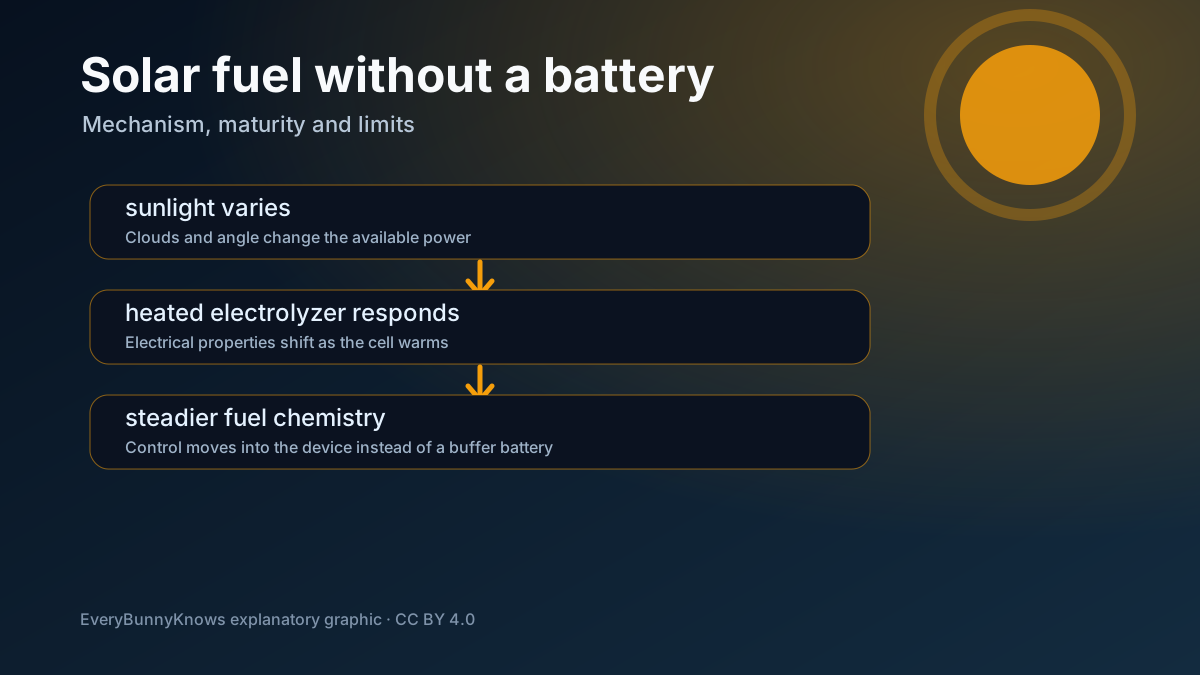
Researchers at Osaka Metropolitan University have reported a small but useful change in the way artificial photosynthesis can be controlled: instead of asking a battery and external electronics to smooth every passing cloud, the electrolyzer itself helps follow the sunlight. The work, published in EES Solar as “Chemical maximum-power-point tracking system for stabilized liquid solar-fuel production,” is a laboratory step toward solar-fuel devices that are simpler to run.
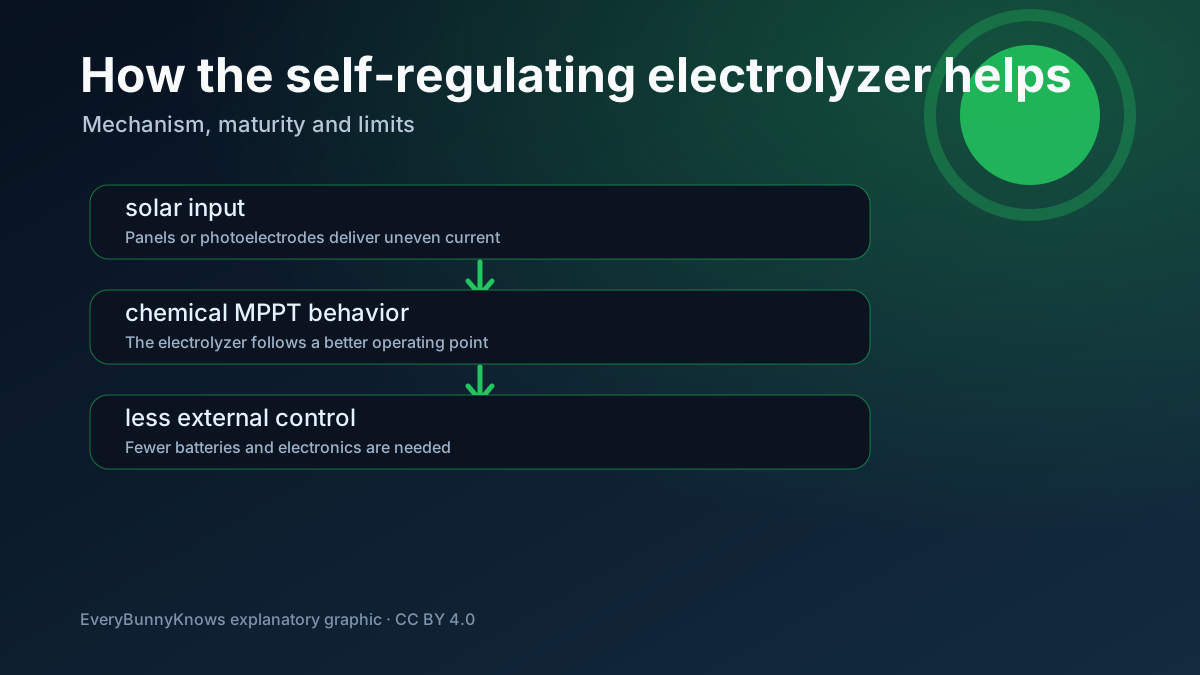
Artificial photosynthesis borrows an idea from plants without copying a leaf. Sunlight supplies energy, catalysts push chemical reactions, and the target is a storable fuel or fuel precursor rather than an instant electrical current. In many experimental systems, the solar side and the electrochemical side do not naturally agree with each other. A photovoltaic cell has a best operating point; an electrolyzer has its own current-voltage behavior; weather, shadows and temperature keep moving both targets. Batteries or control electronics can bridge the mismatch, but they add cost, weight and failure points.
The Osaka team’s answer is a self-regulating chemical component inside the electrolyzer. As the device warms under stronger light, its electrical properties change in a direction that helps it track the available solar power. In engineering terms, it is a chemical version of maximum-power-point tracking: the system tries to stay near a useful operating point as sunlight changes, but some of that response comes from the material behavior of the electrolyzer rather than from a separate battery buffer.
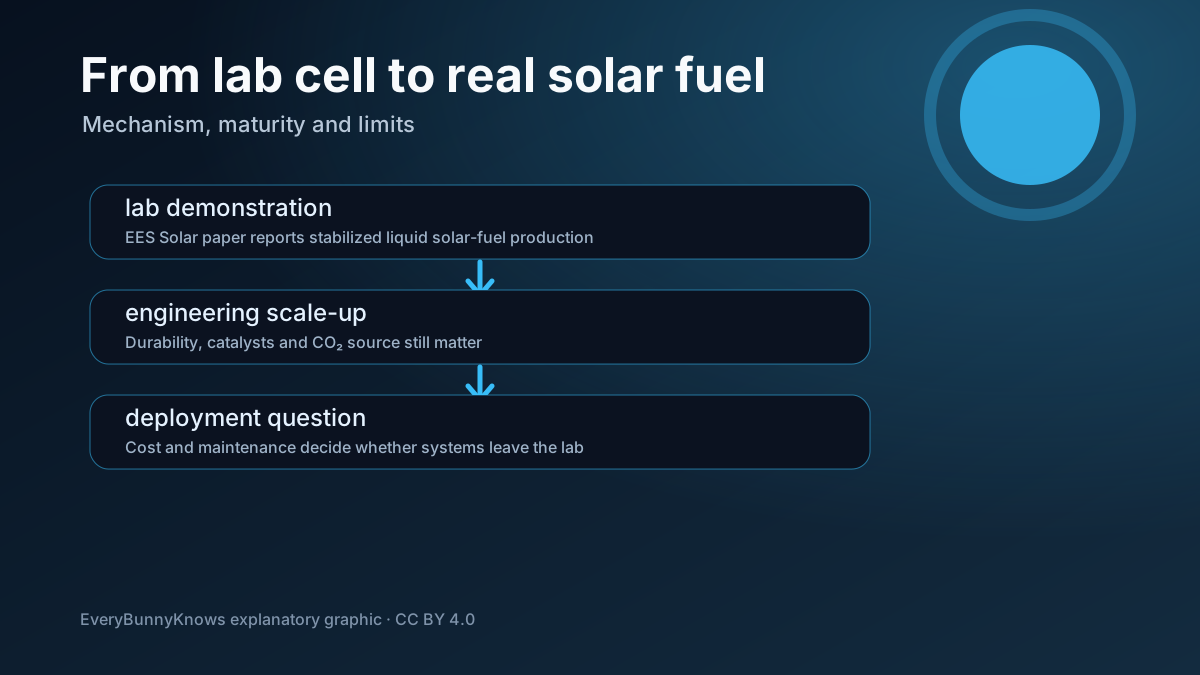
That mechanism matters because solar fuels are usually judged not only by peak efficiency but by the messy hours in between. A device that works well for a few minutes under a calibrated lamp is different from a system that can tolerate morning, noon, passing cloud and afternoon heat. Moving some control into the electrochemical cell could make future prototypes cheaper and more compact, especially for distributed systems where maintenance is expensive.
The limits are just as important as the promise. This is not a commercial fuel plant, and it does not solve every hard part of artificial photosynthesis. Catalysts must remain active, membranes and electrodes must survive long use, carbon dioxide or water feedstocks must be supplied cleanly, and total fuel efficiency must compete with other ways of storing renewable energy. A self-regulating electrolyzer also has to be tested over long cycles, not just under a neat laboratory schedule.
One practical way to read the study is as a control-systems result, not only as a chemistry result. Solar-fuel devices need the chemistry, the power supply and the operating environment to cooperate minute by minute. A material response that gently pushes the cell toward a better working point could reduce the amount of active monitoring required in the field.
Still, the result is a good technology story because it makes progress less magical and more mechanical. Instead of imagining a future fuel machine as a black box, it shows one practical design question: how can the chemistry of the device help regulate the power that drives it? If that idea holds up in larger experiments, sunlight-to-fuel systems may need fewer supporting parts before they can be tested outside the lab.