Reptile skin bones did not come from one armored ancestor
A broad evolutionary study of osteoderms shows that bony skin armor appeared repeatedly in lizard lineages, with Australian goannas offering a striking case of loss and later re-evolution.
Sofia Lane ·
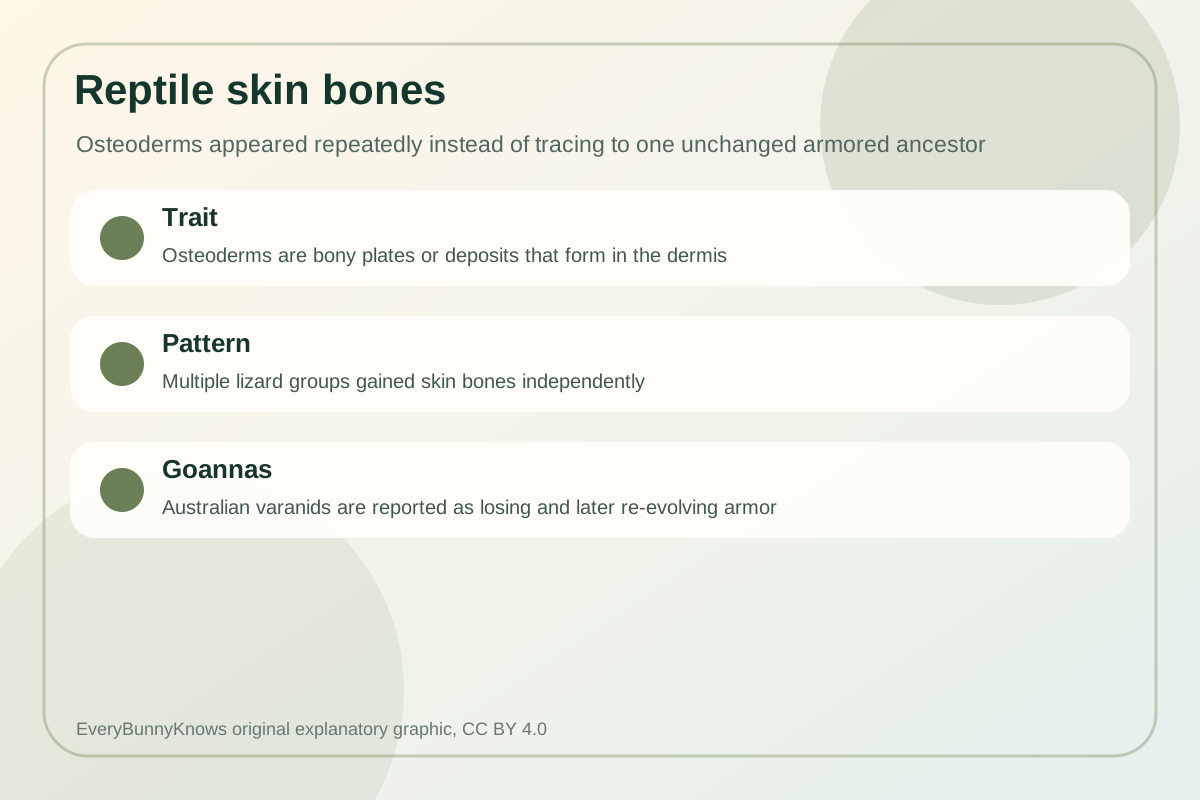
Reptile armor sounds like a relic from a single ancient ancestor: once a lineage grows bone in the skin, the feature simply travels forward. The new evolutionary picture is more interesting. A broad study of osteoderms, the bony plates or deposits that form in the dermis, indicates that reptile skin armor did not arise once and stay fixed. It appeared independently in multiple lizard groups, and Australian goannas are reported as a striking case in which armor was lost and later evolved again.
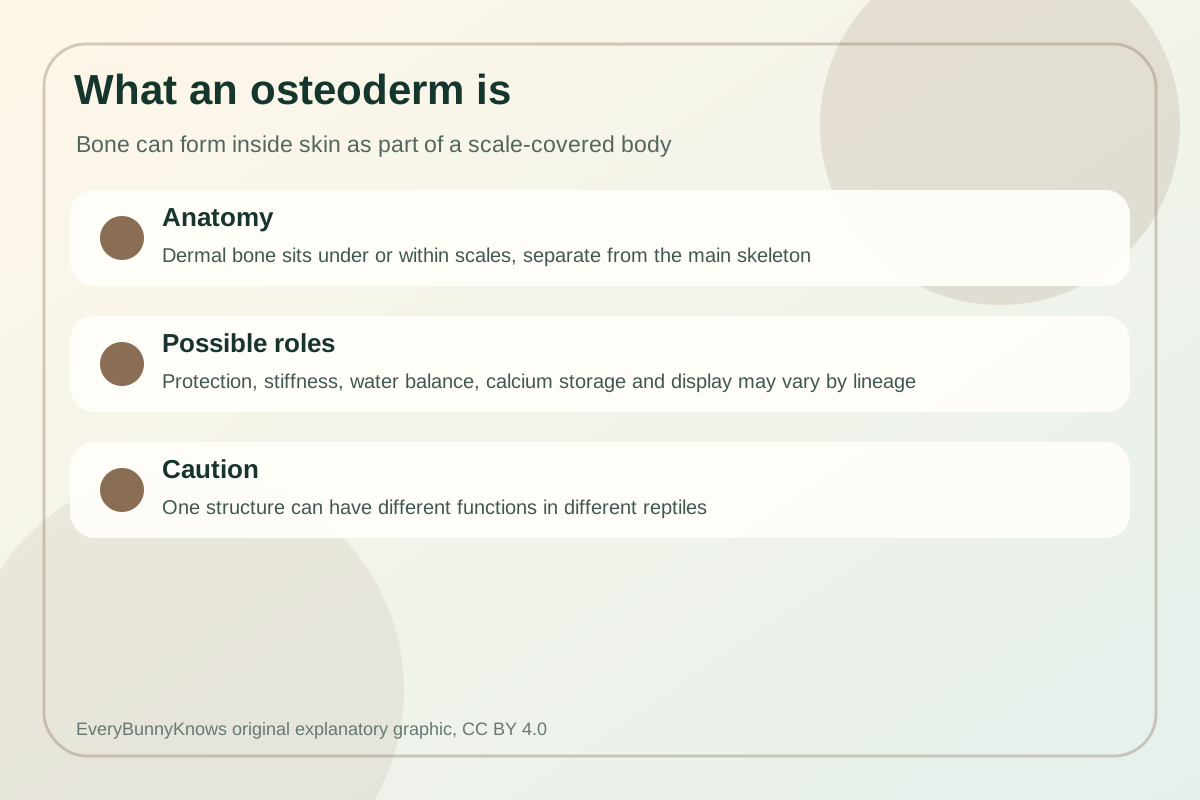
The structures are called osteoderms, from words for bone and skin. They are not ordinary scales, although they can sit beneath or within scaled skin. They are pieces of dermal bone, separate from the main skeleton, and they occur in different forms across reptiles. Crocodilians carry a familiar armored back. Some skinks, geckos, anguids and other lizards have their own versions. Extinct reptiles add deeper time and stranger shapes, which is why the headline reaches back hundreds of millions of years rather than only to living animals.
The mechanism behind the finding is comparative evolution. Researchers map the presence, absence and form of osteoderms across many reptile lineages and compare that map with evolutionary trees. If every armored lizard inherited the trait from one armored ancestor, the pattern should be relatively simple. If armor is scattered across the tree in separate clusters, with relatives that lack it in between, repeated origins or losses become more plausible. The reported result favors repeated evolution within lizards rather than a single uninterrupted inheritance.
Australian goannas, the varanid monitor lizards, make the story sharper. In this interpretation, their ancestors lost osteoderms long ago, and later Australian lineages evolved skin bones again. That does not mean evolution rewound a tape exactly. More likely, developmental pathways capable of making dermal bone remained available or were reassembled under new pressures. Selection can favor a stiffened or armored skin if it helps with defense, digging, water balance, mineral storage or other lineage-specific demands.
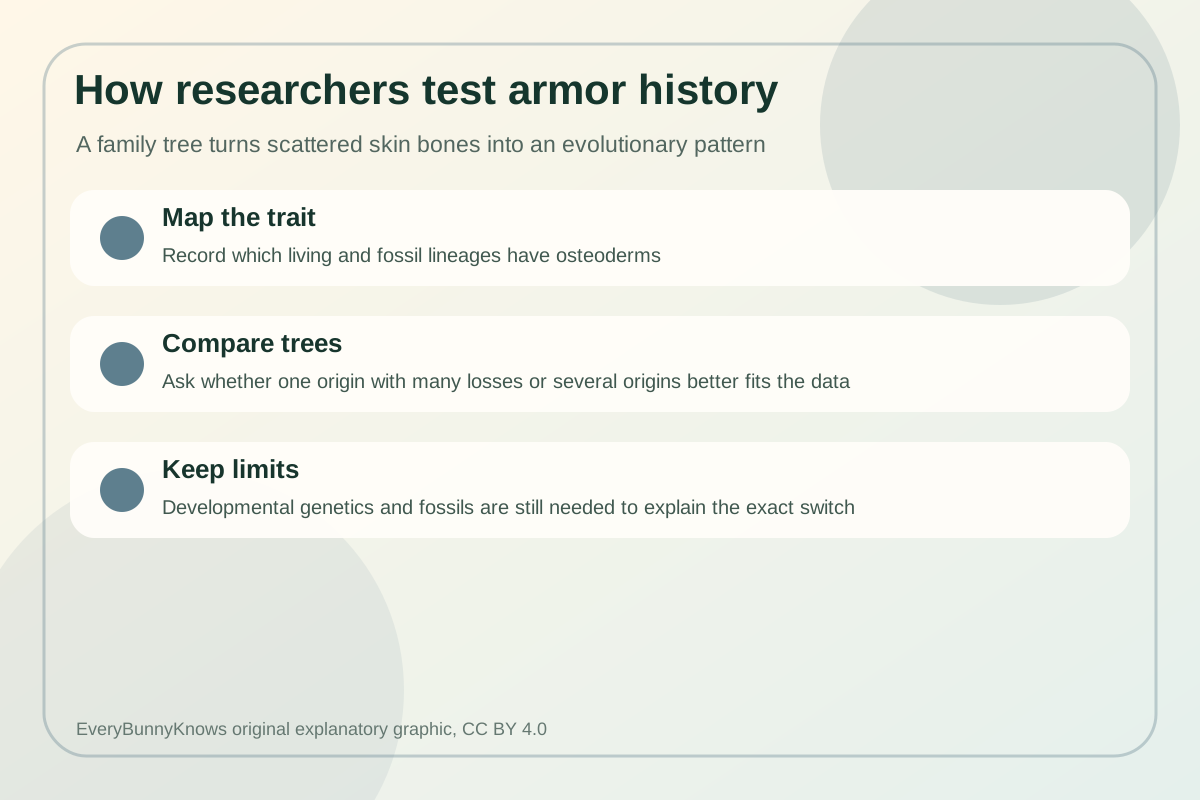
The limits keep the story honest. A broad evolutionary map can show that repeated origins fit the pattern, but it does not automatically identify the exact genes, embryonic triggers or ecological pressures in every group. Osteoderms may do different jobs in different reptiles, and fossil absence can be tricky because small bones may not preserve or be recognized. “Armor” is also a human shorthand; for the animal, the structure is tissue with costs as well as benefits, including weight, growth investment and possible effects on movement.
The value for readers is a better view of evolution’s toolkit. Nature does not always invent a structure once and hand it down unchanged. Sometimes similar body parts appear more than once because development offers materials that selection can reuse. Reptile osteoderms show that bone is not confined to the skeleton and that skin can become part of a deeper structural system. The next questions are precise: which developmental switches build these plates, why do some lineages lose them, and under what conditions does evolution make skin bone again?