Scottish Island Wrens Show Evolution at Work in Miniature
British wrens on remote Scottish islands, especially the St Kilda wren, show how isolation, climate, drift, selection and limited gene flow can shift body size without proving that a new species has already formed.
Lucia Wren ·
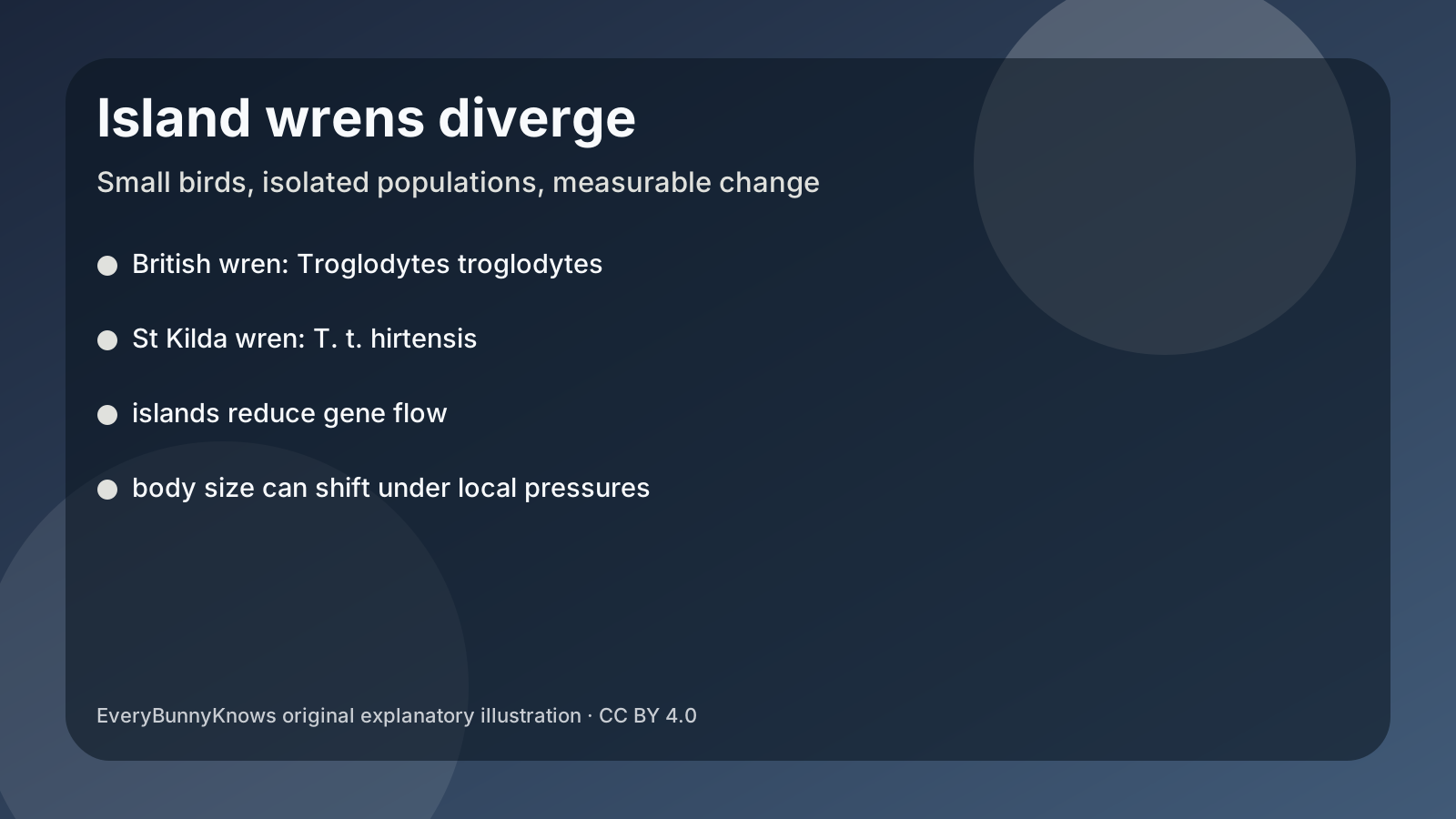
A wren on St Kilda is still a small brown bird, not a monster from an island legend. The evolutionary story is subtler and better. The British or Eurasian wren, Troglodytes troglodytes, has isolated Scottish island populations that can differ noticeably from mainland birds. Troglodytes troglodytes hirtensis is a St Kilda subspecies, and recent reporting on Scottish island wrens highlights especially large birds there. The point is not instant speciation. It is evolution in a scale small enough to measure.
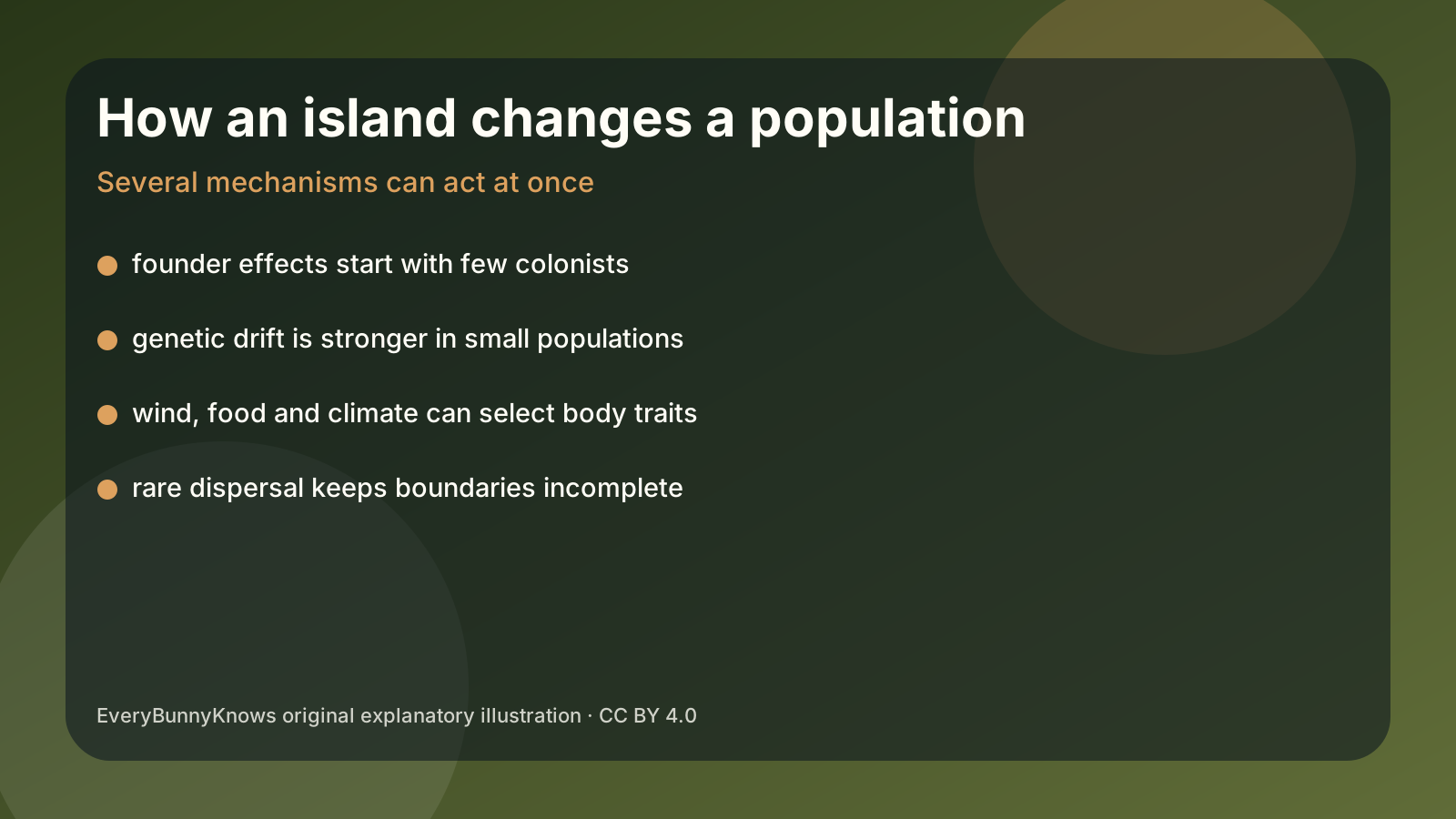
The mechanism begins with isolation. When a few birds colonise an island, they carry only part of the genetic variation found on the mainland. After that, distance and sea crossings restrict gene flow. In a small population, genetic drift can make some traits more common by chance. Natural selection can also act if the island is colder, windier, has different food, different predators or different nesting conditions. Over many generations those forces can shift average body size, bill shape, song or plumage.
Island gigantism is the phrase that draws attention, but it needs a calm definition. For a wren, “large” means larger relative to other wrens, not large in ordinary bird terms. A St Kilda wren that outweighs a small mainland bird is still a tiny passerine living in stone walls, cliffs, rough grass and coastal vegetation. Larger size could help with heat balance, fat storage, dominance, foraging or surviving harsh weather, but the exact mix of causes has to be tested rather than assumed.
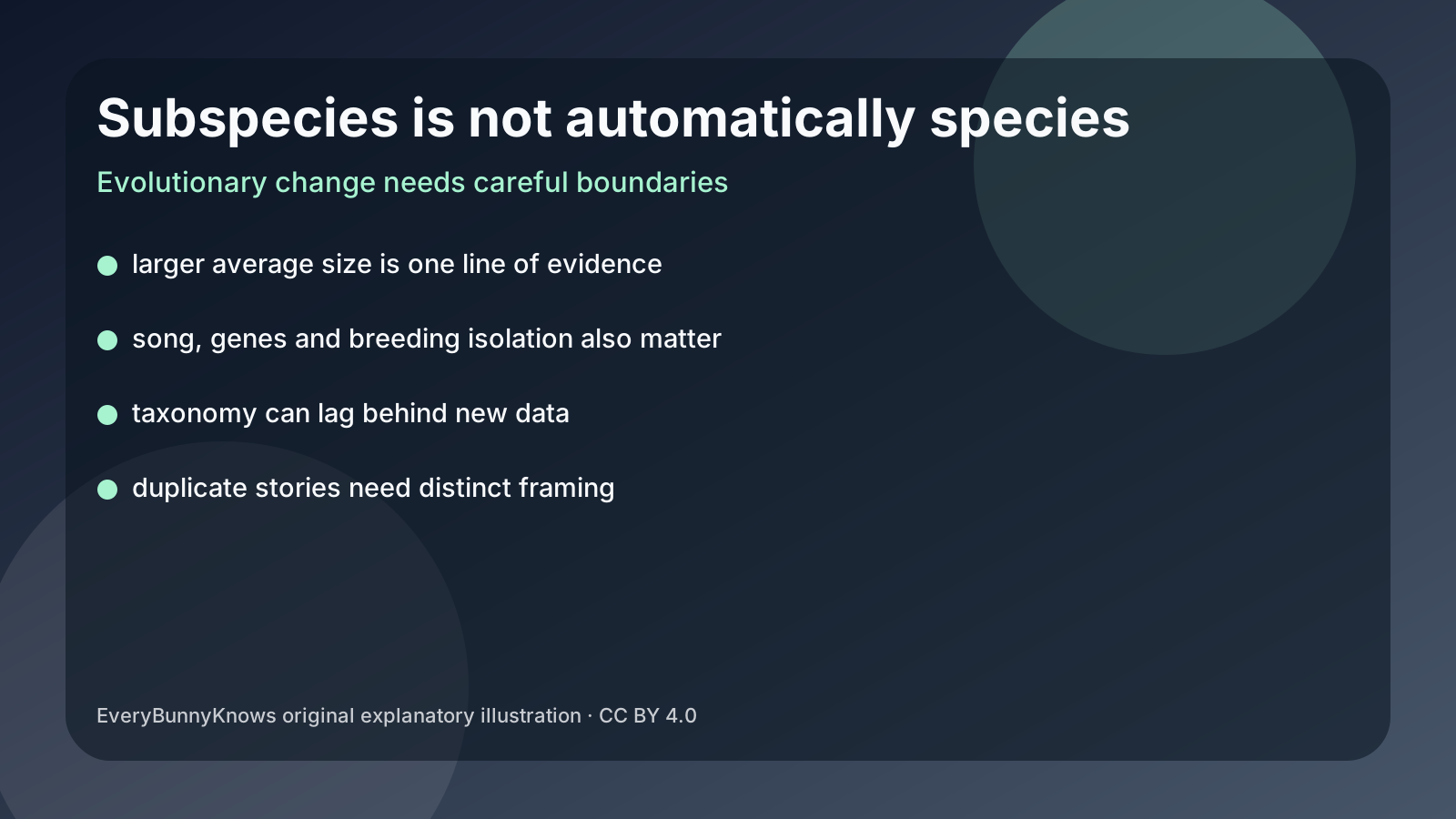
The strongest article is also careful about species boundaries. A named subspecies is evidence of recognised difference, not automatic proof of a completed new species. Biologists may compare measurements, DNA, song, breeding behaviour and evidence of interbreeding if birds meet again. Limited gene flow can let populations diverge, but occasional dispersal can blur boundaries. Taxonomy therefore often moves more slowly than headlines, and that caution is a feature, not a failure.
The Scottish setting matters. Islands such as St Kilda are remote, stormy and ecologically distinctive. A bird population there is shaped by cliffs, Atlantic weather, nesting sites, local prey and the simple fact that neighbours are not constantly arriving from the mainland. That makes island wrens useful living examples for readers who usually meet evolution as a fossil or a textbook diagram. Evolution is not only deep time; it is also the accumulation of small inherited differences in real populations.
The visual standard follows the same caution. An explanatory image can show the exact mechanism without pretending that a single photograph proves drift, selection or reproductive isolation. Where a photo of the St Kilda wren is available it may orient the reader, but the mechanism still needs a diagram: islands, small populations, rare migrants and measured traits changing through generations.
This slug is preserved because it frames the story as evolution at work in miniature, not as a duplicate claim that a new species has already arrived. The responsible lesson is precise. Scottish island wrens show how isolation, founder effects, drift, selection and limited gene flow can push a familiar species along separate paths. What remains is the scientific work of measuring how far those paths have gone and whether they lead to stable subspecies, future species or simply beautifully adapted island populations.