Seaweed-based ingredient helps turn dirt into 3D-printed walls
A seaweed-derived binder such as alginate can change how clay, sand and water hold together during 3D printing, making earthen walls easier to shape while leaving durability, codes and local soils as the hard tests.
Leo Sato ·
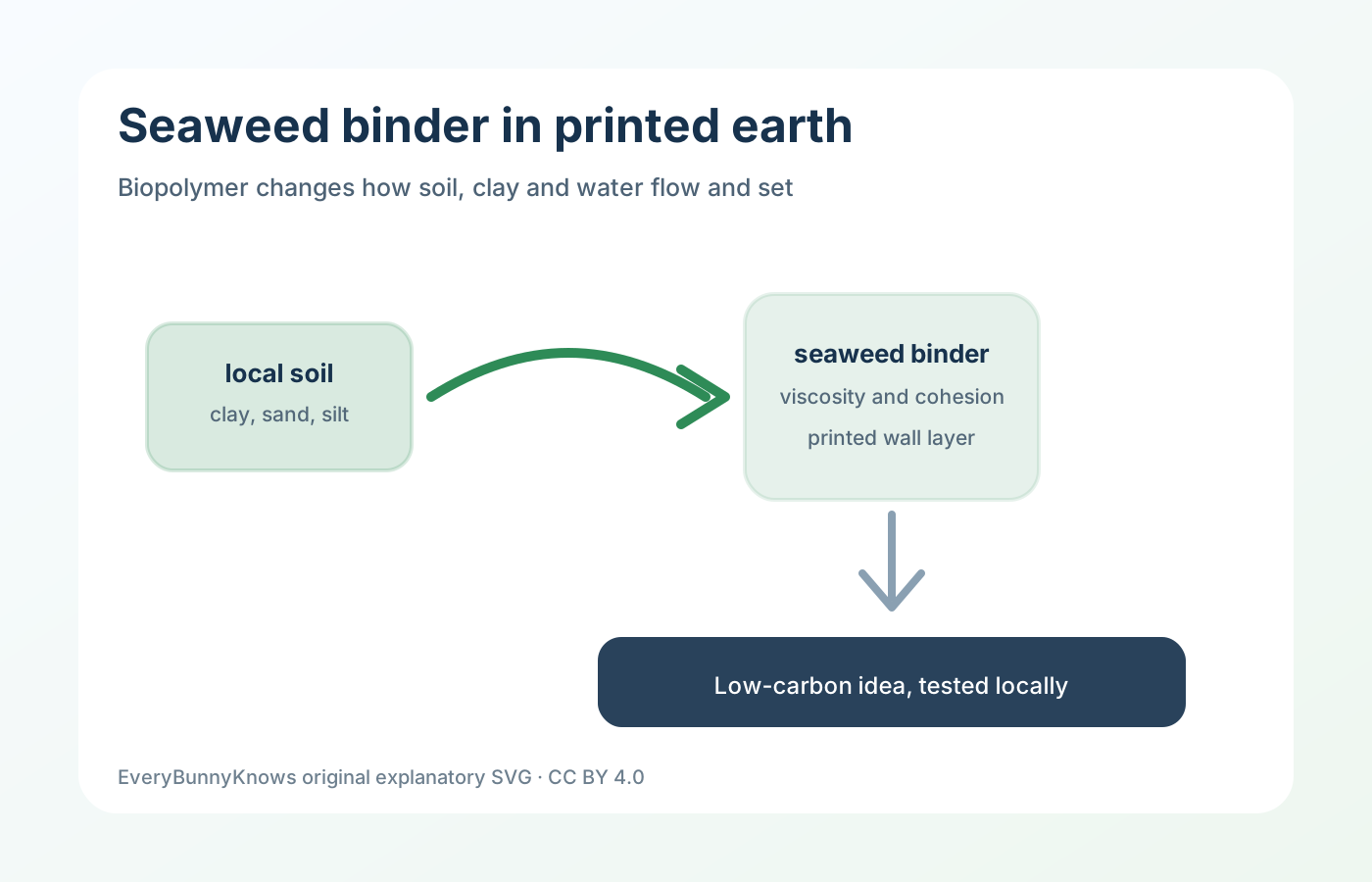
The phrase “turn dirt into 3D-printed walls” sounds like a stunt until the material science is brought back into view. The useful ingredient is a seaweed-derived biopolymer such as alginate, familiar as a thickener and stabilizer in food. In an earthen building mix, a small amount of that binder can change how clay, sand, silt and water behave as they are pumped through a nozzle and stacked into layers.
The mechanism is closer to cooking than to concrete hype. A printable earth mix has to do two opposite things. Under pressure, it must flow smoothly enough that the printer can place it. After it leaves the nozzle, it must stop slumping, hold its edge and bond to the next layer. Alginate and related biopolymers help by increasing viscosity and cohesion, making water and particles behave more like a controlled paste than a loose mud.
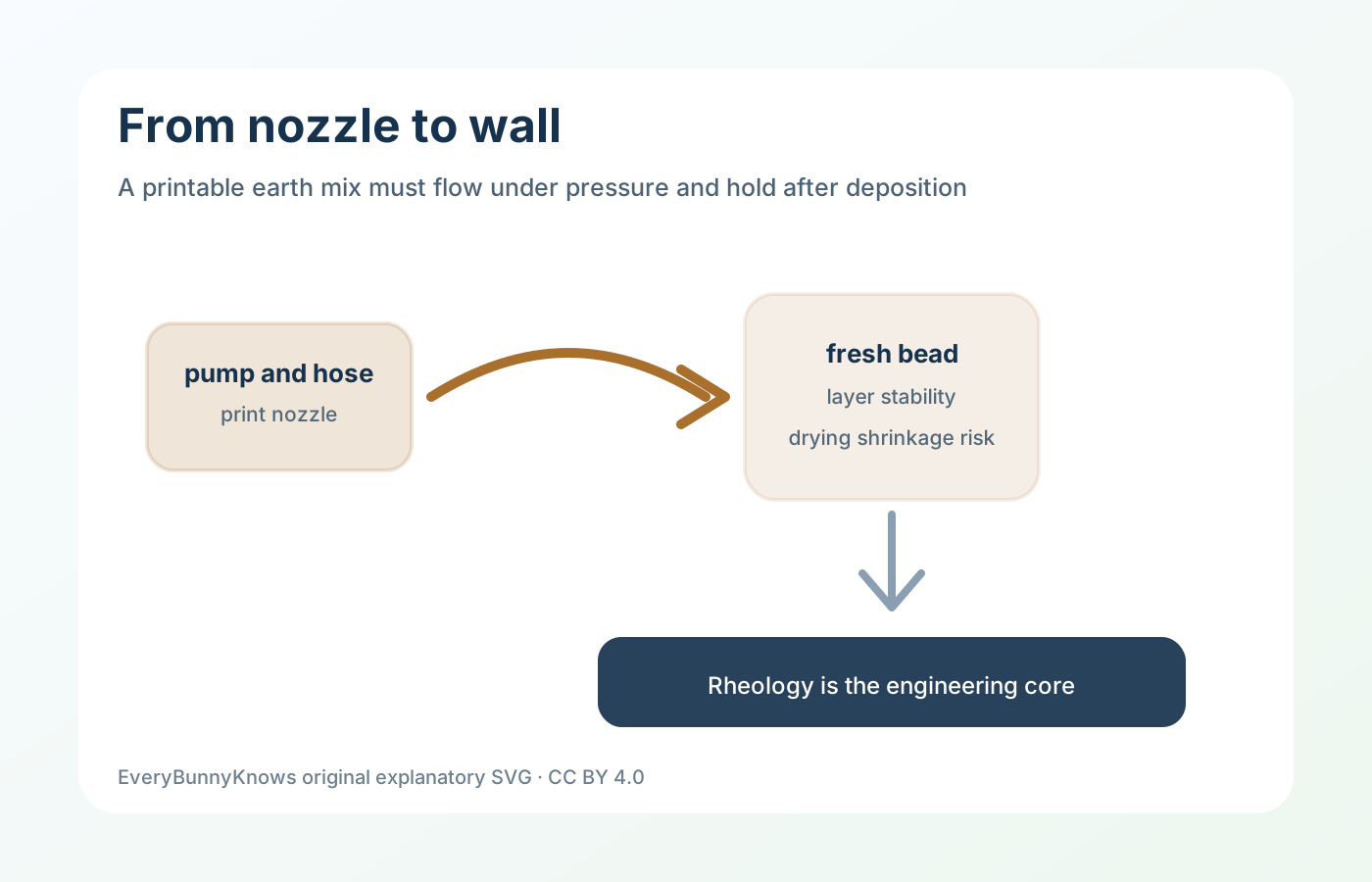
That matters because cement production is carbon-intensive, while earth is abundant, local and historically proven in many climates. Additive manufacturing could reduce formwork, cut waste and make curved or thick walls easier to place. A biopolymer additive also points to a gentler material palette than many synthetic binders. But the climate benefit depends on local soils, transport distance, drying energy, durability and whether the final structure avoids extra cement or steel elsewhere.
The limits are substantial. Earthen walls must resist compression, moisture, freeze-thaw cycles, erosion, pests and long-term shrinkage. Building codes need test data, not attractive printed samples. Soil chemistry varies from site to site, so a recipe that works in one laboratory may fail with another clay fraction or humidity level. Seaweed-derived ingredients also have supply-chain and cost questions if demand ever became large.
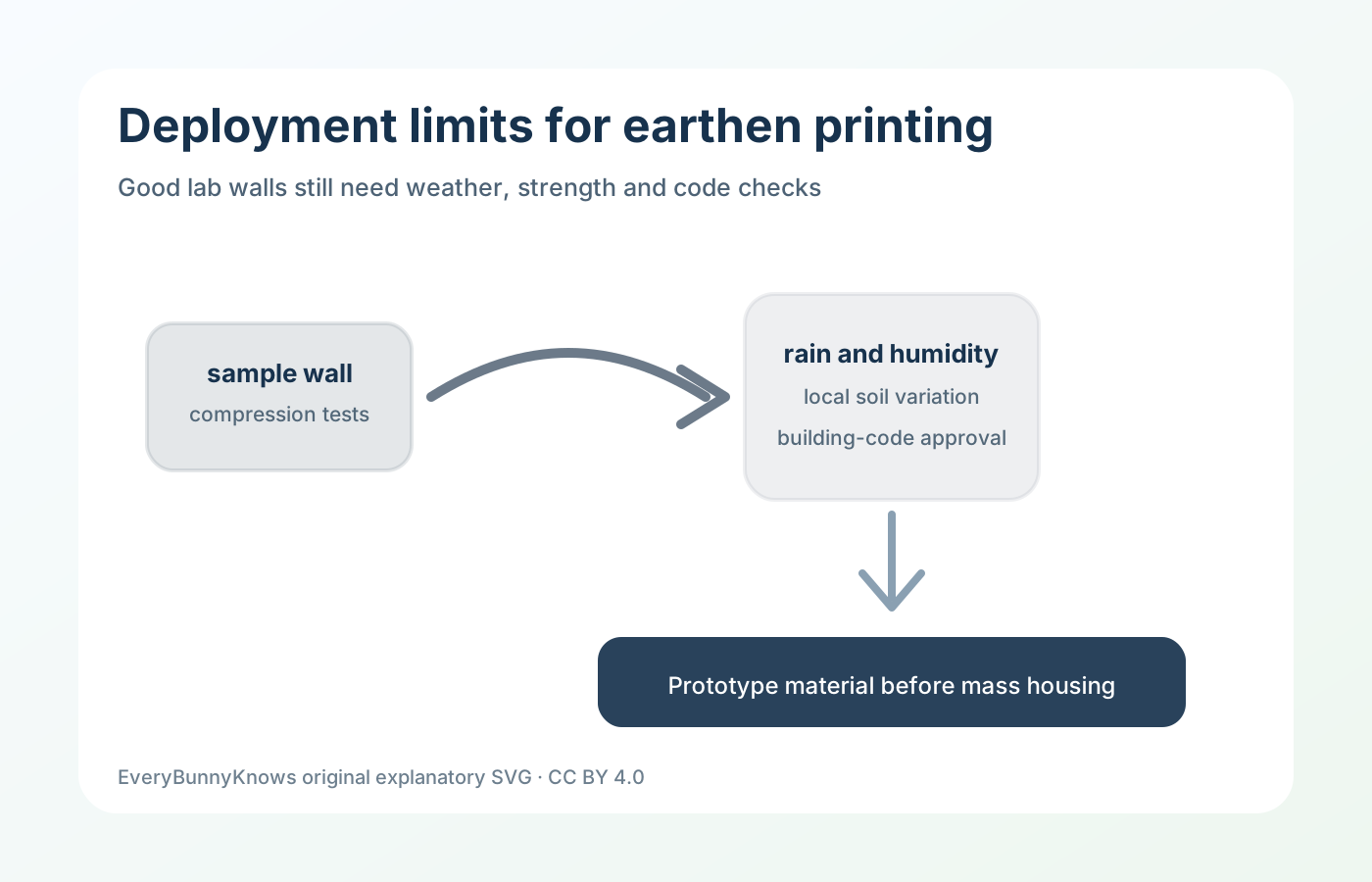
The hopeful lesson is not that seaweed will replace concrete. It is that old materials can become more useful when their flow, bonding and drying are measured with modern tools. If engineers can match local earth, safe binders and verified structural tests, 3D-printed earthen walls may become one more option for lower-carbon buildings rather than a universal answer.
The ingredient also changes the design conversation. Earthen construction is not new, and many traditional buildings already use local soil wisely. What digital printing adds is controlled placement: a printer can vary thickness, create cavities, leave channels for services or make curved forms without custom formwork. A binder from seaweed-derived chemistry is useful only if it helps that control without making the wall fragile, expensive or hard to recycle.
Testing must therefore be local as well as scientific. Builders would need to know how a mix behaves in summer heat, winter moisture, real foundations and repair work years later. A wall that looks smooth after printing is only the beginning. The mature version would pair soil surveys, structural tests, moisture detailing and honest maintenance plans with the printer itself.
For readers, the practical test is whether the mechanism changes decisions. A credible technology story should say what has been measured, what still belongs to prototypes, and which real-world system would have to change before the idea matters outside a paper. That discipline keeps optimism useful: it points to next experiments, standards, operators and costs instead of treating a promising result as a finished product.