What Sleep Clinics Learn from Ordinary Nights
Sleep clinics turn ordinary nights into useful health evidence by measuring breathing, movement, light, rhythm, and rest patterns that people often cannot see for themselves.
Ada Brooks ·

A sleep clinic studies one of the most ordinary events in medicine: a person lying down for the night. The point is not to turn rest into a performance test. It is to make hidden patterns visible when tired people, bed partners and ordinary memory cannot explain what is happening. Snoring, pauses in breathing, restless legs, unusual movements, insomnia, shift-work exhaustion and dangerous daytime sleepiness can all look vague from the outside. Overnight measurement gives clinicians a more careful starting point.
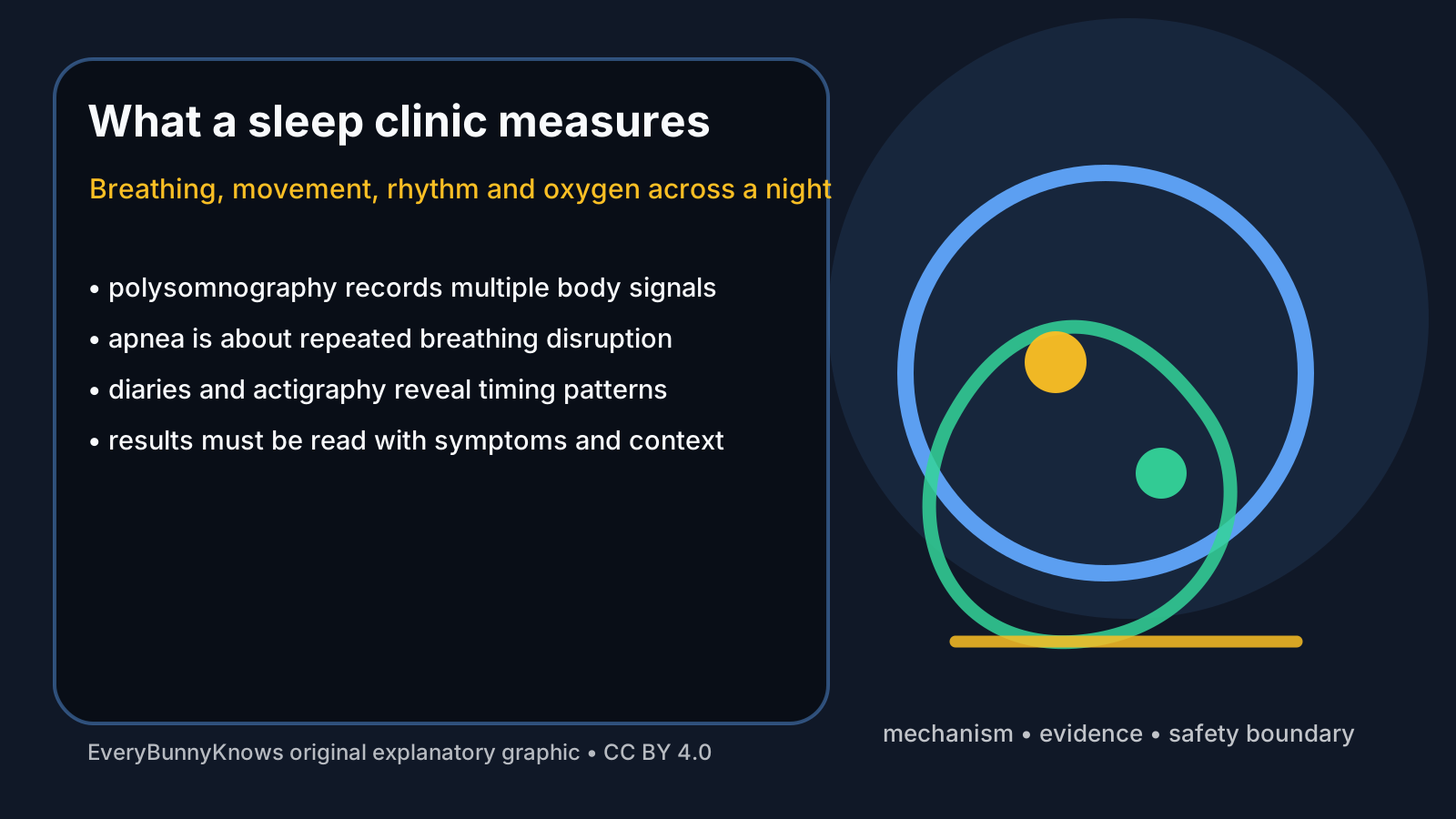
The central tool is polysomnography, a supervised sleep study that records several signals at once: brain waves, eye movement, muscle tone, airflow, breathing effort, blood oxygen, heart rhythm and body position. Those channels help distinguish light sleep, deep non-REM sleep and REM sleep, but they also reveal disruptions that the sleeper may not remember. In obstructive sleep apnea, for example, the airway repeatedly narrows or closes, oxygen can dip and the brain may briefly arouse to restart breathing. The result may be a night that seems long enough on the clock but fragmented in the body.
Not every question needs a full laboratory night. Home sleep-apnea testing, actigraphy, sleep diaries and careful history can be appropriate in selected situations, especially when the question is narrower. A good clinic therefore does more than collect numbers. It asks about medicines, alcohol, pain, mood, work schedules, caregiving, menopause, neurological symptoms, heart or lung disease and safety-critical tasks such as driving. The measurement matters because it is interpreted beside the person’s life.
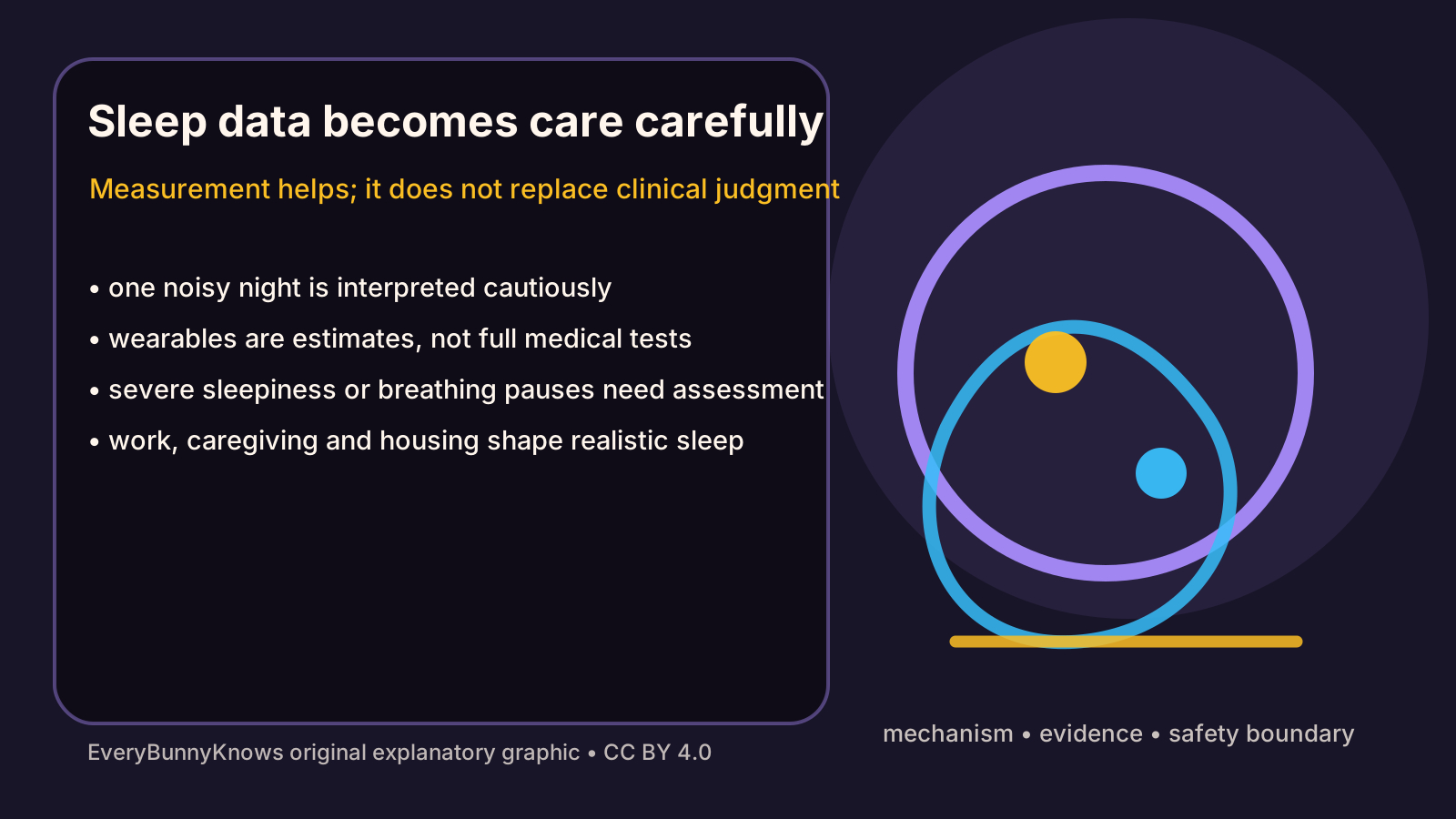
The limits are part of the care. One night in a laboratory can be strange, and wearable sleep-stage estimates are not the same as clinical testing. A normal result does not make every symptom imaginary, while an abnormal result still needs a plan that fits the patient. This article is general education, not medical advice: people with severe sleepiness, witnessed breathing pauses, choking at night, chest symptoms, sudden neurological symptoms or drowsiness that endangers driving or work need qualified assessment rather than self-diagnosis.
Sleep clinics also show why “sleep hygiene” can be too small a phrase. A calmer bedroom and regular light exposure may help some people, but they cannot fix every airway, pain condition, medication effect, rotating shift, noisy apartment or caregiving duty. Clinicians may discuss positive-airway-pressure therapy, oral appliances, behavioural therapy for insomnia, medication review or referral for another condition depending on the diagnosis. The educational point is not to choose among those options from an article, but to understand why careful measurement can change the conversation from blame to evidence. It also helps families describe risk more clearly and sooner.
The hopeful lesson is practical. Sleep clinics show that ordinary nights contain evidence: rhythm, oxygen, breathing, movement and recovery. When those signals are read carefully, sleep becomes less moralized and more treatable as a health system problem. Better nights may involve treatment, scheduling changes, safer work design, pain control, mental-health support or simpler routines, but the first useful step is often seeing what the night was doing all along.