Ground Radar Reveals the Hidden Architecture of Rare Northern Hairy-Nosed Wombats
Ground-penetrating radar at Queensland’s Richard Underwood Nature Refuge shows how critically endangered northern hairy-nosed wombats build complex burrows, helping conservationists judge future recovery sites without digging them up.
Ivy Stone ·
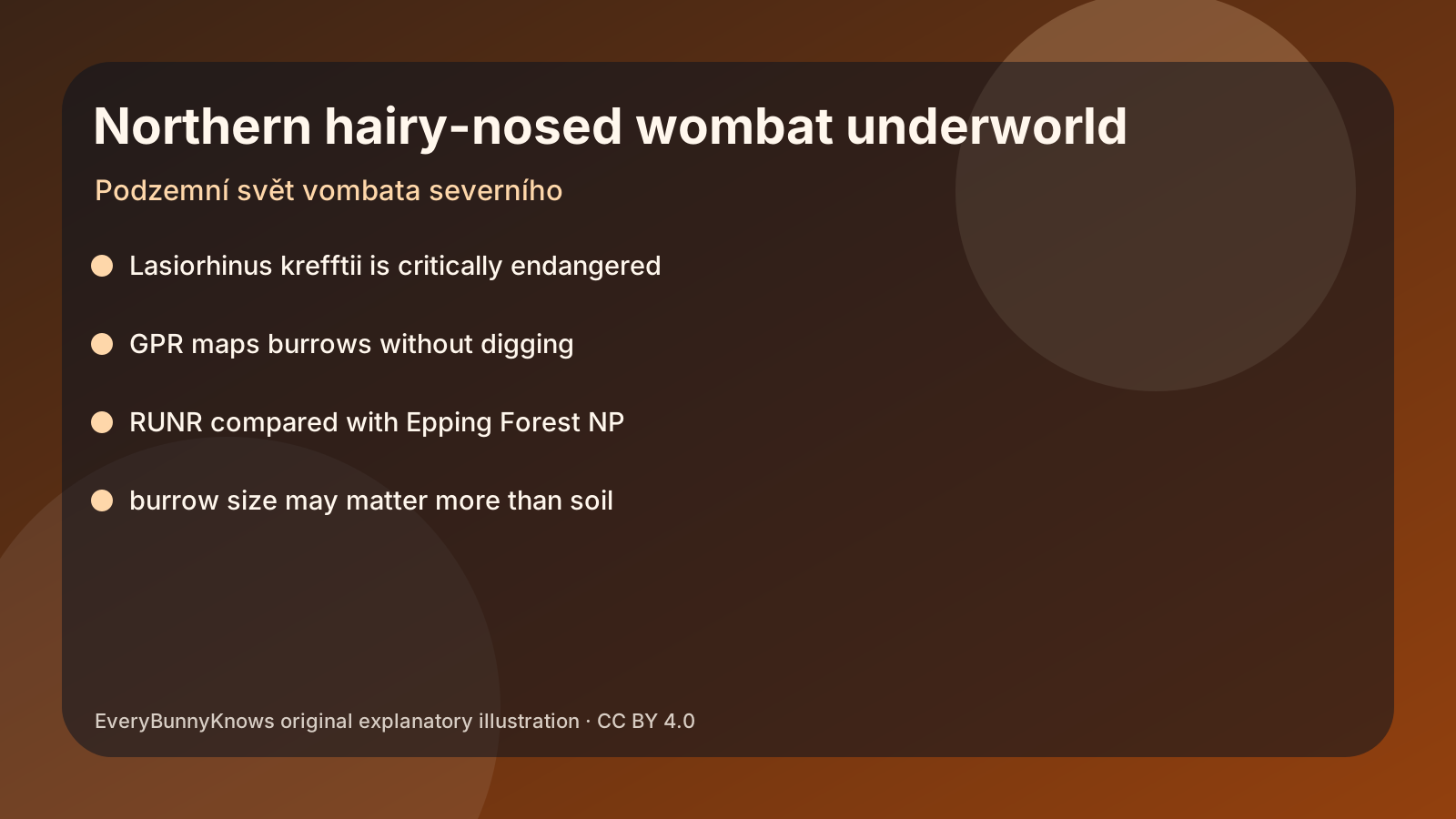
The rare wombat story begins underground, where ordinary wildlife surveys are almost useless. Northern hairy-nosed wombats, Lasiorhinus krefftii, spend much of their lives inside burrow systems, emerging mostly at night and avoiding disturbance. At Queensland’s Richard Underwood Nature Refuge, researchers from Australian Wildlife Conservancy, The Wombat Foundation and the state environment department used ground-penetrating radar to map the spaces the animals had carved below the surface. The method matters because the species is critically endangered and its shelters cannot be treated as expendable research sites.
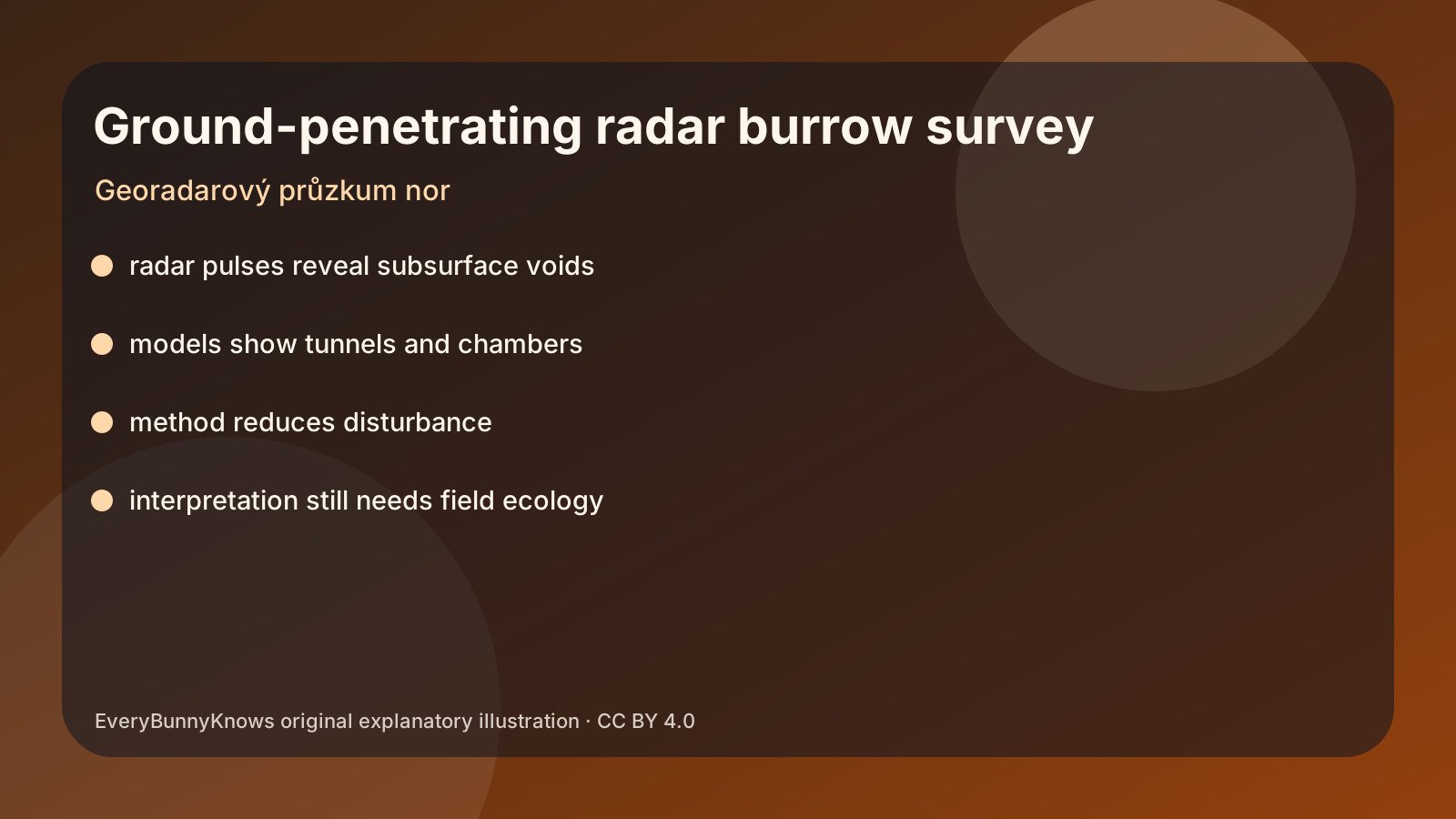
Ground-penetrating radar works by sending electromagnetic pulses into the ground and reading the reflections that return from changes in material and empty spaces. In a wombat refuge, those reflections can be turned into models of tunnels, chambers and depths. That gives conservationists a way to ask practical questions: how large are the burrow systems, how complex are they, how do they compare with older data from Epping Forest National Park, and what kinds of sites might support future translocations?
The ecological mechanism is shelter engineering. A burrow buffers heat, hides a large herbivore from predators and creates a stable place to rest between feeding bouts. For northern hairy-nosed wombats, whose wild history contracted to Epping Forest before additional protected populations were established, the design and persistence of burrows are part of survival. The radar results suggest the animals can create elaborate systems even in different ground conditions, which hints that burrow size and usable architecture may matter more than a simple label such as soil type.
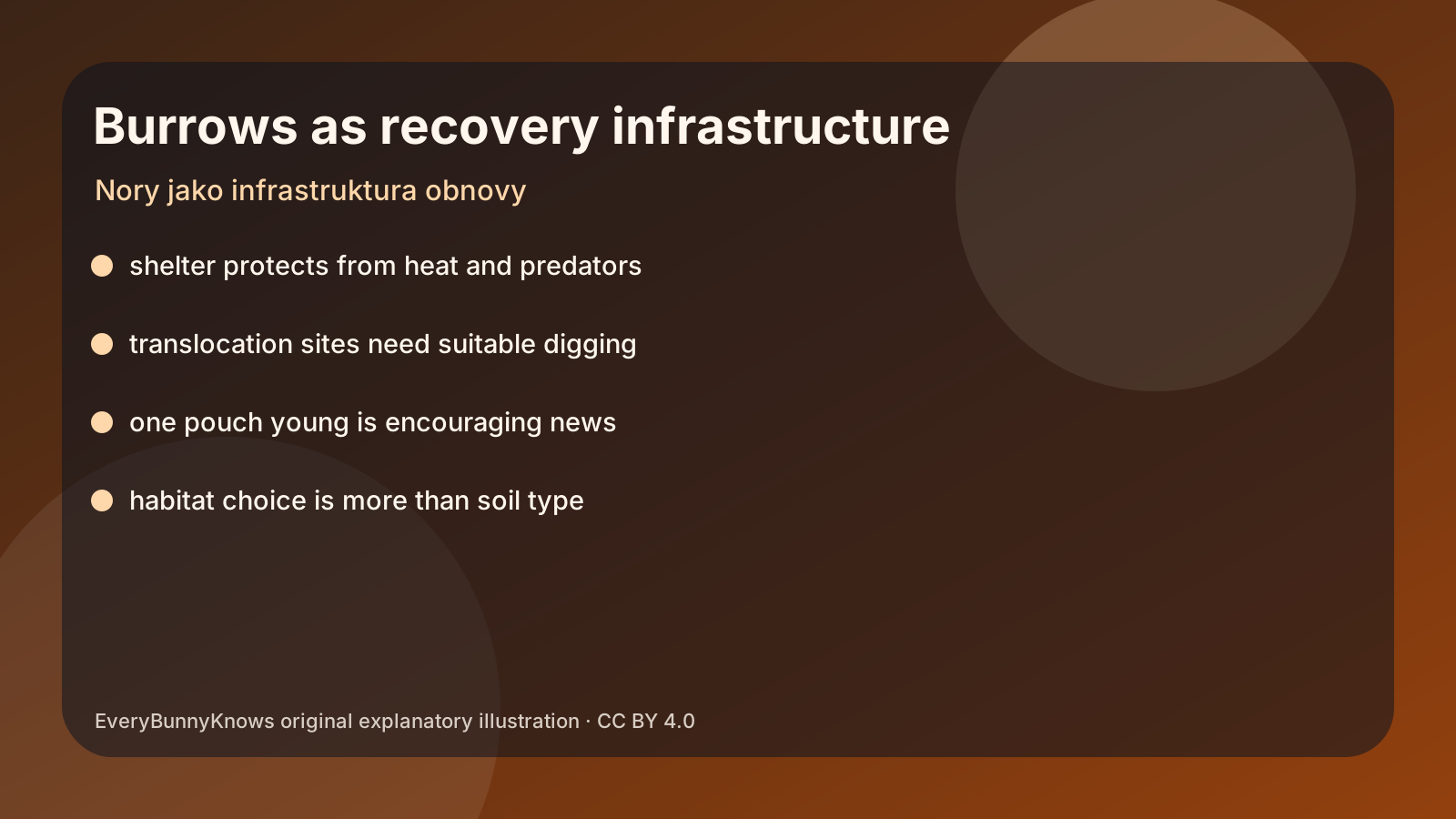
There is also a small but meaningful life-history detail: a female at Richard Underwood Nature Refuge was photographed with a pouch young. One joey does not change the status of the species, but it shows why low-disturbance monitoring is valuable. When every breeding animal counts, methods that reduce digging, handling and repeated intrusion help researchers learn while leaving the wombats to do the work of recovery.
The limits are clear. Radar images require interpretation, and subsurface models are not the same as watching a wombat choose every tunnel. The study compares particular sites and does not prove that any patch of land can become a safe refuge. Food plants, competition, disease risk, predators, fire, drought, fencing and long-term management all influence whether a translocation site will work.
The hopeful lesson is practical rather than sentimental. Conservation often depends on hidden infrastructure: dens, hollows, reefs, roots and burrows. By mapping that hidden architecture without destroying it, scientists can make better decisions about where rare animals may live next. For the northern hairy-nosed wombat, the underworld is not a curiosity. It is the shape of home, and understanding it carefully may give one of Australia’s rarest mammals more room to recover.
One further point keeps the story practical: a conservation result is not made by one image or one measurement alone. It needs repeated monitoring, local context, management cooperation and a clear account of what remains uncertain. That combination is what turns an interesting finding into evidence people can use for the next decision and keeps a specific study from becoming a vague nature fable.