The artificial leaf making methanol is a chemistry test, not a fuel miracle
A Yale-led artificial leaf uses sunlight, water and carbon dioxide to make methanol in a standalone lab device. The mechanism is elegant; durability, CO₂ supply and safe scale are still the hard parts.
Elena Moss ·
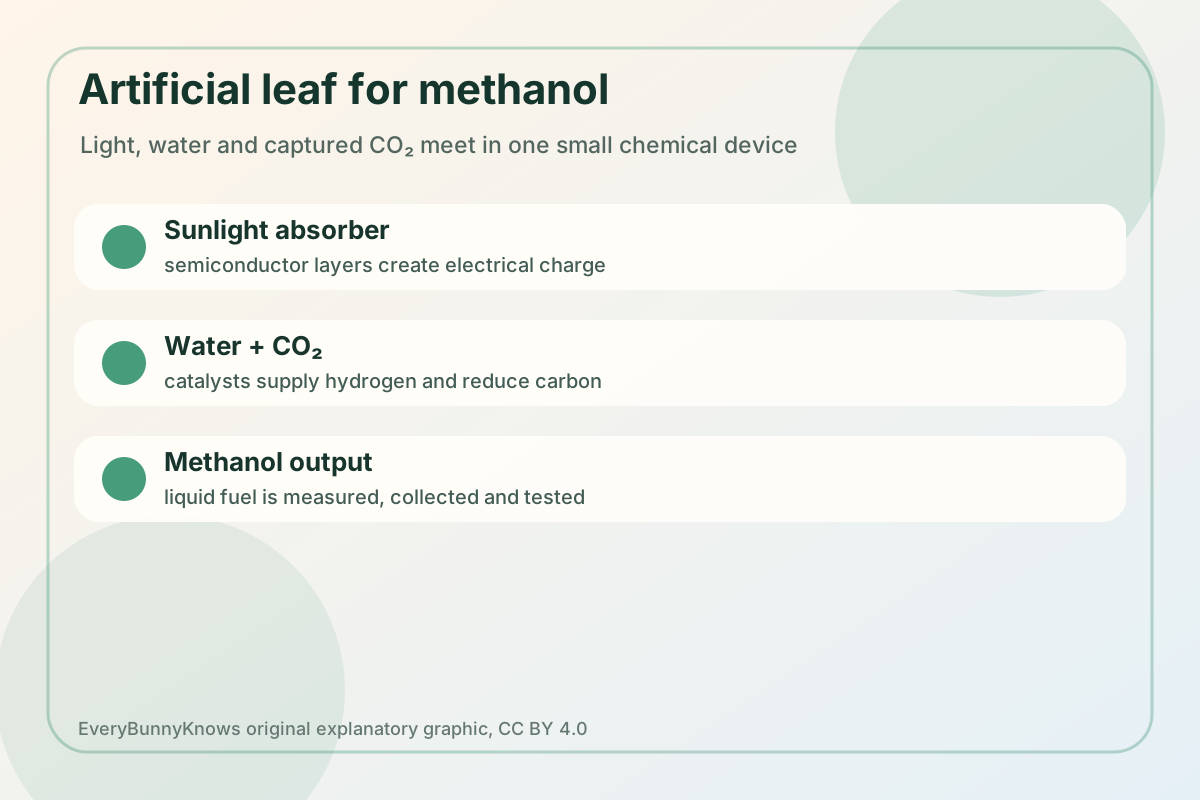
A Yale-led artificial leaf that makes methanol from sunlight, water and carbon dioxide is best understood as a small chemical system, not a miniature tree and not a finished fuel factory. Tech Xplore reported the standalone device in early June 2026 as a record-efficiency demonstration for producing a liquid solar fuel without being wired to a separate electrolyzer. Its value is that it puts several difficult steps — light absorption, water oxidation, carbon-dioxide reduction and product collection — into one testable package.
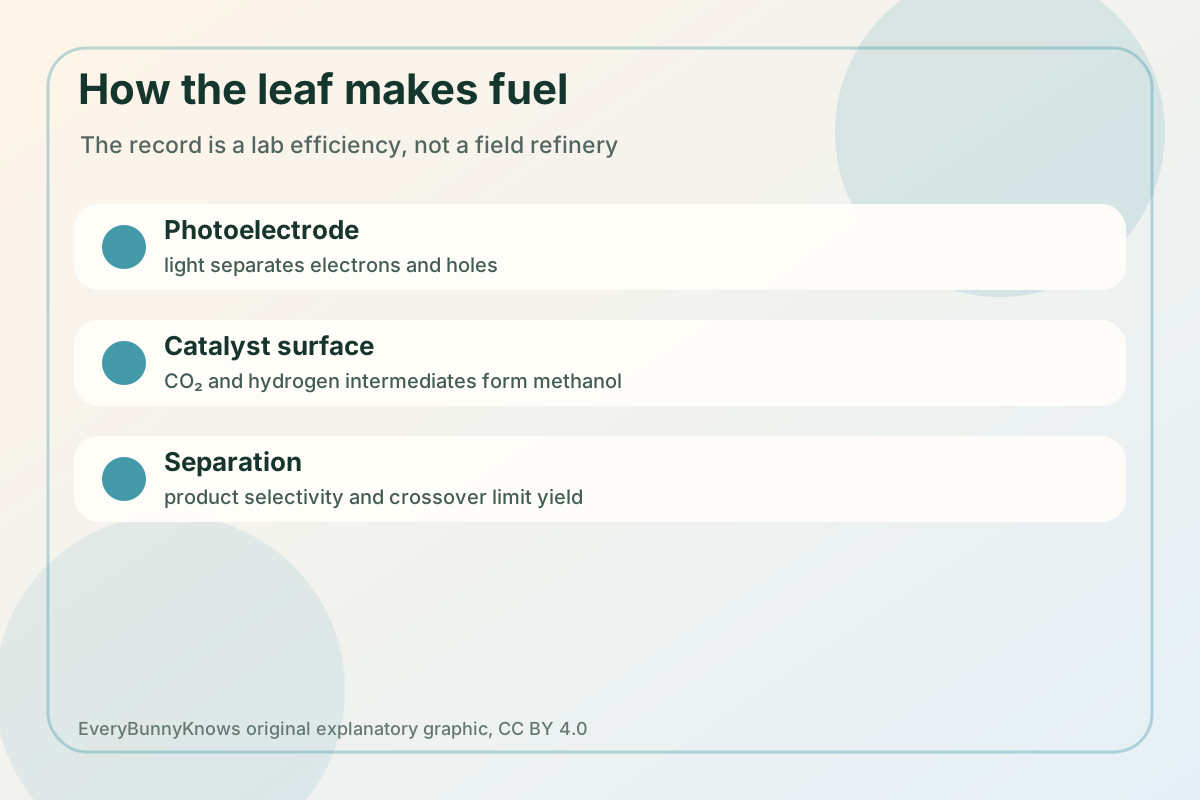
The mechanism starts with a photoabsorber, usually a carefully layered semiconductor that turns incoming light into separated charges. One side of the device uses those charges to pull electrons from water, producing protons and oxygen chemistry. The other side feeds electrons and hydrogen-bearing intermediates to a carbon-dioxide-reduction catalyst. If the surface favors the right chain of steps, carbon and hydrogen assemble into methanol, a liquid that is easier to store than hydrogen gas but toxic and flammable enough to demand ordinary fuel-handling discipline.
That sequence is why the phrase “artificial leaf” is useful but also risky. Natural leaves store solar energy through biology, enzymes and living repair systems. A laboratory leaf uses engineered materials that can corrode, foul, poison their catalysts or drift away from the desired product. Record solar-to-fuel efficiency in this context means a carefully measured conversion of incoming light into chemical energy under defined conditions. It does not mean the device has solved the cost, lifetime or outdoor-control problems of industrial methanol.
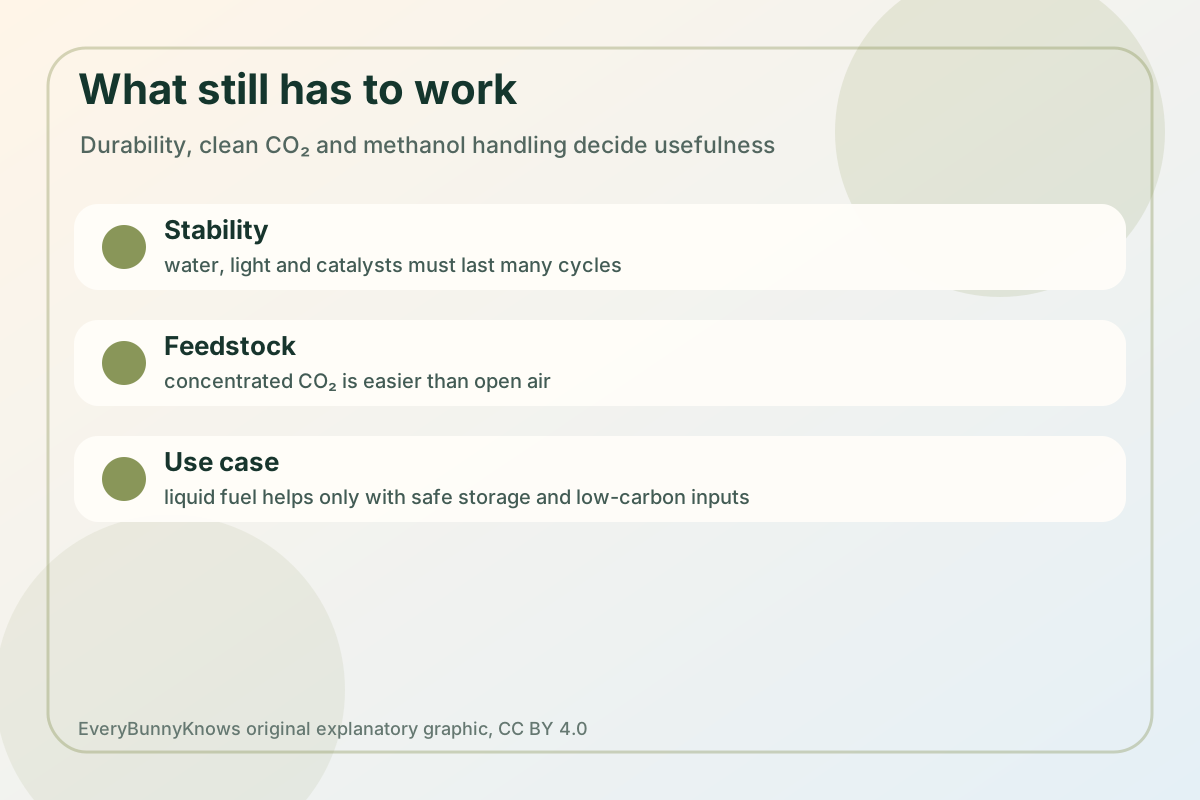
The material limits matter because methanol synthesis is selective chemistry. Carbon dioxide can become carbon monoxide, formate, methane, ethylene, methanol or unwanted side products depending on voltage, catalyst structure, pH, mass transport and local concentration. Water can also compete by making hydrogen. A useful device must keep the intended pathway dominant while moving reactants and products through membranes or electrolytes without losing too much energy. Small improvements in catalyst selectivity can be erased if the full cell degrades or mixes products.
The carbon source is another boundary. Feeding a device concentrated CO₂ from an industrial stream is different from pulling dilute CO₂ out of open air. Both may be useful in some climate strategies, but neither makes fuel automatically carbon-neutral. The total balance depends on where the carbon came from, how the device was made, how long it lasts, what powers pumps or controls, and whether the methanol replaces fossil fuel or becomes another short-lived emission.
The hopeful part is precise. Liquid solar fuels could help sectors where batteries are heavy, long-distance storage is needed or chemical feedstocks are hard to electrify. A standalone artificial leaf gives researchers a compact way to test material combinations and track real product formation instead of only measuring isolated half-reactions. It also lets teams compare materials by the same practical questions: how much light is absorbed, how much carbon ends up in methanol, how much side chemistry appears, and how quickly performance falls. The next evidence should be unglamorous: many hours of stable operation, outdoor tests, transparent product analysis, safe collection and comparison with simpler ways to make low-carbon methanol. If those numbers improve, the leaf will matter because chemistry became reliable, not because a metaphor became beautiful.