Knysna’s 132-million-year-old tracks reopen South Africa’s dinosaur timeline
Dozens of Early Cretaceous tracks in the Brenton Formation near Knysna show dinosaurs persisted on South Africa’s coast long after Karoo lava flows seemed to silence the regional record.
Felix Arden ·
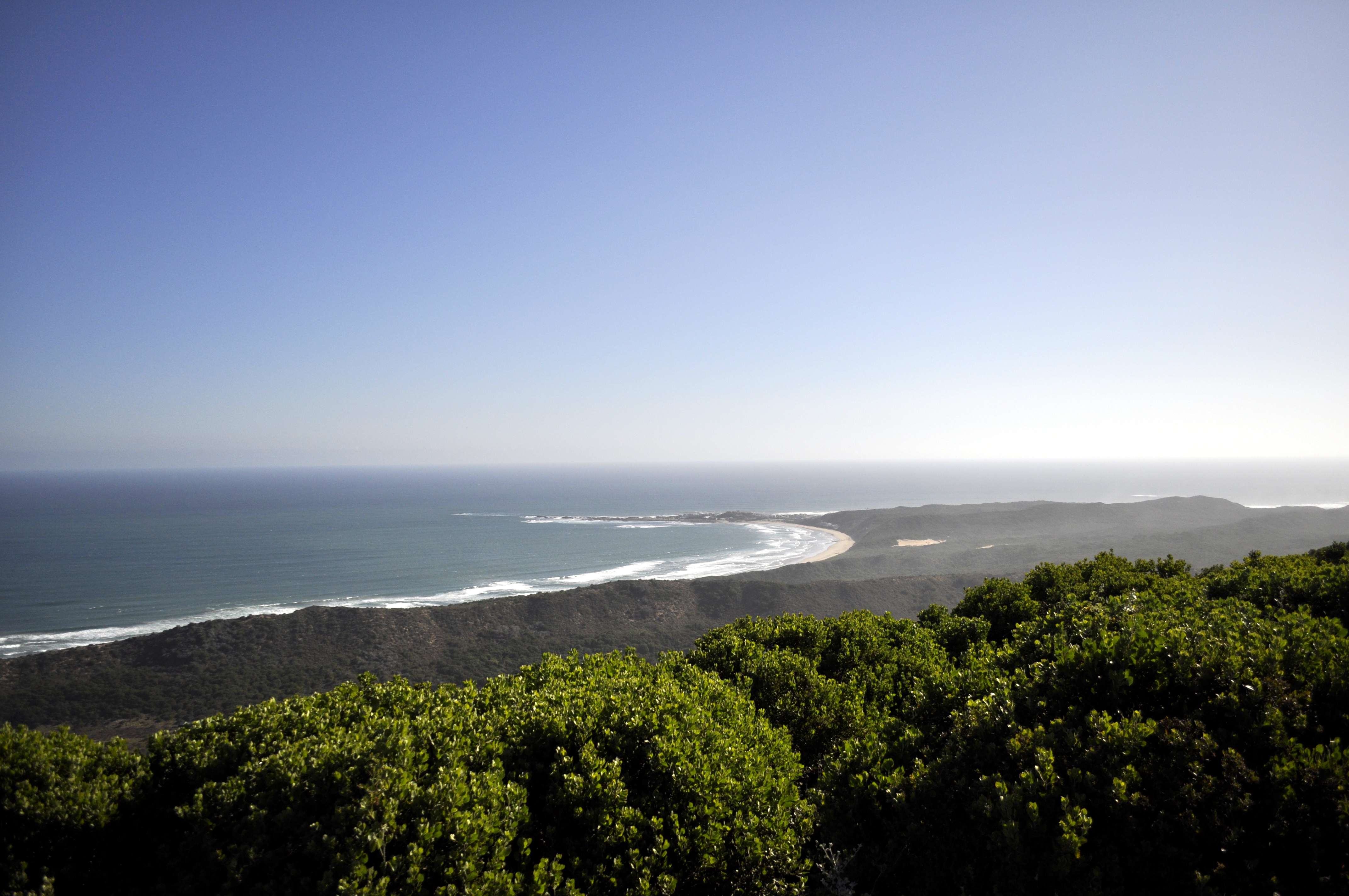
A small exposure of rock near Knysna on South Africa’s Western Cape coast has reopened a large gap in dinosaur history. Researchers reported more than two dozen probable dinosaur tracks in the Brenton Formation, estimating their age at about 132 million years. That makes them the youngest known dinosaur tracks in southern Africa and the second record of Cretaceous dinosaur tracks from South Africa. The discovery matters because the regional record had seemed to fall quiet after enormous Karoo lava flows around 182 million years ago buried much of the older dinosaur-bearing landscape.
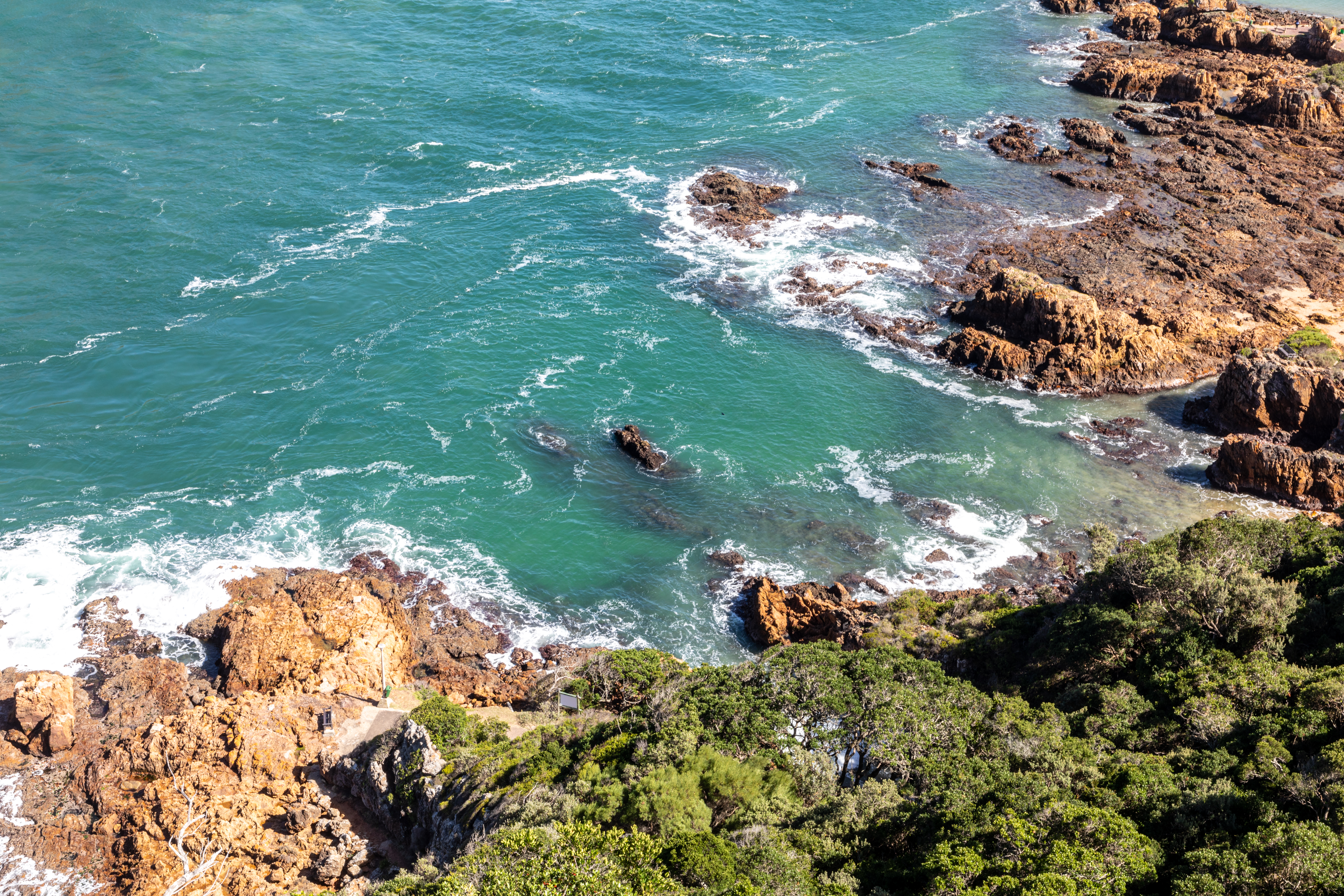
The find was made in a place that is difficult to study: a tiny coastal outcrop, roughly 40 metres long and five metres wide, much of it covered by high tide twice a day. The team had hoped they might find a theropod tooth like one discovered in nearby rocks in 2017. Instead, Linda Helm noticed tracks. Further examination revealed dozens of probable impressions, some on exposed rock surfaces and others visible in cliff profiles. The modest size of the outcrop is part of the excitement. If so many traces occur in such a small window, similar Cretaceous rocks along the coast may preserve more evidence.
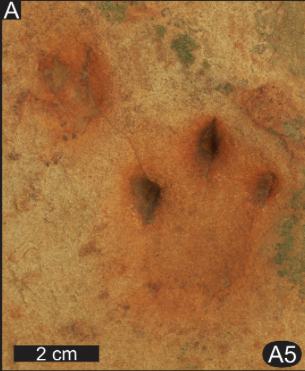
Tracks are a different archive from bones. A skeleton records a body after death; a track records a living animal in motion on a surface soft enough to receive a foot and firm enough to preserve it. The Knysna tracks were probably made by theropods, possibly ornithopods and possibly sauropods, but the authors deliberately avoided over-interpreting unclear impressions. That restraint is important. Theropod and ornithopod footprints can be hard to separate, and sauropod tracks may be large without preserving crisp toe marks. The strongest claim is not that every trackmaker is known. It is that dinosaurs were present on this coast in the Early Cretaceous.
The setting also changes the picture. Today the area is a modern shoreline of cliffs, estuary and human development. Around 132 million years ago, the researchers suggest, dinosaurs may have moved through tidal channels or point bars in a very different landscape. Southern Africa’s older Triassic and Jurassic tracks are abundant in parts of Lesotho, the Free State and the Eastern Cape, but the Drakensberg Group lava flows complicated the story. Cretaceous terrestrial deposits later formed in rift basins as Gondwana fragmented, creating scattered opportunities for fossil preservation.
The limits are clear and useful. The tracks do not provide complete bodies, exact species names or a full ecosystem. They do provide a search strategy. Non-marine Cretaceous exposures in the Western and Eastern Cape deserve systematic exploration for more tracks and skeletal remains. The hopeful lesson is not that one site rewrites everything alone, but that a quiet intertidal rock can turn absence into a testable question.
For readers, the discovery is a reminder that fossil history is shaped by exposure as much as extinction. Rock must survive, appear at the surface and be noticed before it can become evidence. A changing tide on the Western Cape can therefore matter as much as a laboratory, because it briefly reveals the pages on which ancient animals wrote by walking.