Why Montana’s Bergstrom bison site went quiet about 1,100 years ago
At the Bergstrom site in central Montana, bison remained present after communal hunting stopped; archaeology, radiocarbon dates and creek-side paleoecology point instead to drought, water limits and changing hunting organization.
Marco Linden ·
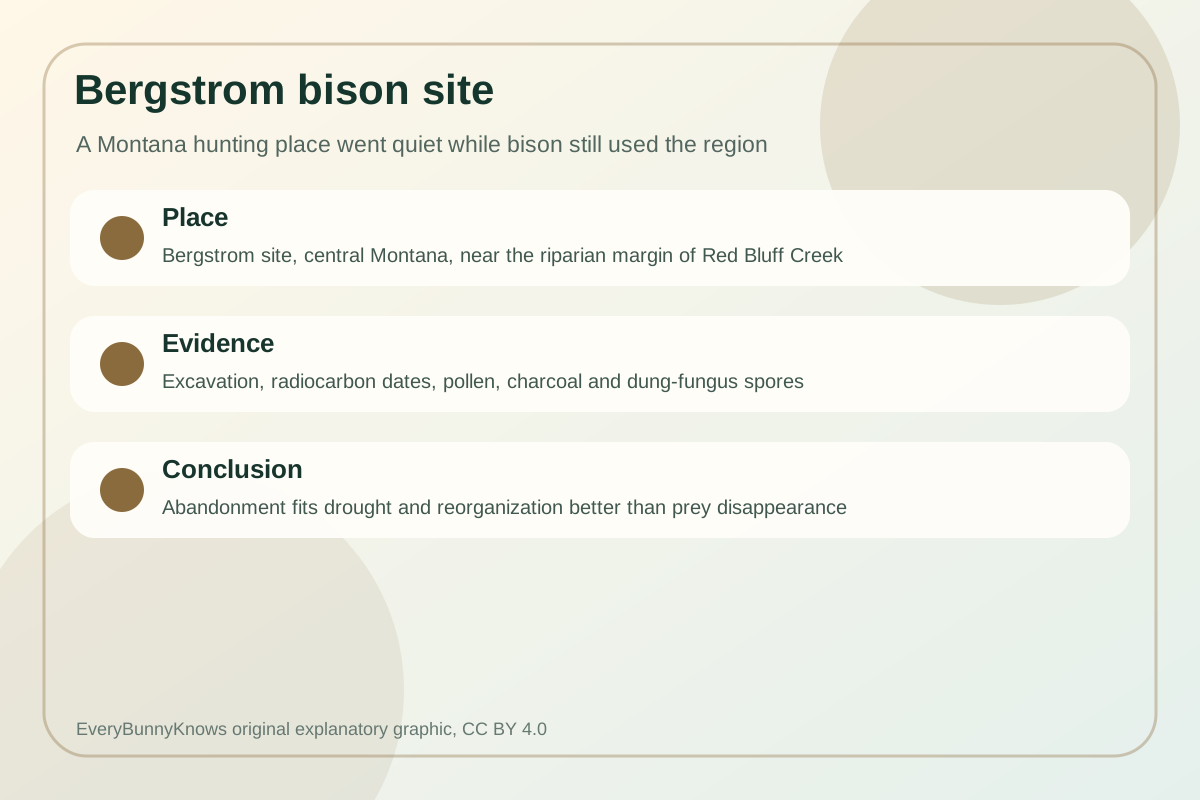
The lost Montana bison site was not solved by finding a missing herd. At the Bergstrom site in central Montana, archaeologists had a sharper puzzle: Indigenous hunters used the place intermittently for roughly seven centuries, and then archaeologically visible use stopped near 1100 calibrated years before present. The bison did not simply vanish from the region. The better explanation, published in Frontiers in Conservation Science, is that drought and changing hunting organization made a small, water-limited place less useful.
Bergstrom matters because communal bison hunting was never only about chasing animals. It required terrain that could help move Bison bison, people who could coordinate a dangerous event, and enough nearby water and labor to butcher, process, dry, store and transport large amounts of meat, fat, hide and bone. A site could be excellent under one mix of climate and social organization and awkward under another. That is the key to the 1,100-year problem.

The study joined several kinds of evidence. Excavation and AMS radiocarbon dates built the chronology of site use. Sediment cores from the riparian margin of Red Bluff Creek recorded pollen, charcoal and coprophilous fungal spores, a proxy often used to indicate large herbivores nearby. Regional drought reconstructions, including summer Palmer Drought Severity Index records, added a wider climate frame. The result was not a picture of ecological collapse. Local vegetation looked broadly stable, fire activity was low, and large-herbivore indicators persisted after the site was abandoned.
That finding shifts the mechanism. If bison were still present, abandonment is less likely to mean simple prey scarcity. The authors argue instead for convergence of constraints. Severe, multi-decade droughts could reduce the processing water available at a hydrologically marginal place. At the same time, hunting systems may have been moving toward larger, more infrastructure-intensive communal operations at topographically stronger sites. In that setting, Bergstrom did not need to become empty of animals to become a poor choice for people.

The limits deserve care. The study does not speak for every Indigenous community or every bison-hunting tradition on the Plains, and it should not turn a living cultural history into a single environmental cause. Archaeology can show deposits, dates, proxies and plausible constraints; it cannot recover every decision, ceremony, conflict, alliance or teaching that shaped use of a place. The phrase “abandonment” also means archaeologically visible use stopped, not that people lost knowledge of the landscape. The authors’ evidence is strongest at the scale they measured: one small site, nearby riparian creek records and regional bison and drought datasets.
The useful lesson is that human ecology is rarely a one-factor story. Bison abundance, drought, water access, processing labor, social coordination and site design all had to fit together. When that fit changed, people could reorganize rather than simply fail. For modern readers, Bergstrom offers a precise kind of hope: past societies were not passive victims of climate. They made choices within constraints, shifted effort to better-suited places and kept regional bison hunting alive even as one small site went quiet.