Inside the social-media black box
Recommendation systems rank posts through signals, prediction models, product rules and safety filters. Understanding the black box means testing objectives, data access and limits — not treating AI as magic.
Hana Meridian ·
A social-media feed can feel like a window chosen by an invisible machine. One post appears, another disappears, a rumor accelerates and a careful correction stalls. Calling that system a black box is understandable, because outsiders rarely see the full model, data, experiment history or policy rules behind a feed. But the box is not mystical. Recommendation systems are engineered pipelines, and their most important choices can be named, measured and challenged.
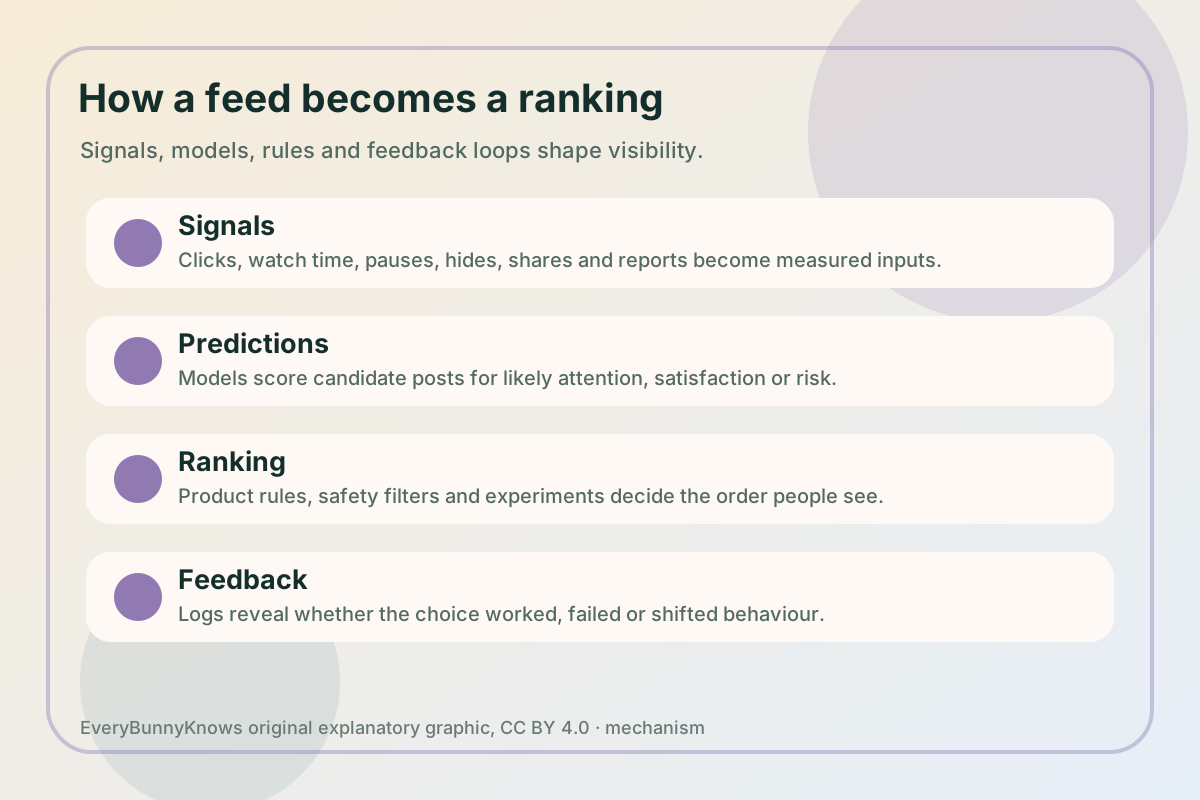
The mechanism usually begins with a candidate pool. A platform cannot score every post on the internet for every user, so it first gathers plausible items from followed accounts, similar creators, trending topics, ads or posts that resemble earlier behaviour. Then the ranking system turns observations into signals: clicks, watch time, pauses, likes, replies, shares, hides, reports, follows, device settings and freshness. A model predicts outcomes for each candidate, such as whether someone will watch, comment, leave satisfied, report the post or keep using the app. Around that model sit product rules, advertising rules, safety classifiers, account-quality scores and experiments. The final feed is not a neutral river of all available posts; it is a ranked selection produced by many adjustable decisions.
This matters because the objective is not the same thing as public value. A system optimized mainly for predicted engagement may learn that novelty, anger, fear, identity conflict or extreme claims hold attention. A safety layer may reduce some abuse while still missing coded language, local context, satire or fast-moving events. A creator may depend on algorithmic reach for income without knowing whether a drop came from audience fatigue, a policy change, a model update or an experiment. Researchers may see broad social effects but lack the logs needed to test cause and effect. The black box affects culture, politics, mental health, journalism and small businesses because ranking has become social infrastructure.
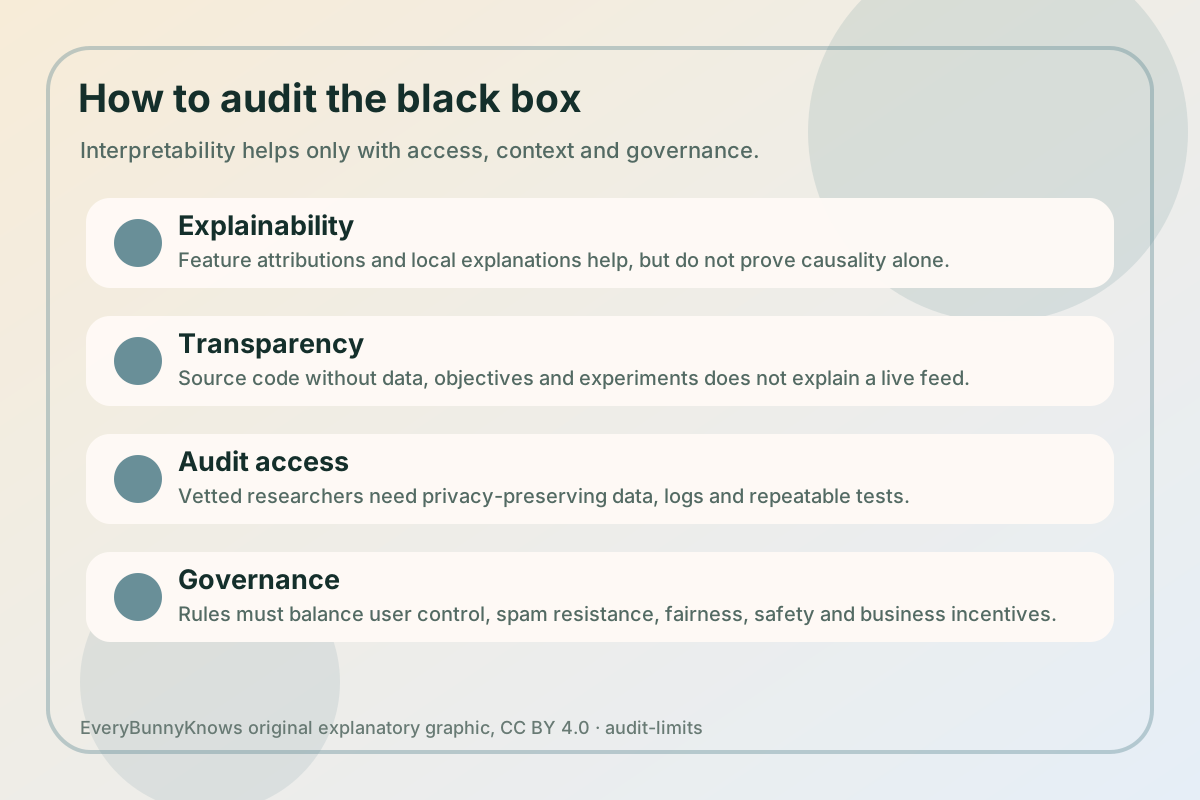
Opening the box therefore does not mean posting a million lines of source code online. Source code alone would not explain a live platform, because the behaviour depends on training data, objectives, feature definitions, enforcement decisions, A/B tests and constant feedback from users and spammers. Complete disclosure could also help manipulators game the system. Better transparency is more specific: meaningful reports about ranking changes, libraries of ads and recommender parameters, privacy-protecting access for vetted researchers, reproducible audit questions, and records of how high-risk systems were tested before and after deployment. Interpretability tools can show which features influenced a particular prediction, but they are approximations; they do not automatically prove why a society-level outcome occurred.
Users need controls that match this reality. A chronological feed, topic filters, reset buttons, ad explanations, limits on recommendations from untrusted accounts and clearer labels for major ranking modes can make the system less opaque. None of those controls removes responsibility from the platform, because most people cannot audit a machine-learning pipeline while reading news or watching a video. The practical standard is governance: define the objective, log changes, measure harms, protect privacy, let independent experts test claims and give users meaningful ways to refuse a ranking mode.
The hopeful lesson is modest. The feed is not fate, and the black box is not a monster outside human control. It is a system of signals, targets, filters and incentives that can be documented badly or well. If platforms, regulators and researchers treat recommender systems as infrastructure, society can ask sharper questions than why the machine is mysterious. It can ask who chose the target, who measured the damage, what trade-offs were accepted and who is allowed to change course.