The Clocks That Keep the Internet Honest
Behind every message, trade, map, and login sits a quiet discipline of synchronized clocks that lets the internet agree on what happened first.
Matyáš Král ·

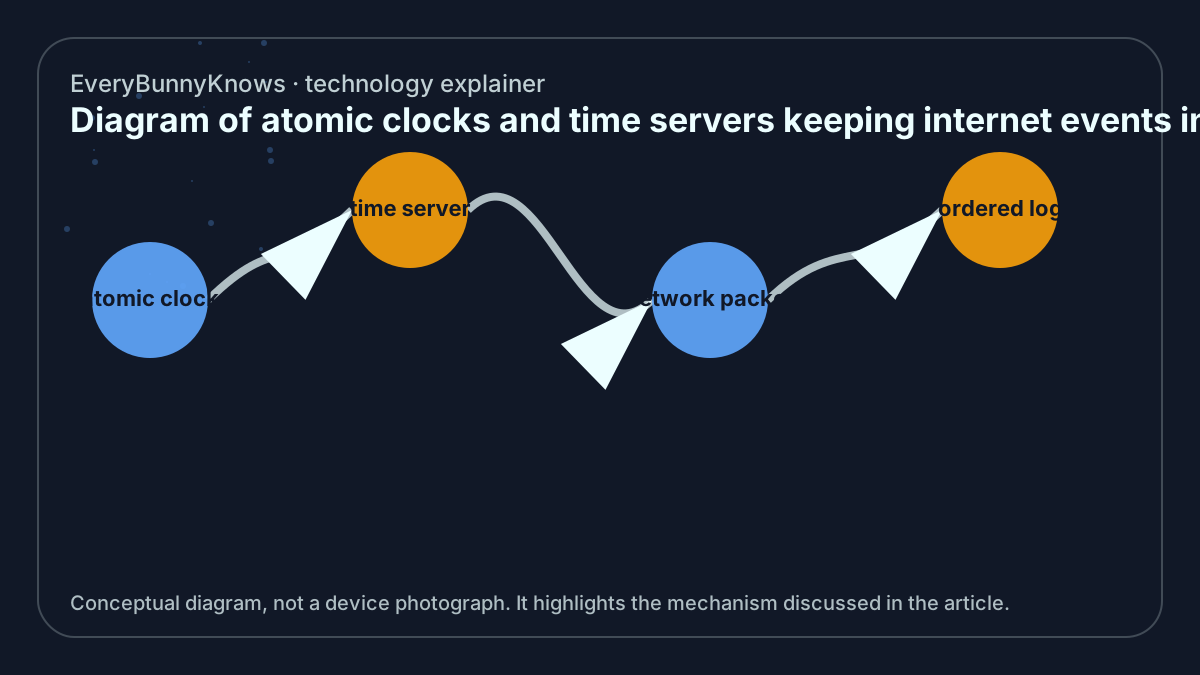
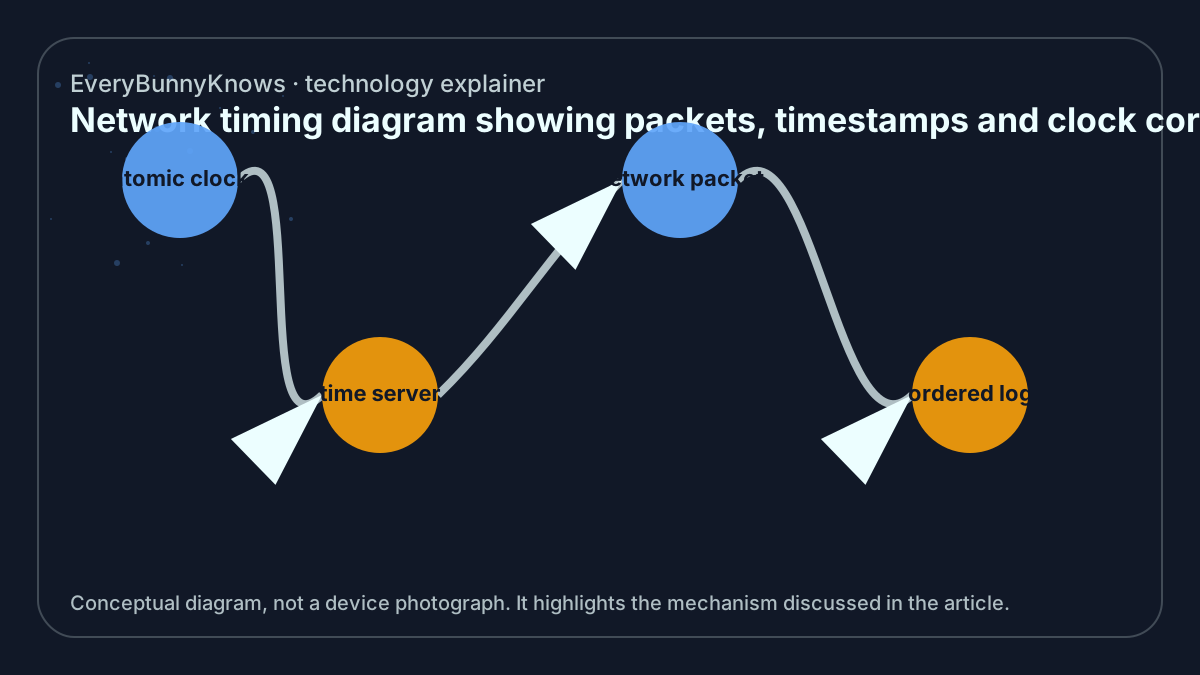
The internet appears to be a geography of cables, towers, routers, and glowing screens. Less visibly, it is also a civilization of clocks. Every bank transfer, database update, security certificate, chat message, ride-share arrival, and satellite-guided map depends on machines agreeing, with sufficient precision, on the order of events. Time online is not as simple as asking one perfect clock. Signals take time to travel. Servers drift. Laptops sleep and wake confused. Data centers sit in different countries under different power grids and weather. To keep the system coherent, networks use protocols that compare clocks, estimate delays, and gently discipline wandering seconds back into line. The Network Time Protocol, created in the early internet era, is one of those quiet inventions that became infrastructure by being boring enough to trust. It lets computers consult layers of time sources, from ordinary servers up to machines linked with atomic clocks and satellites. Its work is humble: shave errors, notice delays, choose reliable sources, and keep disagreement small. When time fails, the consequences can feel strangely supernatural. Files appear older than the changes that created them. Logs tell events in the wrong order. Authentication breaks because a certificate seems not yet valid or already expired. In finance, science, aviation, and distributed databases, milliseconds can become evidence. The internet does not merely move information; it arranges events into a believable order. That order is maintained by protocols few users will ever meet, watched by engineers who know that civilization often depends on dull precision. The web feels instantaneous because a hidden chorus of clocks is constantly negotiating what now means. The internet appears to be a geography of cables, towers, routers, and glowing screens. Less visibly, it is also a civilization of clocks. Every bank transfer, database update, security certificate, chat message, ride-share arrival, and satellite-guided map depends on machines agreeing, with sufficient precision, on the order of events. Time online is not as simple as asking one perfect clock. Signals take time to travel. Servers drift. Laptops sleep and wake confused. Data centers sit in different countries under different power grids and weather. To keep the system coherent, networks use protocols that compare clocks, estimate delays, and gently discipline wandering seconds back into line. The Network Time Protocol, created in the early internet era, is one of those quiet inventions that became infrastructure by being boring enough to trust. It lets computers consult layers of time sources, from ordinary servers up to machines linked with atomic clocks and satellites. Its work is humble: shave errors, notice delays, choose reliable sources, and keep disagreement small. When time fails, the consequences can feel strangely supernatural. Files appear older than the changes that created them. Logs tell events in the wrong order. Authentication breaks because a certificate seems not yet valid or already expired. In finance, science, aviation, and distributed databases, milliseconds can become evidence. The internet does not merely move information; it arranges events into a believable order. That order is maintained by protocols few users will ever meet, watched by engineers who know that civilization often depends on dull precision. The web feels instantaneous because a hidden chorus of clocks is constantly negotiating what now means. The internet appears to be a geography of cables, towers, routers, and glowing screens. Less visibly, it is also a civilization of clocks. Every bank transfer, database update, security certificate, chat message, ride-share arrival, and satellite-guided map depends on machines agreeing, with sufficient precision, on the order of events. Time online is not as simple as asking one perfect clock. Signals take time to travel. Servers drift. Laptops sleep and wake confused. Data centers sit in different countries under different power grids and weather. To keep the system coherent, networks use protocols that compare clocks, estimate delays, and gently discipline wandering seconds back into line. The Network Time Protocol, created in the early internet era, is one of those quiet inventions that became infrastructure by being boring enough to trust. It lets computers consult layers of time sources, from ordinary servers up to machines linked with atomic clocks and satellites. Its work is humble: shave errors, notice delays, choose reliable sources, and keep disagreement small.