The First Primates May Have Evolved in the Cold, Not the Tropics
Fossil-climate modelling suggests some early primate relatives may have begun in cold, seasonal North America, a careful hypothesis that reframes primate origins without proving hibernation directly.
Elena Moss ·
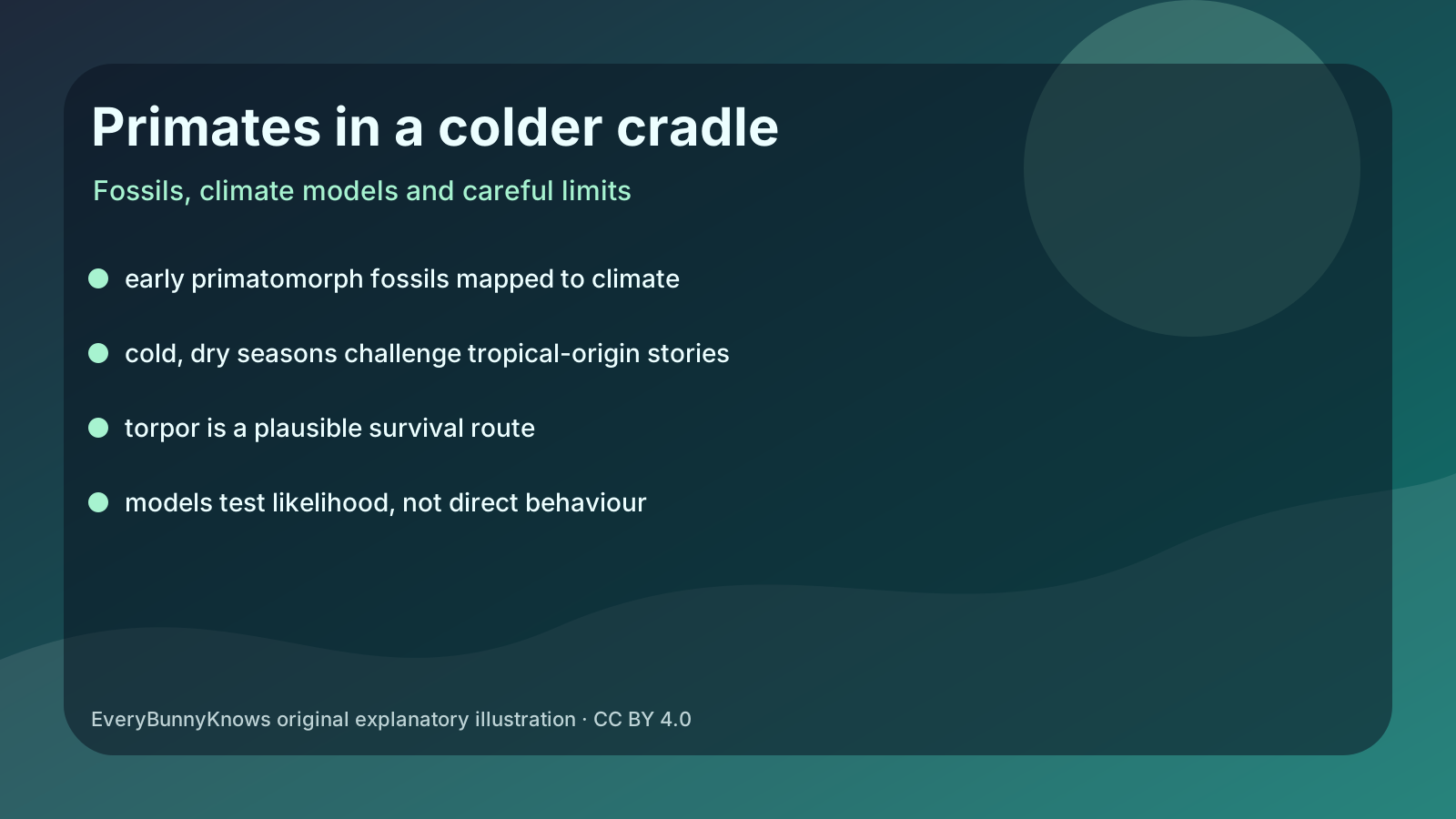
The most surprising part of the new primate-origin story is not that early primates were adaptable. It is where that adaptability may have begun. A 2025 study in Proceedings of the National Academy of Sciences, highlighted by the University of Reading and Nature, used fossil occurrences and reconstructed climate niches to argue that some of the earliest primate relatives may have evolved in cold, dry, strongly seasonal parts of North America rather than in the warm tropical forest setting that has long framed the popular story of primate beginnings.

The mechanism is ecological filtering. Small tree-climbing mammals living through long, food-poor seasons would have faced different pressures from animals in year-round tropical abundance. Cold winters, dry intervals and changing plant communities could have favoured flexible diets, sheltered nesting, reduced activity and, in some lineages, torpor-like metabolic slowing. Modern dwarf lemurs show that a primate can use hibernation or deep torpor, so the idea is biologically possible even if the fossil record cannot show a sleeping animal directly.
The study’s important shift is methodological. Instead of beginning with the assumption that primates must have started in the tropics, researchers asked what climates are associated with known fossil lineages and how those associations changed as Earth warmed and cooled. That kind of niche modelling can reveal a pattern that individual teeth and jaws cannot show alone: early primates and their close relatives were not simply passengers in lush forests, but animals whose expansion may have been tied to climate swings.

This does not erase forests from primate evolution. Grasping hands, vision, balance and life in branches still matter deeply to later primates, and many fossils come from environments with trees. The point is narrower and more interesting: the cradle may have included seasonal woodland, cooler latitudes and ecological stress. Warmth may have helped later dispersal, while cold tolerance helped some ancestors persist until warmer intervals opened new routes.
The limits are substantial. Fossil sites are unevenly sampled, climate reconstructions have uncertainty and the earliest primate family tree is still debated. A tooth or jaw can identify a lineage and hint at diet, but it cannot prove whether an extinct animal hibernated, nested in tree hollows or migrated locally. The result is best read as a model-supported hypothesis that changes where scientists look and what questions they ask.
That distinction matters for public trust. A cold-origin model does not turn every early primate into an Arctic specialist, and it does not make living tropical primates less important for understanding anatomy, behaviour or conservation. It simply widens the set of environments that could have shaped the group before the familiar monkey, ape and lemur branches existed. In paleontology, that kind of revision is useful because it points field teams toward under-sampled rocks and encourages climate scientists to refine the background conditions around each fossil.
For readers, the payoff is a richer picture of evolution. Origins are not always comfortable nurseries. Sometimes a lineage becomes successful because its ancestors survived awkward, marginal conditions before a warmer world let them spread. If new fossils from high-latitude North America or better climate models support the pattern, the first chapters of primate history may look less like an endless rainforest and more like a seasonal landscape where flexibility was the decisive trait.