Nature

The Forest That Thinks

A concrete look at forest signalling without metaphor: University of British Columbia and Suzanne Simard anchor the story, while 1 gram of soil and 100 meters show the scale readers should keep in mind.

Editorial Observer ·

The Forest That Thinks

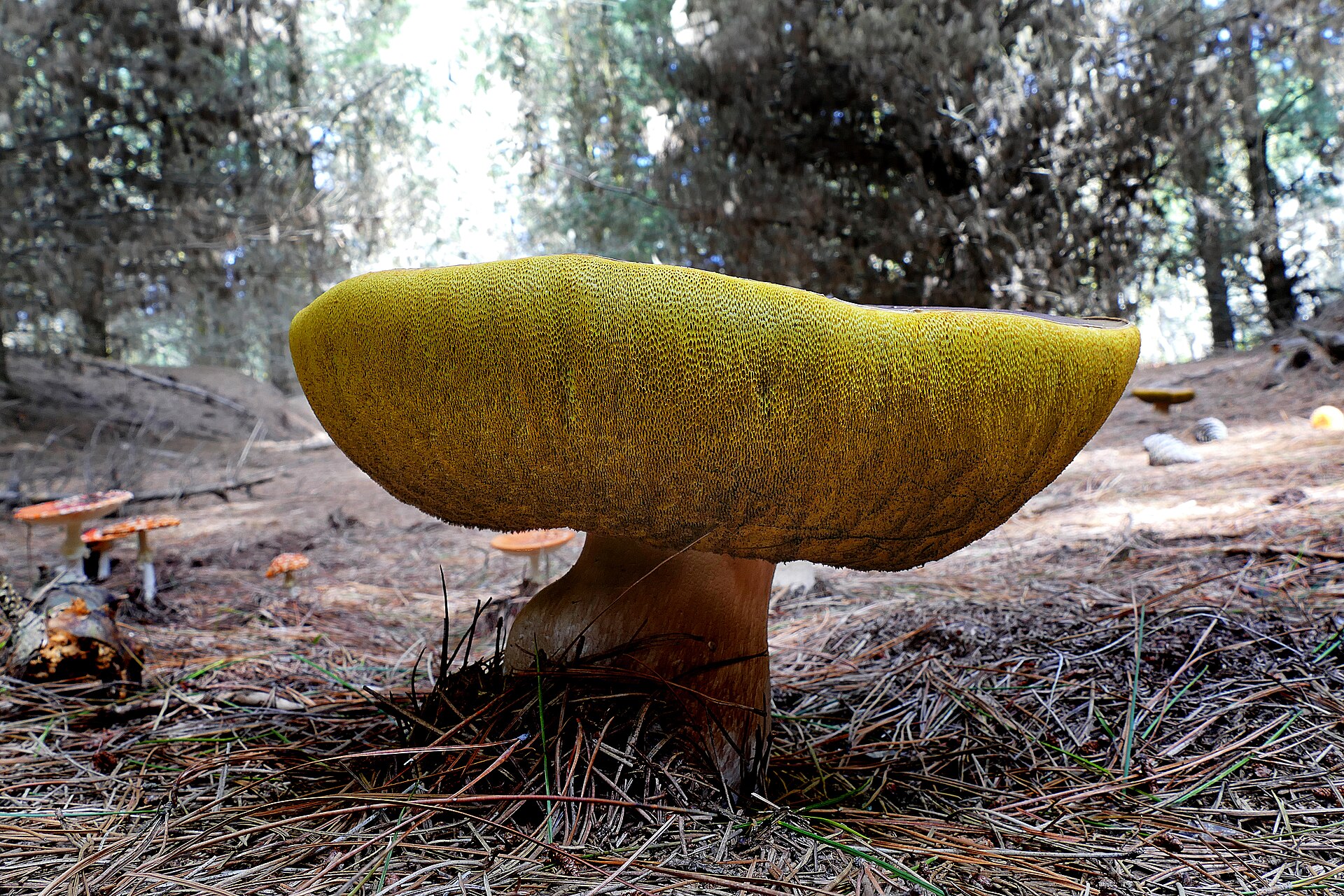
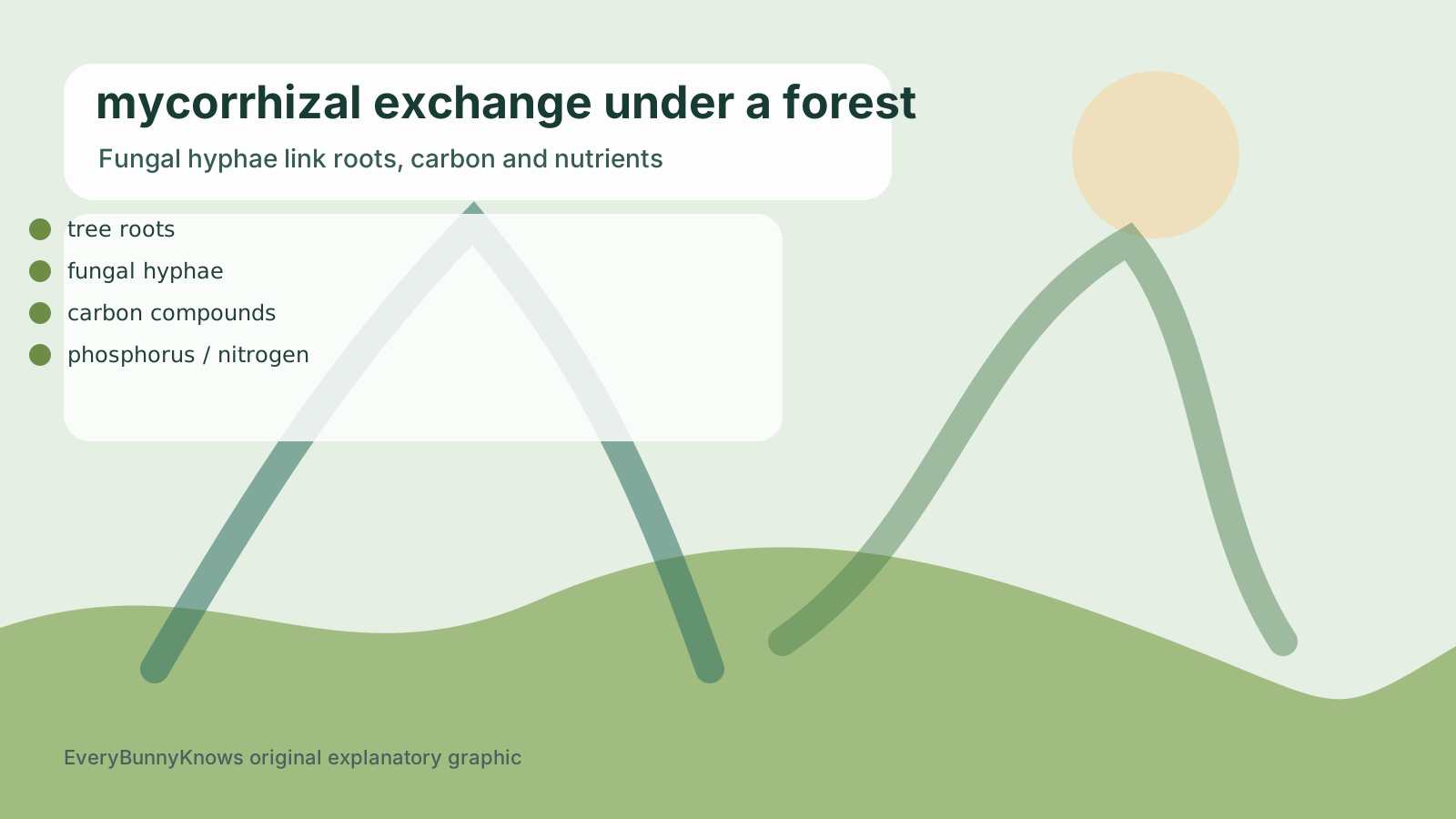
To walk through the temperate rainforests of British Columbia is to feel a sense of ancient communion. The air is thick with the scent of pine and damp earth. Moss hangs from the branches of giant cedars and Douglas firs like the beards of old men. It is a world that feels complete in itself, a self-contained ecosystem that has evolved over millennia. But beneath the surface, hidden from our eyes, lies a secret network, a bustling underground city of information and exchange that is only now being brought to light. This is the world that Dr. Suzanne Simard has spent her life exploring, a world that she has controversially dubbed the “wood-wide web.”![Bolete fungi. (51151298267). Photo: Bernard Spragg. NZ from Christchurch, New Zealand, Wikimedia Commons, Public domain](https://images.ctfassets.net/80ca4ljo2d4c/6bMsz5jTz6vgPlaeDiR1oo/d7cdc993bf5134f1c352c0230ccdca00/the-forest-that-thinks-body-1.jpg) Simard, a professor of forest ecology at the University of British Columbia, has pioneered a field of research that is as radical as it is profound. Her work has shown that trees in a forest are not isolated individuals, competing for resources, but are connected to each other through a vast network of mycorrhizal fungi. These fungi, which live in a symbiotic relationship with the roots of the trees, act as a kind of biological internet, allowing trees to share resources, send distress signals, and even nurture their young. A mother tree, the oldest and largest in the forest, can be connected to hundreds of other trees, and will shuttle carbon, water, and nutrients to seedlings growing in the shade, giving them a better chance of survival. This is not just a one-way flow of altruism. The network is a complex, dynamic system of an almost economic nature. Trees can recognize their own kin, and will preferentially share resources with them. They can also send warning signals through the network when they are attacked by insects or disease, allowing neighboring trees to mount their defenses. It is a system of cooperation and reciprocity that challenges the Darwinian notion of nature as a purely competitive struggle for existence. The forest, in Simard’s view, is not a collection of individuals, but a single, intelligent organism, a community that thrives on collaboration. Simard’s research has been met with both acclaim and skepticism. Some scientists have criticized her for anthropomorphizing the forest, for using terms like “communication” and “intelligence” to describe what they see as simple biochemical processes. But for Simard, these terms are not just metaphors. They are accurate descriptions of the complex, adaptive behaviors she has observed. To deny the intelligence of the forest, she argues, is to cling to an outdated, mechanistic view of nature. It is to miss the forest for the trees.![Byron Hamstead hauls trees into the forest (37950051861). Photo: USFWS/Southeast, Wikimedia Commons, Public domain](https://images.ctfassets.net/80ca4ljo2d4c/2jZ6GvmSb5ogsmdSEt9t2j/e36dff256de02ec263077d79f0ab799a/the-forest-that-thinks-body-2.jpg) The implications of Simard’s work are far-reaching. If trees can communicate and cooperate, then clear-cutting a forest is not just a matter of harvesting timber. It is an act of violence, a severing of a complex social network. It is the equivalent of destroying a community, with all its intricate relationships and shared history. This understanding has profound consequences for the way we manage our forests, and for our relationship with the natural world as a whole. It suggests that we need to move from a mindset of extraction and exploitation to one of stewardship and respect. Her research also has a deeply personal dimension for Simard. She comes from a family of loggers, and grew up in the forests of British Columbia. Her work is driven by a deep love for these ancient ecosystems, and a desire to understand them on their own terms. She has spent countless hours in the forest, conducting experiments that are both ingenious and back-breaking. She has injected trees with radioactive isotopes to track the flow of carbon through the network, and has painstakingly mapped the fungal connections between individual trees. Her work is evidence of the power of curiosity and the importance of on-the-ground observation. To see the forest through Simard’s eyes is to see a world transformed. The silent, static trees become actors in a drama of epic proportions. The soil beneath your feet becomes a vibrant, bustling metropolis. The forest becomes a place of conversation, of negotiation, of life and death played out on a scale that is both humbling and awe-inspiring. It is a vision of nature that is not just more complex than we imagined, but more beautiful. Whether the scientific community will fully embrace Simard’s vision remains to be seen. Her ideas are still on the cutting edge of ecological research, and there is much that we still do not understand about the wood-wide web. But her work has already changed the conversation, and has forced us to ask fundamental questions about the nature of life and intelligence. The forest, it seems, has a voice, and thanks to Suzanne Simard, we are finally beginning to listen.

The careful reading is ecological, not decorative. The detail matters because habitat, timing and human pressure decide whether a living system can recover or simply be admired.

A more useful way to read this story is through forest signalling without metaphor, with concrete scale attached. University of British Columbia, Suzanne Simard, Max Planck Institute and mycorrhiza give the subject real geography and evidence rather than a floating mood. The numbers matter too: 1 gram of soil, 100 meters and 50 species mark size, time or dose, so the reader can see what is being compared.

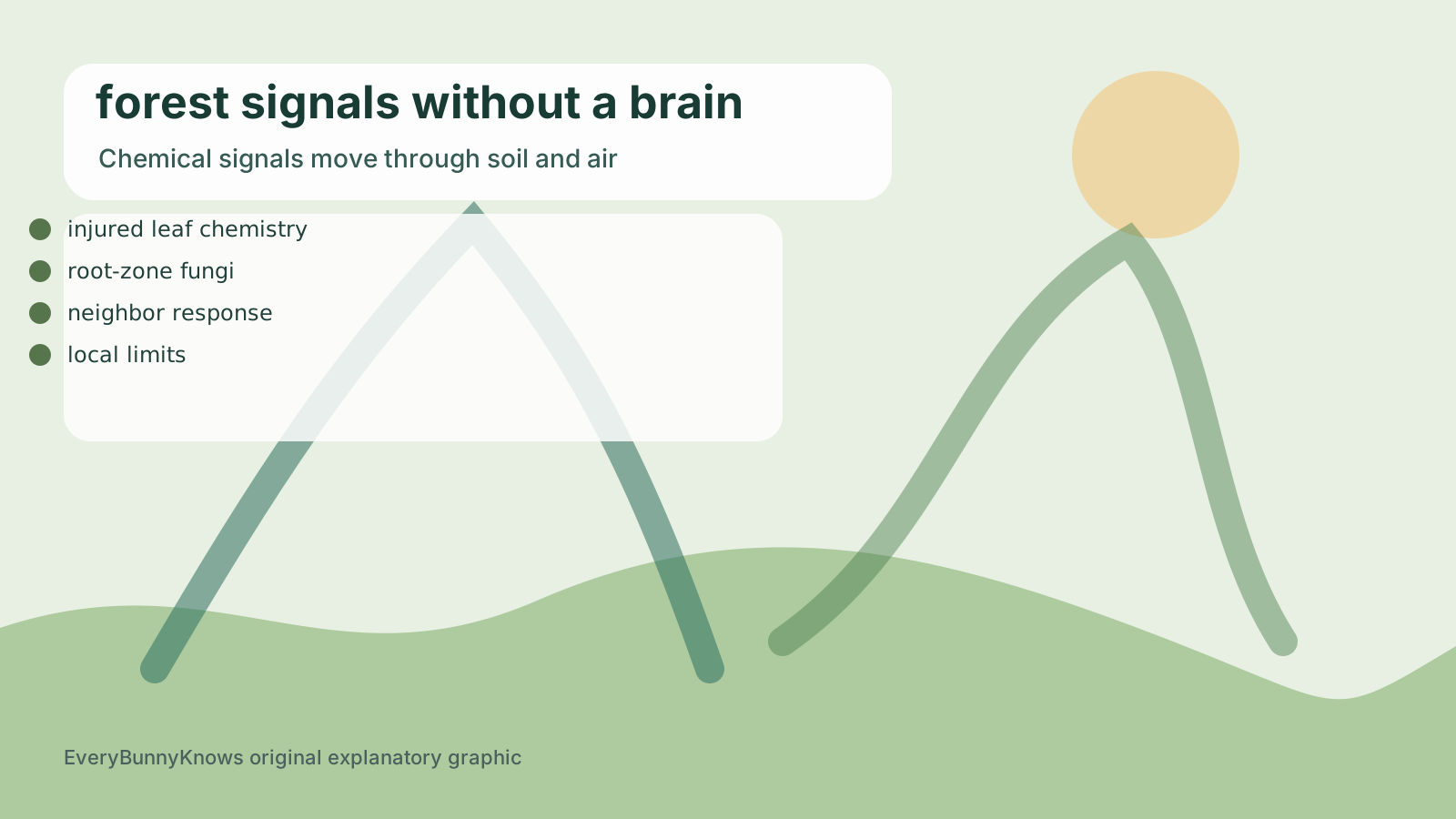
The mechanism is specific. A forest does not think like a brain; signals move through shade, roots, volatile chemicals, fungi and competition for water. That process works because small changes are measured against a baseline, then tested in a place where weather, people, materials or biology can push back. It is the difference between a pleasant claim and a useful explanation.

The limit is metaphor: calling a forest intelligent can inspire care, but management still needs measurements of soil, species, drought and fire. A careful reader should therefore ask what was measured, where the observation happened, how many cases were included, and what would count as failure. That honest boundary is what makes the hopeful part stronger: the next step is not hype, but better measurement and better decisions.