The Ghosts of the Agora
Beneath the Acropolis, the sprawling ruins of the ancient Agora are more than a marketplace. They are a blueprint for a radical experiment in self-governance, with lessons for our own turbulent times.
Mira Vale ·
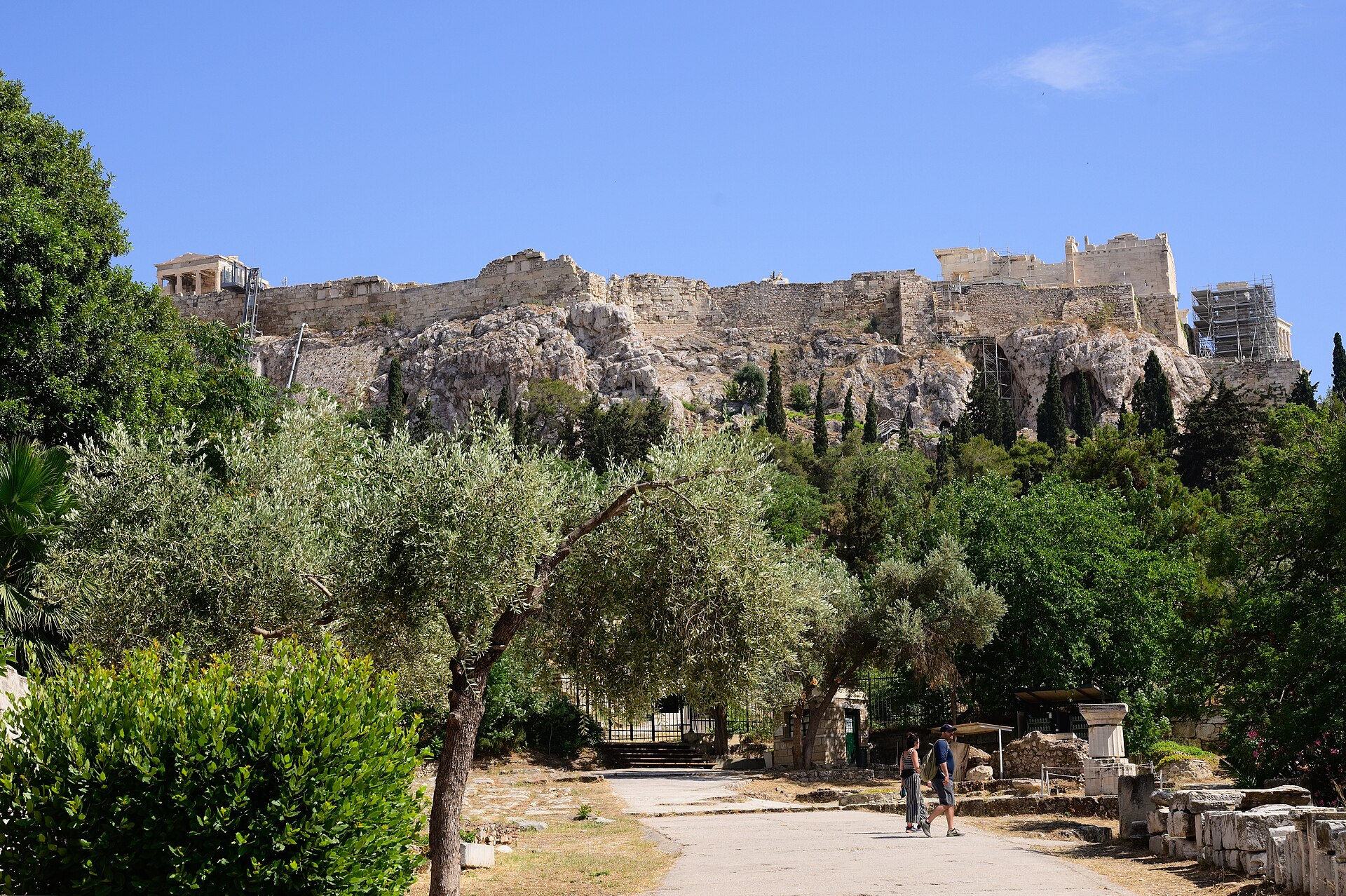
The heat in Athens comes off the marble in waves. It presses down from a cloudless sky and radiates up from the fractured stones of the Panathenaic Way, the ancient city’s main thoroughfare. Standing here, amid the scattered ruins of the Agora, the modern city hums and clatters just beyond the fence line. The rumble is not from chariot wheels, but from the ISAP electric train running in a trench dug right through the heart of the classical city, a constant, subterranean reminder of the centuries that have passed. Above it all, perched on its low hill of Kolonos Agoraios, the Temple of Hephaestus stands almost perfectly preserved, a silent witness in honey-colored stone.
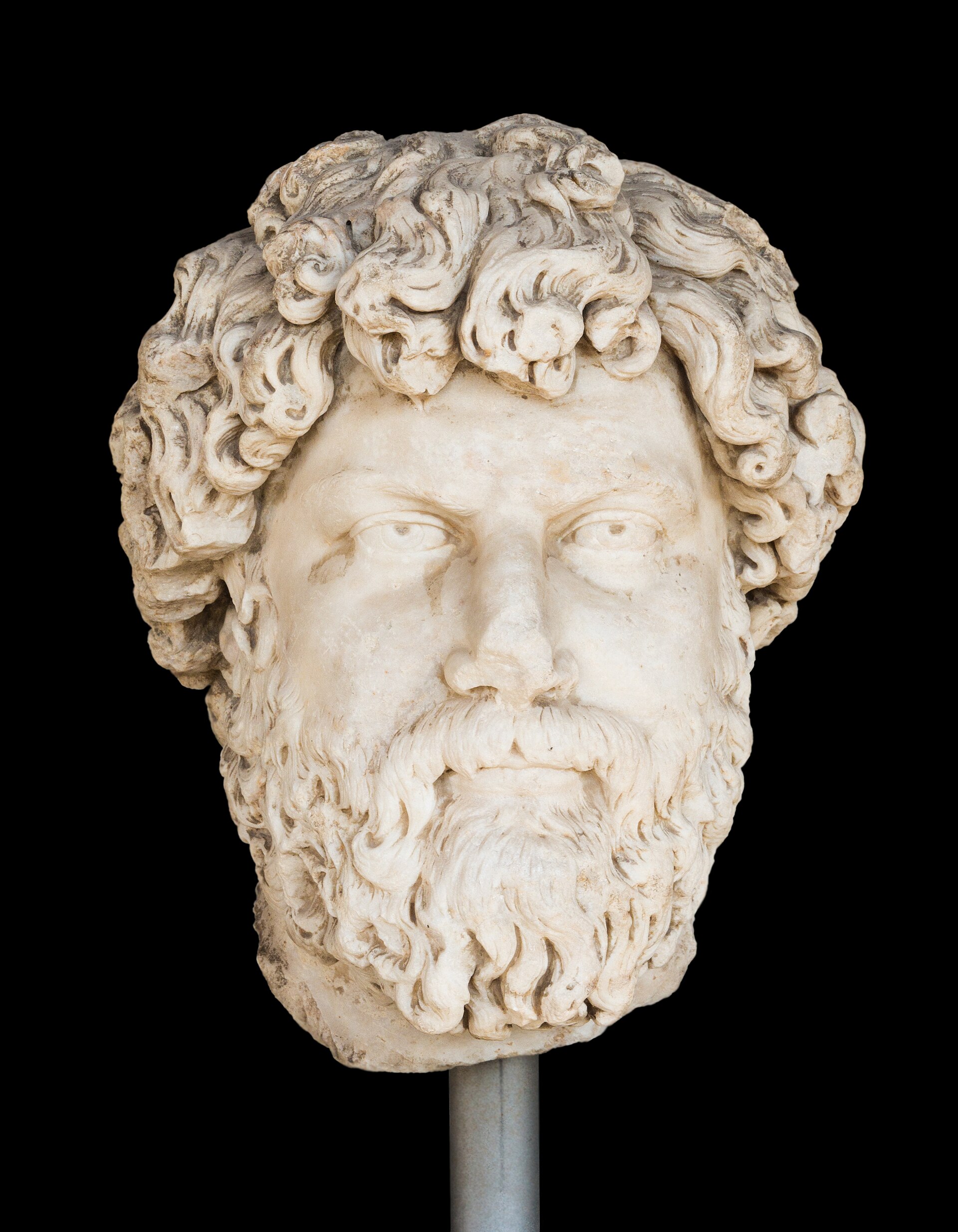 This open expanse, cupped in the valley northwest of the Acropolis, was never just a marketplace for olive oil and ceramics. It was the heart of a political idea. For nearly half a millennium, this ground was the stage for a grand, and often messy, experiment in direct democracy. To walk here is to walk through the foundational concepts of Western governance, not as abstract theories, but as lived, daily practices shaped by the very architecture and layout of the space itself. One’s gaze is inevitably drawn to the long, two-story colonnade of the Stoa of Attalos, a faithful reconstruction built in the 1950s by the American School of Classical Studies. In antiquity, its shaded porticoes were a refuge from the sun, but they were also a crucible for discourse. Here, merchants haggled, but here too, Socrates questioned the powerful, philosophers debated the nature of the good life, and ordinary citizens exchanged news and political opinion. This was the incubator of *isegoria*—the equal right of every citizen to speak their mind in the public assembly. More than just a shopping mall, the stoa was the ancient world’s most important social network, an open-access forum where public opinion was forged through face-to-face conversation. Just west of the Stoa, archaeologists uncovered the foundations of the city’s law courts. And with them, they found the ingenious tools of Athenian justice. One of the most telling is the *kleroterion*, a stone slab incised with rows of slots and fitted with a hollow tube. This was a randomization machine. Bronze tickets, or *pinakia*, bearing the names of potential jurors were placed in the slots. Black and white balls were poured into the tube; the color of the ball that emerged determined whether the citizens in that row would serve. The system was designed to eliminate bribery and cronyism, to ensure that a jury of one’s peers was truly that: a random, representative sample of the citizenry. This was the physical manifestation of *isonomia*, equality before the law. But the Athenians understood that democracy’s greatest vulnerability was the consolidation of power. Their unique, and rather brutal, defense mechanism for this was ostracism. In the Agora museum, housed within the reconstructed Stoa, one can see the humble artifacts of this process: simple shards of broken pottery called *ostraka*. Once a year, if they so chose, citizens would assemble and scratch onto one of these shards the name of a politician they deemed too powerful, too ambitious, or too dangerous to the state. If at least 6,000 votes were cast, the man with the most mentions was exiled for ten years. He did not lose his citizenship or his property, but he was removed from the political arena. This was democracy as a high-stakes immune response: a tool to expel a perceived threat before it could metastasize.
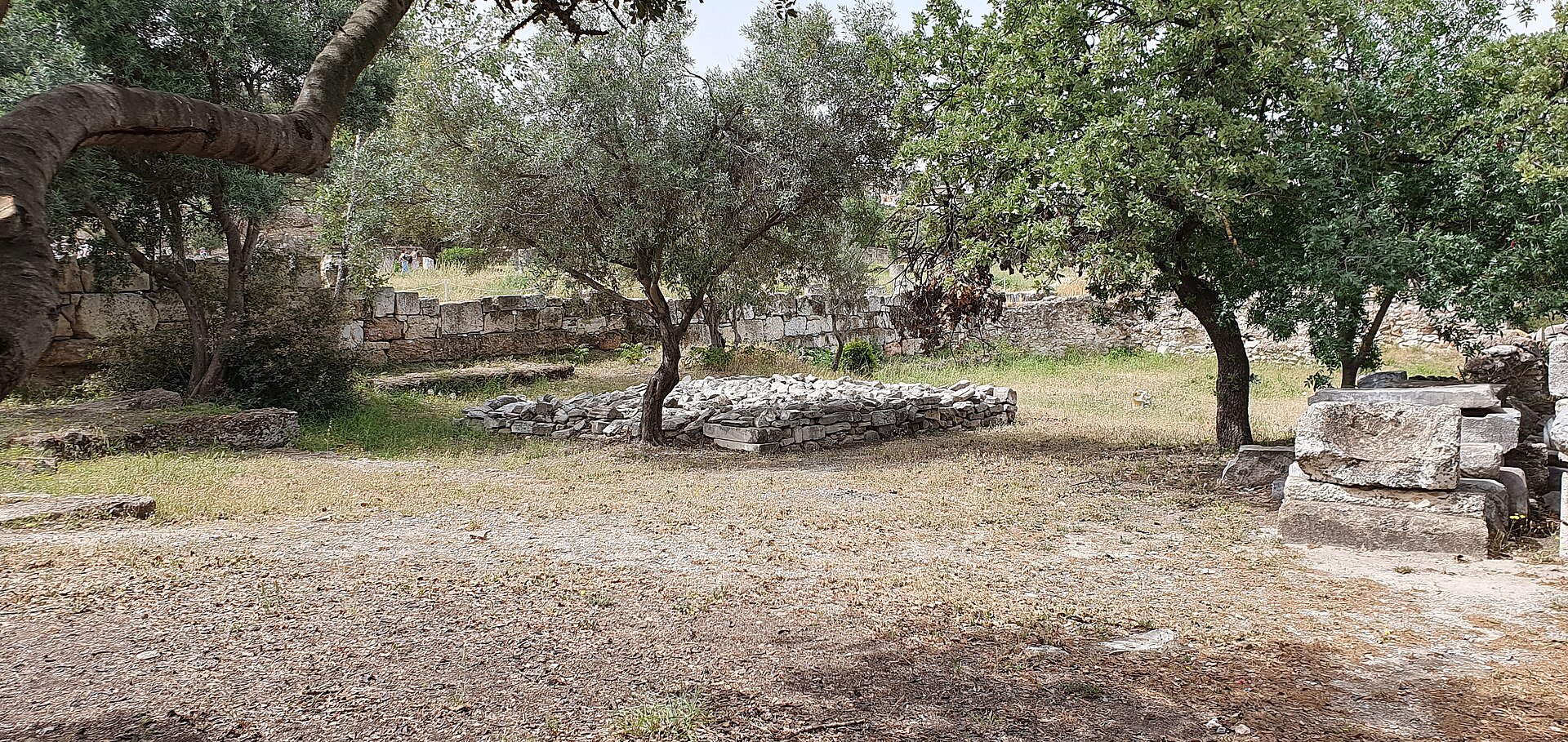 We must not romanticize this. Athenian democracy was radically exclusive. Only adult male citizens could participate. Women, a vast population of enslaved people, and resident foreigners—the *metics*—were entirely shut out of public life. The freedom of the few was built upon the bondage and exclusion of the many. The Parthenon’s gleam is shadowed by the silver mines at Laurion, where enslaved men and boys toiled in horrific conditions. Any lesson from the Agora must begin with this stark acknowledgment. Still, the demands it placed on its chosen citizens were profound. A man might be chosen by lot to serve on a jury one day and in the *Boule*, the Council of 500 that set the agenda for the city, the next. The Athenians had a word for the person who shunned public life, who focused only on their own private affairs: *idiotes*. The term was not a judgment of intelligence, but of character. It described someone who was failing to uphold their responsibility to the collective. The health of the *polis* depended on constant, active, and informed participation. This is perhaps the Agora’s most urgent echo in our own time. We live in an age of digital agoras, of social media platforms that promise connection and discourse. Yet these spaces are disembodied, often anonymous, and governed by algorithms designed to amplify outrage rather than foster understanding. The Athenian, debating under the shade of the Stoa, had to look his opponent in the eye. He had to coexist with him in the same physical space, to breathe the same dusty air, to participate in the same civic rituals the next day. This enforced a basic level of humanity that our current modes of public debate seem designed to strip away. Walking the sun-bleached paths toward the metro station, one passes the scant remains of the Bouleuterion, where the Council met. It is little more than a footprint on the ground now. The Athenian experiment eventually failed, succumbing to the pressures of war, demagoguery, and internal division. It reminds us that democracy is not a destination, but a difficult, ongoing process. It is a verb, not a noun. The ghosts of the Agora are not the spirits of Pericles or Socrates, but the spectral forms of the ideas they embodied. Equality under the law, the freedom to speak, the duty to participate, and the vigilance against tyranny. These are not artifacts to be placed in a museum. They are living principles that require their own space to breathe, their own constant tending, lest they, too, become little more than footprints in the dust.