The Waiting Room as a Health Signal
Waiting time is more than a patient annoyance. In clinics and emergency departments it can reveal triage choices, staffing pressure, communication gaps and unequal access—if it is measured carefully and not mistaken for a diagnosis of one worker or one visit.
Owen Pike ·
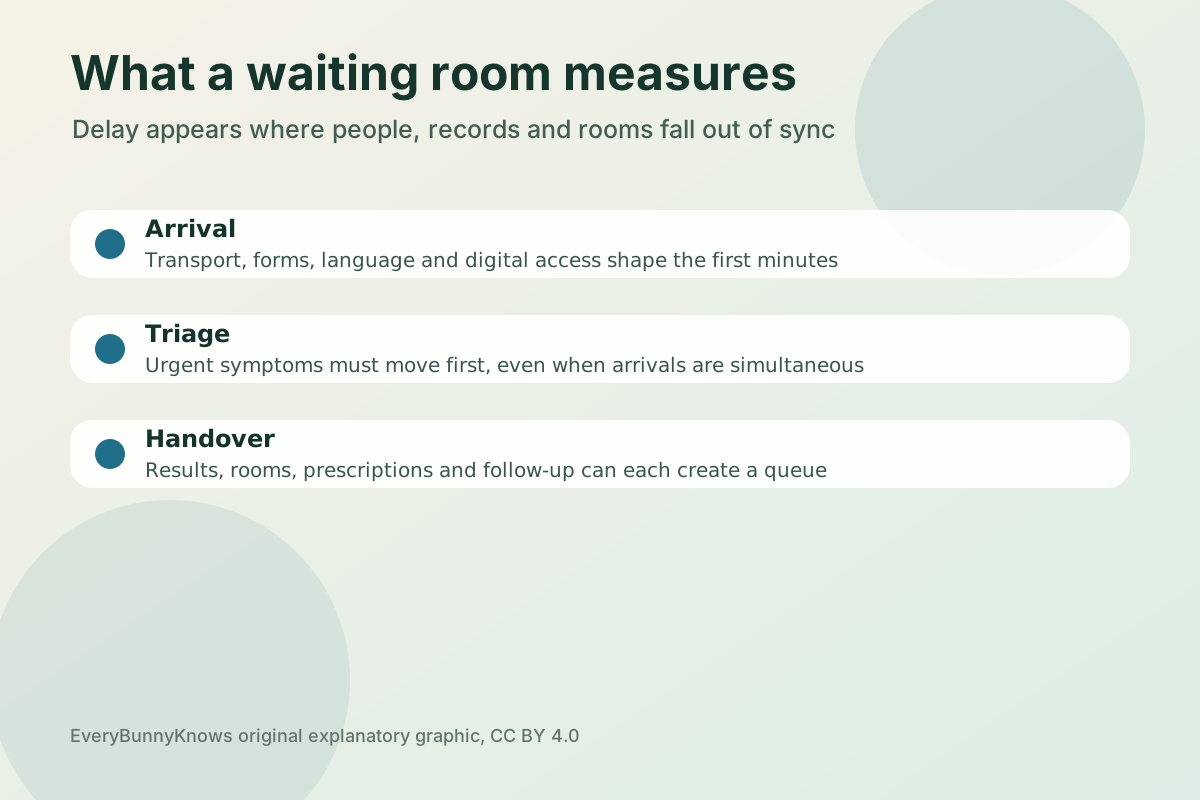
A waiting room looks ordinary: chairs, reception desk, screen, forms, perhaps a child leaning against a tired parent. In health care, that ordinary room can behave like a vital sign for the system around it. Long waits may point to staff shortages, appointment templates that do not match the real length of visits, missing test results, transport barriers, language barriers or triage rules that rightly move urgent patients ahead of people who arrived earlier.
The mechanism is flow. A clinic or hospital has to identify who has arrived, collect enough information to act safely, sort risk, place the patient in the right room, connect nurses and clinicians, document the visit and arrange prescriptions, tests or follow-up. If one step slows, the delay becomes visible in the waiting area. Emergency departments make this plain every day: possible stroke, chest pain or severe infection must be prioritised before a minor injury, even if both patients walked in at the same hour.
Measurement helps only when it is honest about what is being measured. A fifteen-minute median wait may sound acceptable while a smaller group waits two hours. A clinic may look efficient by clock time while patients with limited mobility, limited English, poor internet access or inflexible work schedules face more practical barriers than the average number shows. Patient-experience surveys used by systems such as the NHS and by quality programmes in the United States ask about access, communication and timeliness because the queue is partly an information problem, not only a chair problem.
Crowding research also warns against blaming the front desk alone. Reviews of emergency-department crowding describe input, throughput and output: how many people arrive, how quickly care can be delivered, and whether admitted patients can move to inpatient beds or community services. When the output door is blocked, the waiting room fills even if clinicians are working hard. The same logic appears in primary care when phone lines, lab portals or referral systems fail to connect.
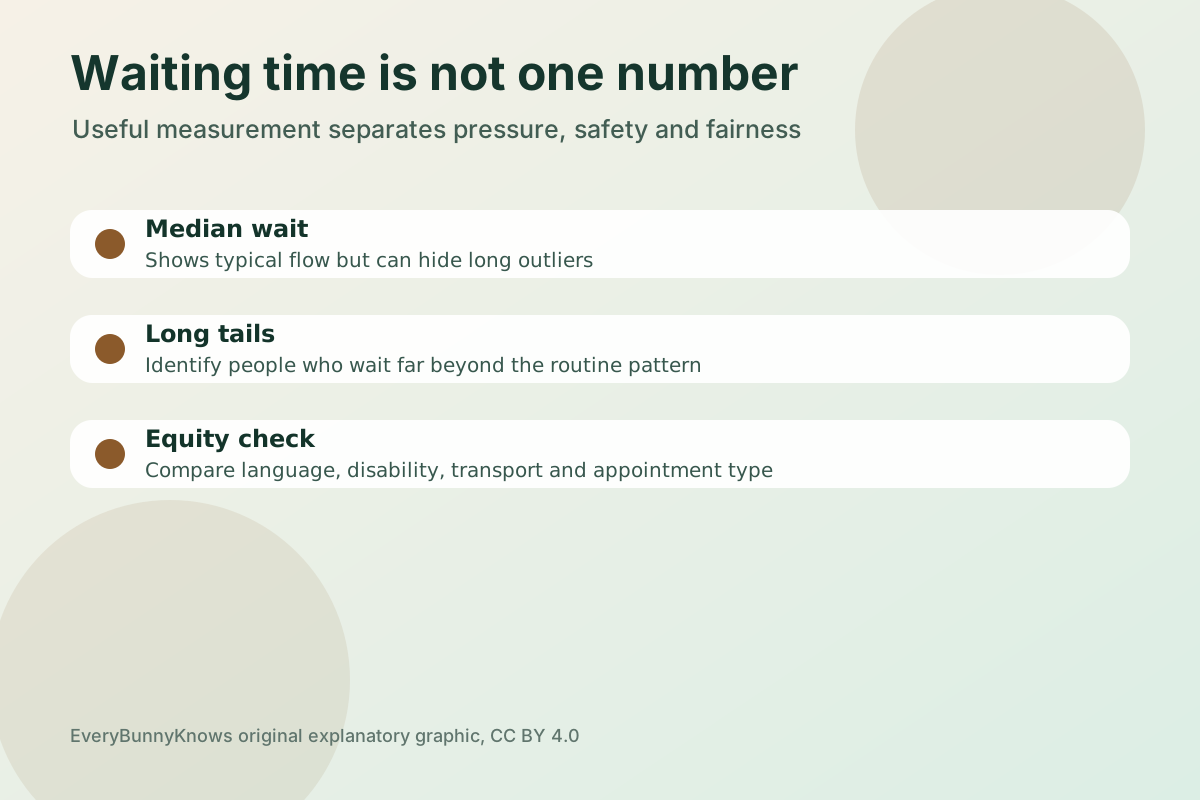
There are limits. Waiting time is a signal, not a complete diagnosis of care quality. A short wait can hide rushed communication; a long wait can reflect safe prioritisation during a surge. The useful question is not whether any waiting is morally wrong, but which waits are predictable, preventable, unsafe or unfair. For patients, the article should not become medical advice about when to leave or how to judge symptoms. Anyone worried about urgent symptoms should use local emergency guidance. For health systems, the hopeful step is practical: track waits with context, listen to patients who experience the longest delays, compare patterns across language, disability and appointment type, and redesign the points where information stops moving.