Koharalepis Shows How a Devonian Fish Helps Explain the First Steps Toward Land
Neutron and synchrotron scans of the Antarctic fish Koharalepis jarviki reveal skull features linked with surface life, air-gulping and light sensing, clarifying the watery setting before vertebrates walked on land.
Owen Pike ·
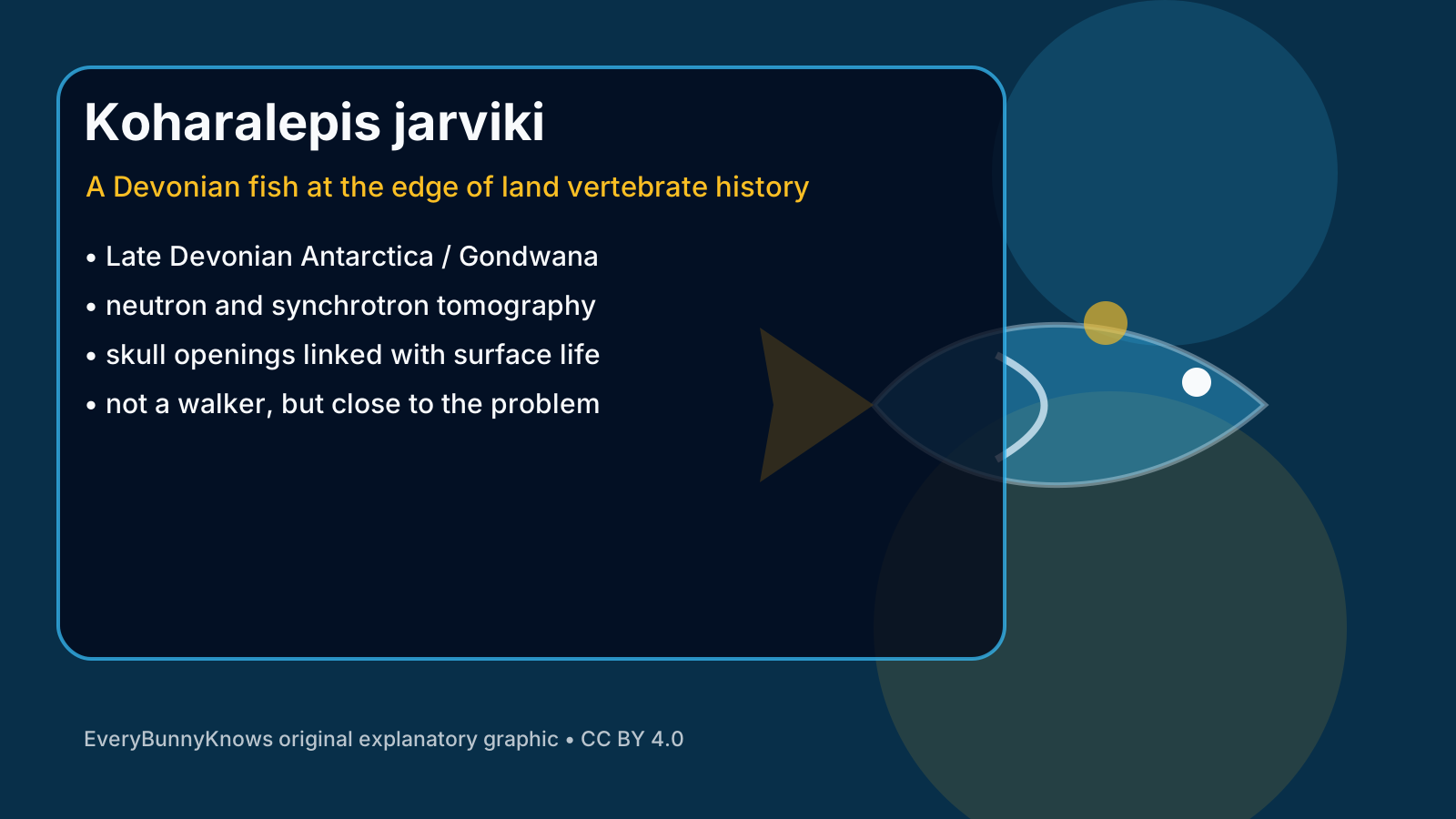
The fish in this story is Koharalepis jarviki, and that exact name matters. Koharalepis jarviki was a Late Devonian tetrapodomorph fish from Antarctica, a lobe-finned relative close to the lineage that eventually produced the first four-limbed animals on land. In 2026, Corinne Mensforth, John Long, Joseph Bevitt and Alice Clement reported new data from synchrotron and neutron tomography of its skull and braincase in Frontiers in Ecology and Evolution. The result is a more detailed view of an animal living near the water's surface about 380 million years ago, when the boundary between water and land was becoming biologically interesting.
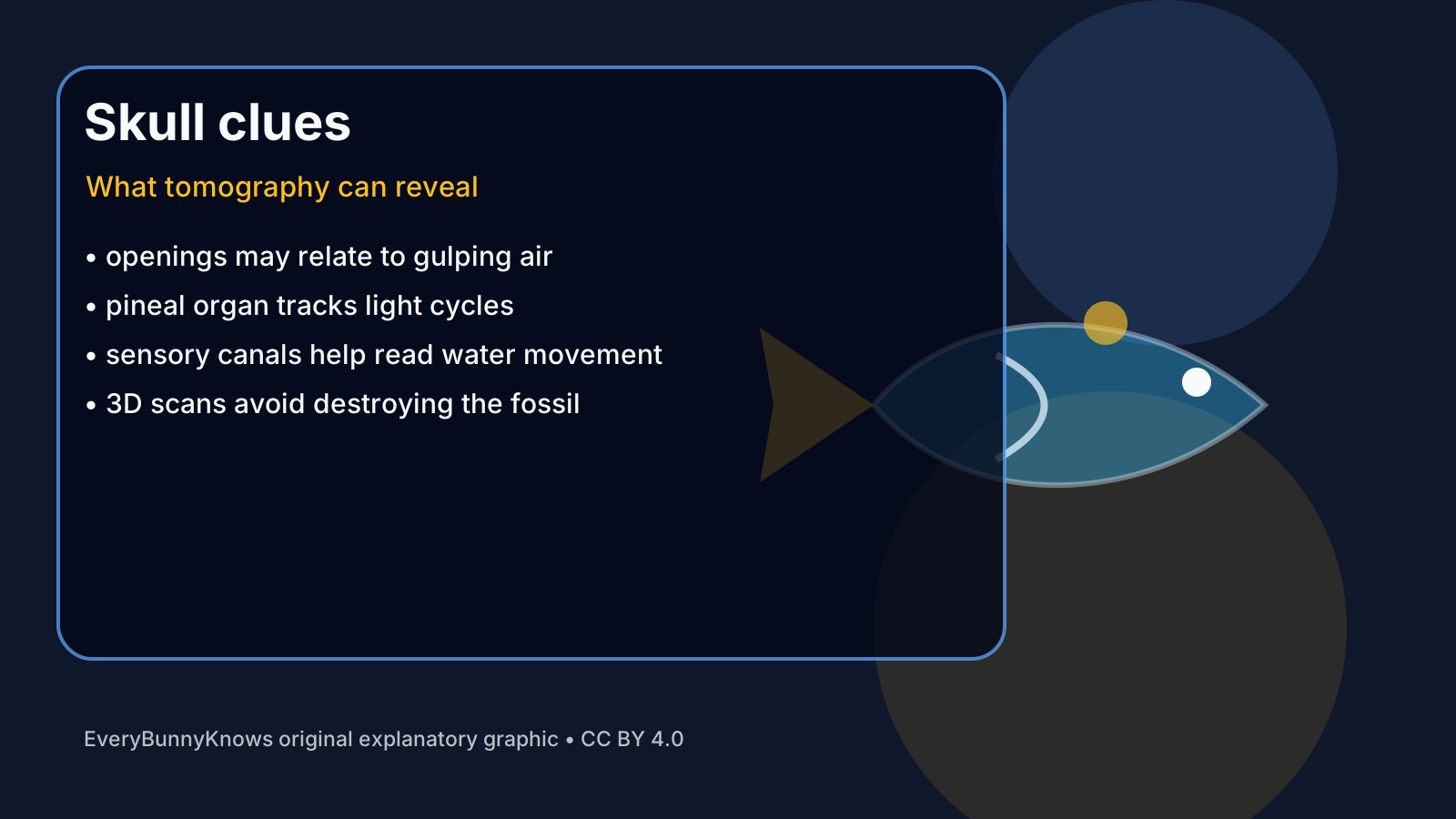
The mechanism is imaging without destruction. Fossil skulls can hold canals, cavities and delicate internal surfaces that are difficult to prepare by hand without damage. Synchrotron tomography uses intense X-rays to read density differences inside a specimen. Neutron tomography can sometimes reveal contrasts that X-rays miss, especially where minerals and fossilized tissues interact differently with neutrons. Together, the scans let researchers build a three-dimensional map of a rare skull rather than slicing it apart.
What they found makes Koharalepis useful for thinking about the water-to-land transition, but not because it was already walking. Public summaries of the study describe features suited to life near the surface, including skull openings that may have helped the fish gulp air and a pineal opening connected with sensing light and day-night cycles. The animal, estimated at roughly a meter long, was probably an ambush predator of smaller animals. Small eyes suggest it may have relied strongly on other senses as it hunted in Devonian waters.
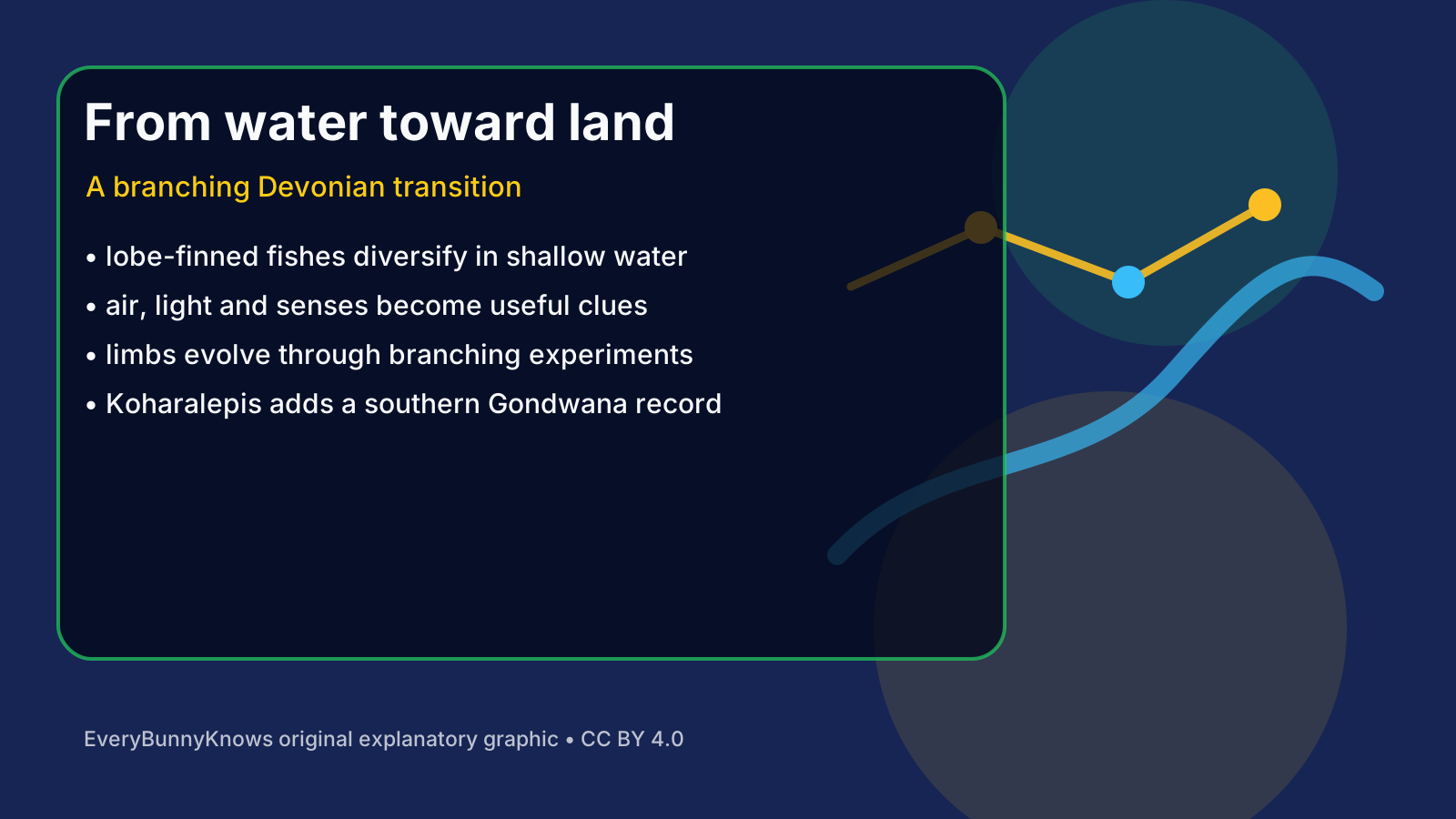
The Antarctic setting is important. During the Devonian, Antarctica was part of the southern supercontinent Gondwana, not the ice-covered continent familiar today. Fossils from those rocks give scientists a southern record that can be compared with better-known Devonian finds elsewhere. Koharalepis was first described in earlier work, but modern imaging now lets researchers revisit the specimen and ask questions about behavior, breathing, senses and relationships that older preparation could not answer as well.
There are limits. A skull scan does not show a living animal crawling onto a shore, and Koharalepis should not be treated as a direct ancestor with a simple ladder leading to humans. Evolution is a branching history, and tetrapodomorph fishes include many side branches that illuminate conditions around a transition without being the transition itself. The evidence is strongest when read as anatomy plus environment: a fish with surface-oriented adaptations in a world where air, light, shallow water and limbs were becoming part of the same evolutionary problem.
For readers, the value is a less cartoonish origin story. Animals did not simply decide to leave the sea one day. Over millions of years, bodies that already lived in complex shallow-water settings experimented with breathing, sensing, feeding and supporting themselves in new ways. Koharalepis adds one carefully imaged southern skull to that larger record. It makes the first steps onto land feel less like a leap and more like a series of anatomical compromises, tested at the edge of water long before footprints crossed mud.