Two Mini-ROVs Show How Ocean Inspection Is Becoming Portable
Blueye’s X3 Ultra and X7 are portable underwater robots with different ambitions: one improves compact inspection, the other adds more thrusters, ports and depth for harder jobs.
Nina Kaplan ·
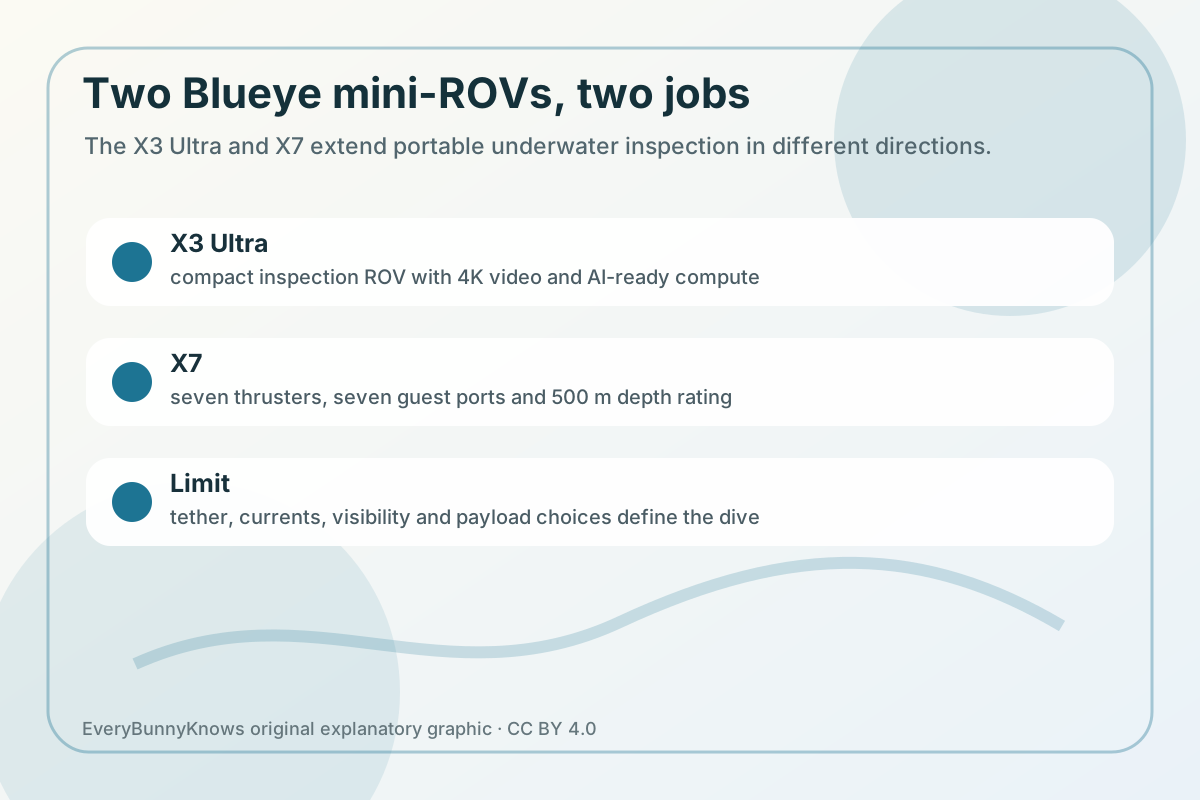
Blueye Robotics' two new mini-ROVs are interesting because they do not promise to make the deep sea easy. They show how much capability can now be packed into portable tethered vehicles, and how quickly the limits reappear once the vehicle enters cold, dark, moving water. The Norwegian company introduced the X3 Ultra and X7 in May 2026 alongside a cloud service for fleet and mission data. The X3 Ultra updates Blueye's compact workhorse with 4K video, improved positioning and onboard AI-ready computing. The X7 is a larger flagship platform with seven thrusters, seven guest ports and options for battery or topside power.
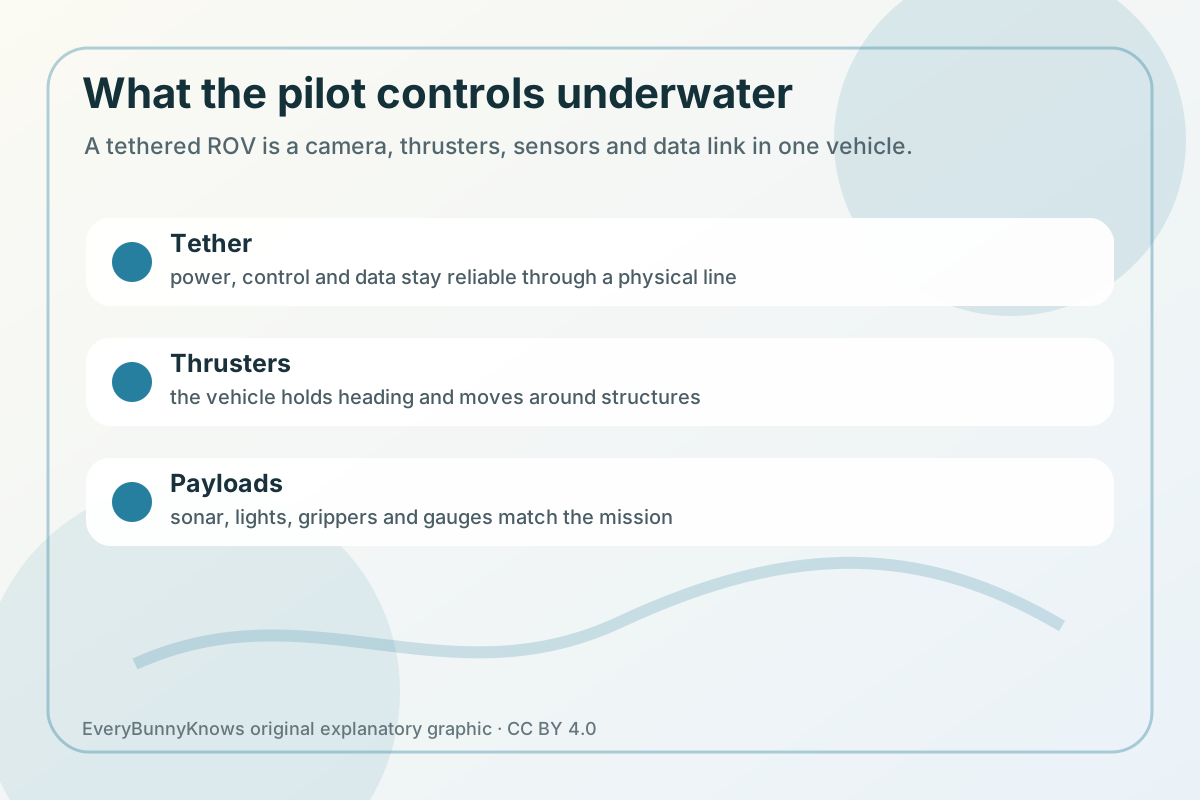
The mechanism of a remotely operated vehicle is direct but demanding. A pilot stays on a boat, pier or shore and sends commands through a tether. Thrusters convert those commands into motion; cameras and lights return a live view; optional payloads such as sonar, positioning beacons, grippers, thickness gauges or water sensors turn the vehicle into a task-specific tool. The tether is not old-fashioned clutter. It provides a reliable control and data path in a medium where radio waves do not travel well and acoustic links are slower.
The X3 Ultra is aimed at portable inspection. Blueye lists a depth rating of 305 metres, a weight below 9 kilograms, 4K UHD video, 8x zoom, improved inertial measurement and three guest ports for external equipment. That makes sense for aquaculture pens, harbour structures, hull checks, research dives, search work and quick inspection after storms. The point is not to replace a crewed submersible; it is to let a small team get eyes and measurements underwater without mobilising a large vessel.
The X7 moves up the ladder. Blueye describes it as an inspection-class ROV with a 500-metre depth rating, seven thrusters for six-degree-of-freedom control, seven guest ports, a 4K zoom camera and Nvidia Jetson Orin NX onboard computing. The extra thrusters matter because underwater inspection is often about holding position, pitch and roll near a structure rather than merely driving forward. The extra ports matter because serious jobs rarely need only a camera: a sonar may map a murky area, a DVL may improve navigation, and a gripper or gauge may collect evidence.
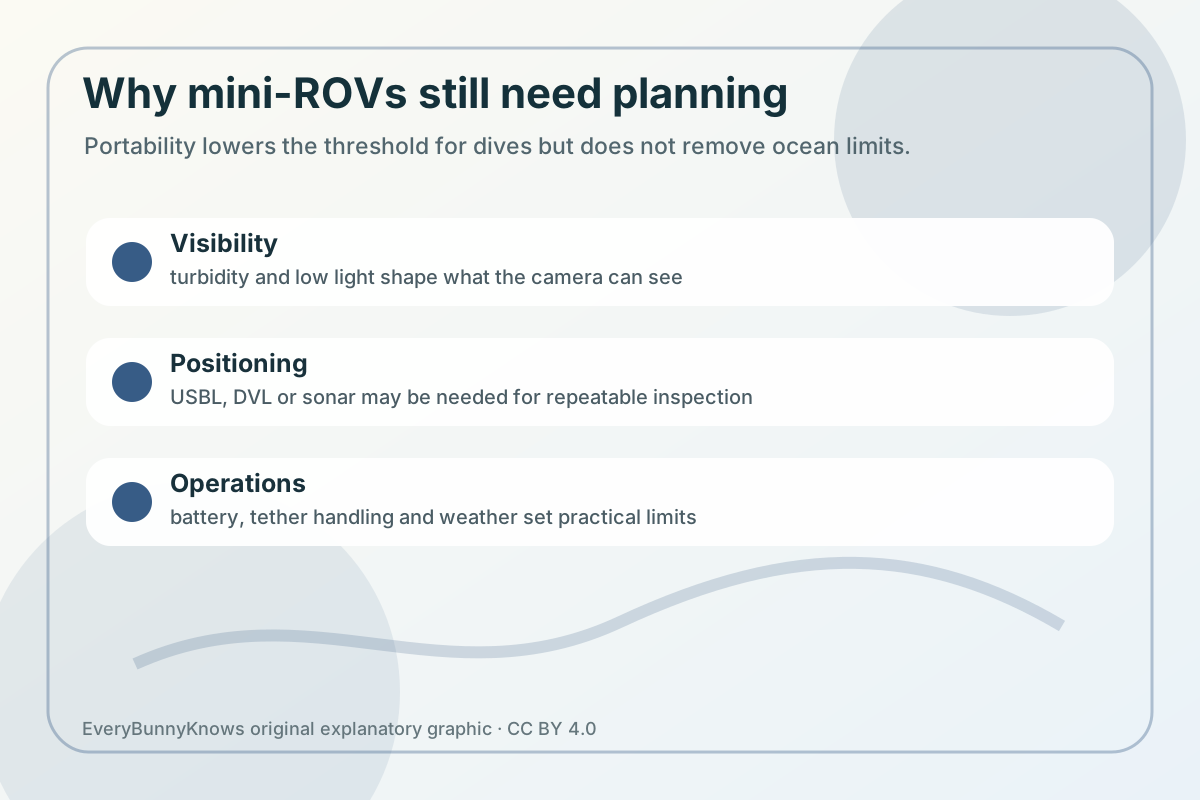
Maturity is commercial, but not universal. These are products in a known ROV market, not speculative prototypes. Their AI and computer-vision features, however, should be read as pilot assistance and data processing rather than underwater autonomy without supervision. Turbidity filtering, object tracking or recognition can help the operator, yet the dive still depends on visibility, currents, tether management, battery or topside power, weather, training and recovery plans.
The limits are part of the value. Mini-ROVs lower the cost and risk of looking under a quay, inside a net pen or along a pipe, but they cannot make every sea state safe or every object visible. They also create data that must be labelled, stored and linked to a location if it is to help maintenance rather than become impressive footage. The hopeful change is practical: more teams can inspect earlier and more often, which means small damage, lost gear or environmental changes can be seen before a diver or a large vessel is justified.