A UK urine-test trial turns medication adherence into a careful conversation
The OUTREACH trial tested whether showing patients objective urine results for antihypertensive medicines could improve care. It points to a useful tool, but also to privacy, trust and underpowered evidence limits.
Elena Moss ·
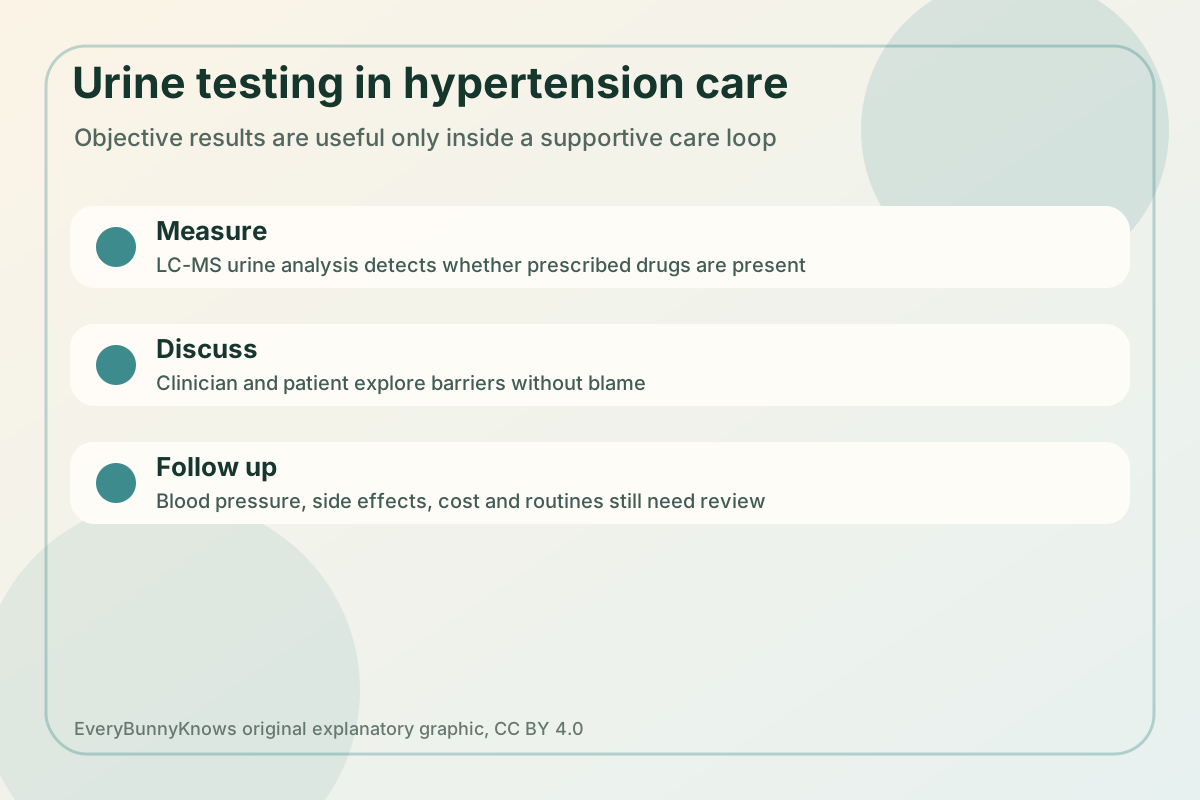
A urine test for blood-pressure medicines sounds simple, but the question behind it is delicate. In the UK OUTREACH trial, published in The Lancet Primary Care in 2026, researchers tested whether chemical adherence testing could help people with hypertension who were not taking all prescribed antihypertensive medicines. The test used liquid chromatography–mass spectrometry to look for drug signals in urine, then asked whether sharing the result and discussing reasons for missed treatment would improve care.
The trial gives the story useful precision. It took place across 12 UK secondary, tertiary and primary-care services. Adults with hypertension who were taking at least two blood-pressure medicines had urine chemical adherence testing. Those with evidence of non-adherence were randomly assigned either to a guided discussion of their urine result or to standard care. The main outcome was clinic systolic blood pressure at a later visit.
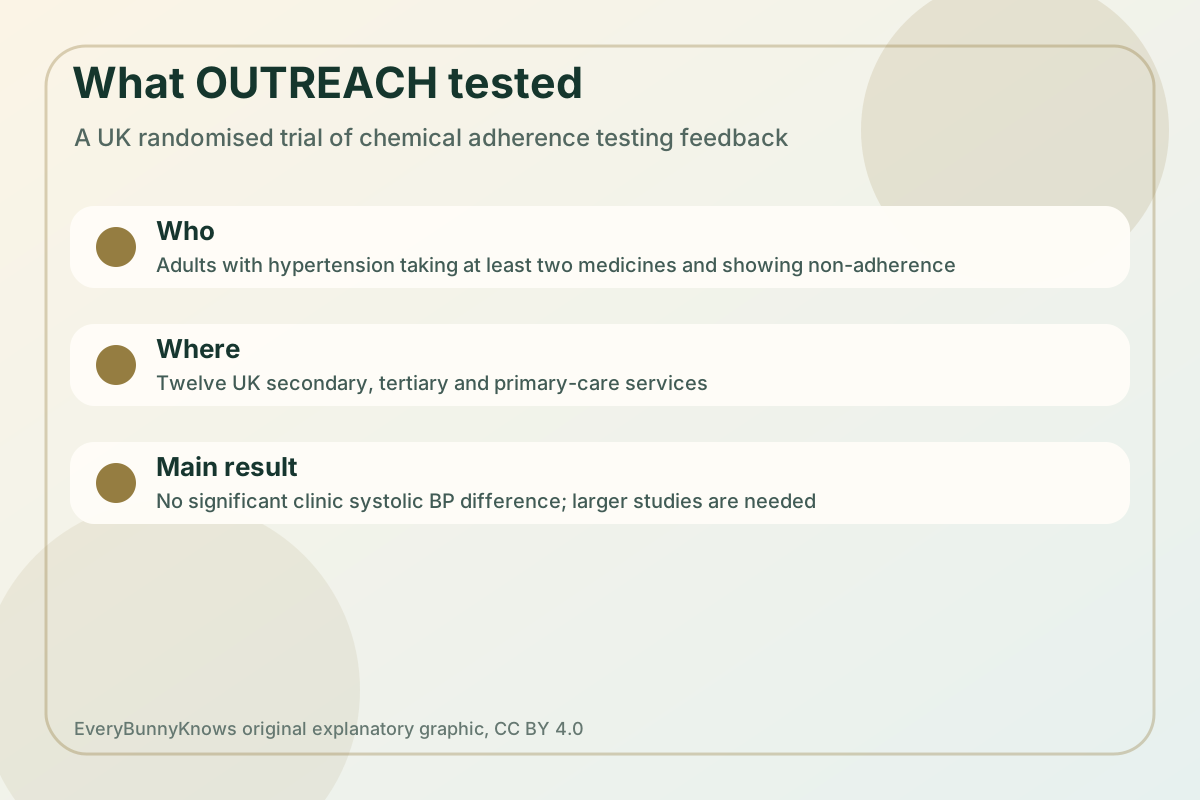
The result was not a simple triumph. Among 130 non-adherent participants randomised, mean clinic systolic blood pressure at visit 4 was similar in the two groups; the adjusted difference favoured the intervention but was not statistically significant. The authors concluded that the study did not show a significant blood-pressure effect and was underpowered. That matters because the headline phrase “may boost adherence” should not be read as proof that testing alone lowers blood pressure or solves long-term medicine-taking.
The mechanism remains clinically interesting. Many people miss doses for reasons that are understandable: side effects, cost, complex schedules, doubts about benefit, depression, work patterns, caring duties, low health literacy or previous bad experiences with healthcare. An objective test can make hidden non-adherence visible. Used well, it can turn an awkward suspicion into a shared problem: what makes this regimen hard, and what can be changed safely?
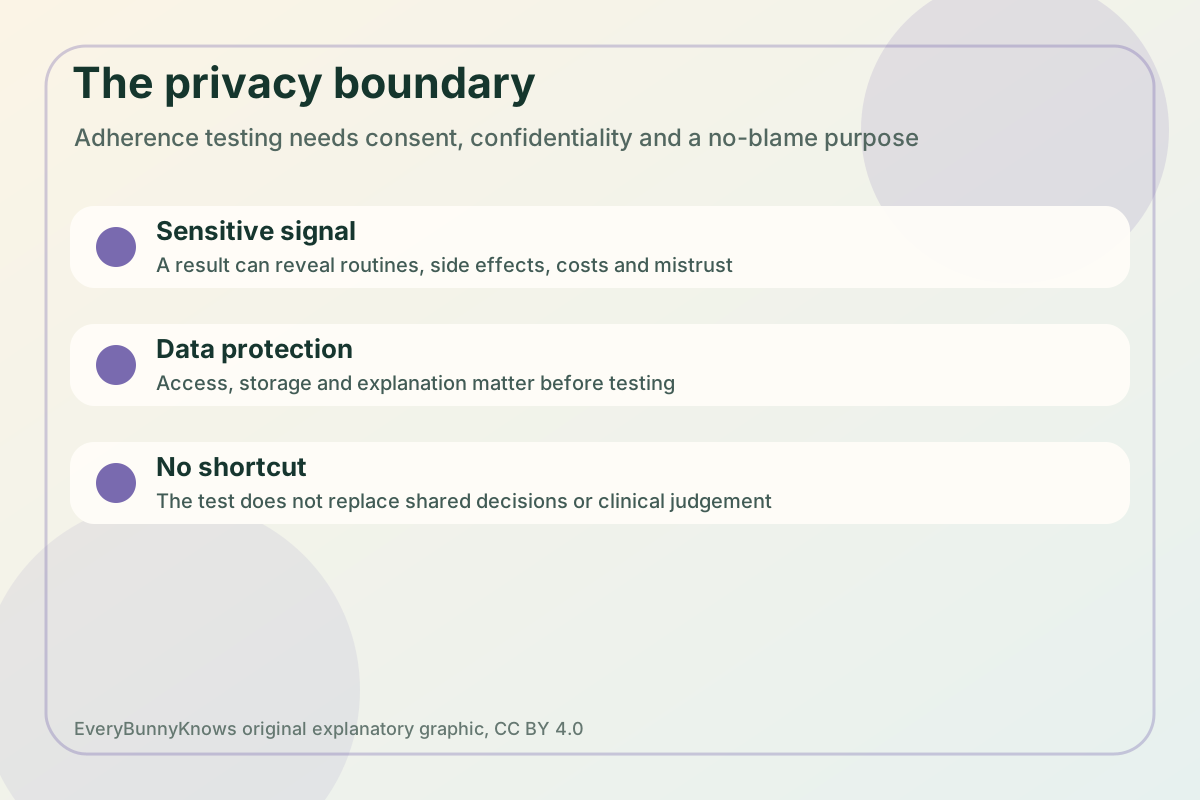
That usefulness has boundaries. Urine testing can feel intrusive, and medication adherence data are sensitive. A result may reveal not only missed tablets but also fear, poverty, side effects or mistrust. Patients need clear consent, an explanation of what is tested, who sees the result, how it is stored and how it will be used. A test used to blame people could damage the trust needed for chronic care; a test used to open practical support may be different.
There is also a treatment-advice boundary. Readers should not change, stop or restart blood-pressure medicines because of an article or a home interpretation of adherence. Hypertension care depends on diagnosis, risk, side effects, kidney function, pregnancy status, other medicines and clinician judgement.
The trial also reminds clinicians that measurement is not the same as relationship. A biochemical result can be accurate and still fail if the clinic has no time to explain it, no plan for side effects, no way to simplify treatment and no respect for the person receiving the result. The OUTREACH trial is best understood as health-systems evidence: chemical testing may help clinicians identify and discuss missed medication, but larger studies are needed to know when it improves blood pressure, kidney markers, costs and patient experience. The hopeful part is not surveillance. It is the possibility of a more honest, respectful conversation around a common and often hidden problem.