Himalayan pit vipers were hiding a five-species story
A taxonomic study split the long-used Himalayan pit viper idea into five species-level lineages, including newly named snakes from the Hindu Kush and Nepal, showing why mountain biodiversity needs careful DNA, anatomy and locality work.
Nina Kaplan ·
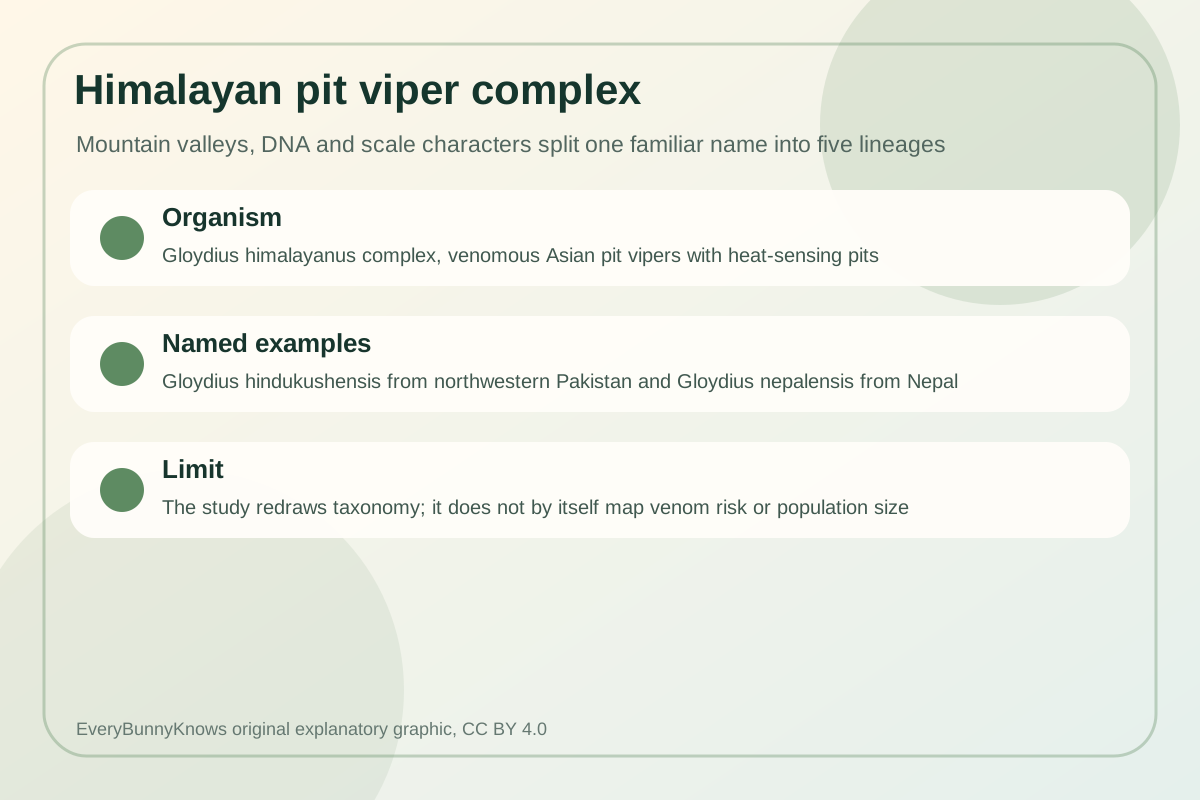
For more than a century and a half, the Himalayan pit viper was treated as a single familiar mountain snake. The newer taxonomic picture is more intricate. Researchers working with specimens, DNA and locality records now argue that the name long used for the Himalayan pit viper complex covers five species-level lineages, including newly named forms such as Gloydius hindukushensis from northwestern Pakistan and Gloydius nepalensis from Nepal. The story is not that a snake suddenly changed. It is that human labels finally began to catch up with evolution in a very folded landscape.
The animal at the centre of the story belongs to Gloydius, a group of Asian pit vipers. Like other pit vipers, these snakes have heat-sensing pits between the eye and nostril that help them detect warm-bodied prey. The Himalayan forms live in mountain settings where valleys, passes, rivers, altitude and climate can separate populations that look broadly similar at first glance. A brownish, heavy-bodied viper on a rocky slope may be easy to call by one name; proving whether it shares a recent history with a snake from another valley takes a different kind of work.
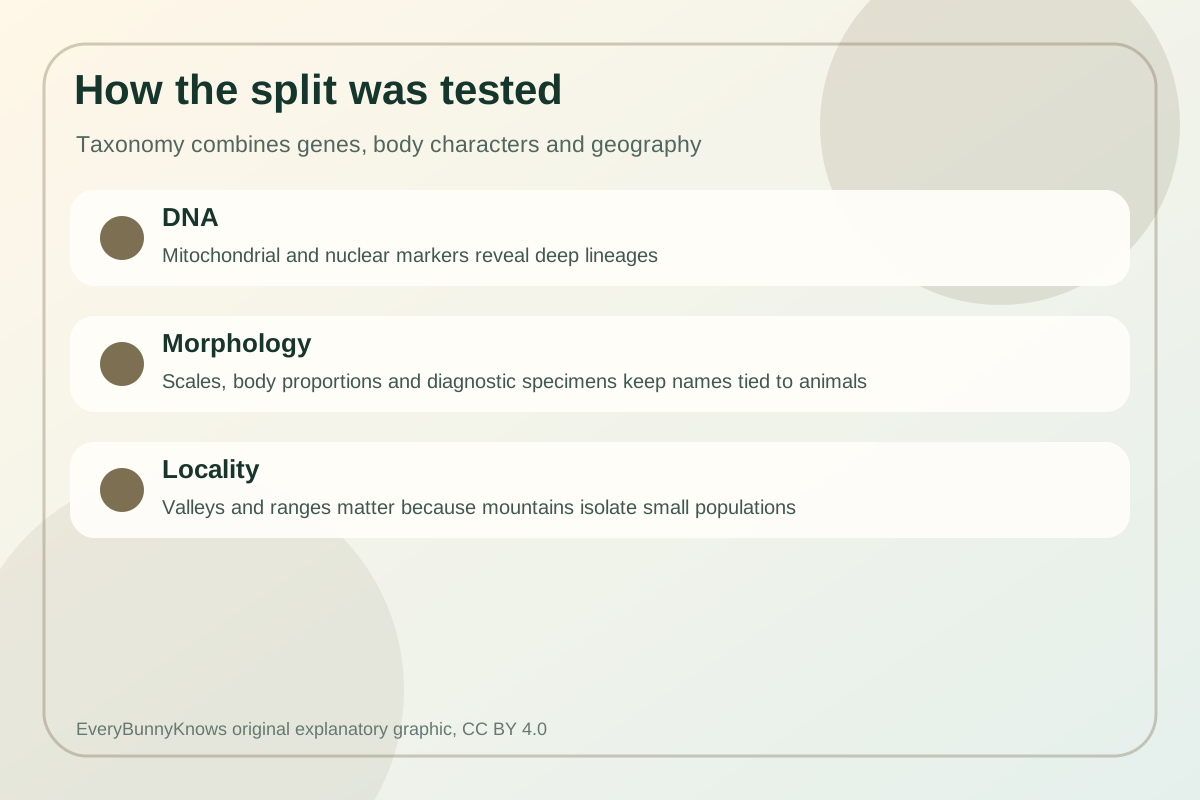
The mechanism is allopatric divergence, made practical by mountain geography. When populations are separated by high ridges, cold passes or unsuitable habitat, genes move less freely between them. Over many generations, mutations, selection, drift and local survival pressures can accumulate. Taxonomists then test whether the separated lineages are consistent enough to deserve species names. That is why the study does not rely on colour alone. It brings together molecular evidence, preserved specimens, scale counts, measurements, diagnostic features and the places where the snakes were collected.
This matters beyond a naming exercise. Species names are the handles used by museum collections, biodiversity databases, park managers, doctors, antivenom researchers and local naturalists. If five lineages have been hidden under one name, maps of range, conservation status and snakebite risk may be too coarse. A protected area that seems to hold a common species may actually hold a small-range lineage. A medical note about “Himalayan pit viper” venom may need to specify which Gloydius population supplied the data.
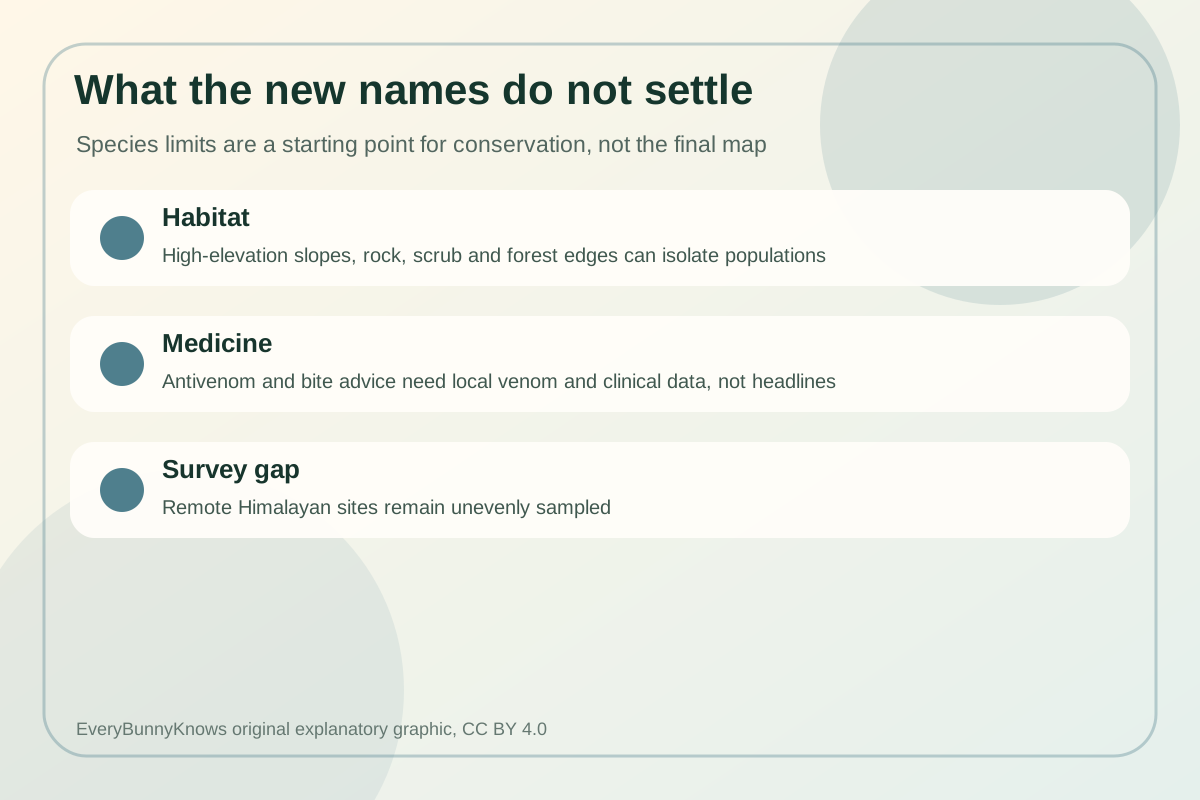
The limits are just as important. Taxonomic recognition does not automatically tell us how many animals remain, whether any lineage is declining, or how different their venoms are in clinical practice. Remote Himalayan and Hindu Kush sites are hard to sample evenly, and museum specimens can leave gaps in season, age and sex. The new names should therefore be read as a sharper map for future work, not as a finished conservation assessment.
The useful lesson is concrete. Mountain biodiversity can hide in plain sight because ridges and valleys create repeated pockets of isolation. A single common name may be convenient for field guides, but it can flatten histories that matter for protection and public health. By tying names to DNA, anatomy and geography, researchers give future surveys a better starting point: find the right snake, in the right valley, under the right name, and only then decide what conservation or medical question should come next.