Why Madagascar Became an Evolutionary Laboratory of Animals Found Nowhere Else
Madagascar’s isolation, rainforest-to-spiny-thicket habitat mosaic and long evolutionary history explain its lemurs, tenrecs and chameleons — and why fragmented habitats make endemism fragile.
Matyáš Král ·
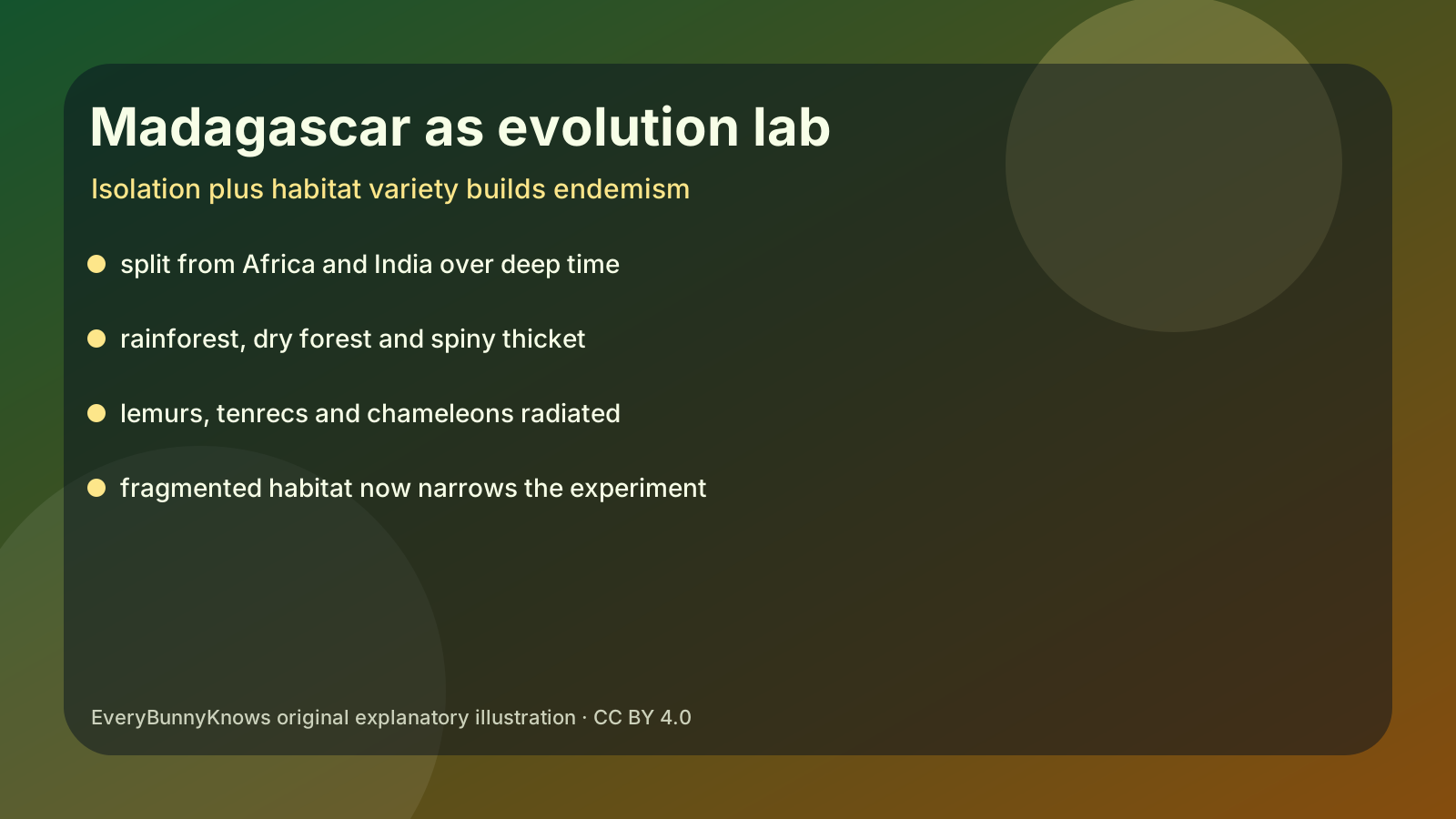
Madagascar is often called an evolutionary laboratory because its animals are not simply unusual; they are the result of isolation working for tens of millions of years across many habitats. The island broke away from Africa and later from India, leaving lineages to diversify on a landmass far enough from continents to limit gene flow but large enough to contain rainforests, dry deciduous forests, highlands, rivers and spiny thickets. That combination is why so many groups found there occur nowhere else.
The mechanism is allopatric evolution multiplied by ecological variety. When populations are separated by ocean, mountains, rivers or habitat belts, they stop exchanging genes freely. Over generations, chance, selection and local conditions push them in different directions. Lemurs radiated into nocturnal mouse lemurs, leaping sifakas, leaf-eating indris and many other forms. Tenrecs filled insect-eating and hedgehog-like roles. Chameleons diversified from tiny leaf-litter species to larger forest and woodland specialists.
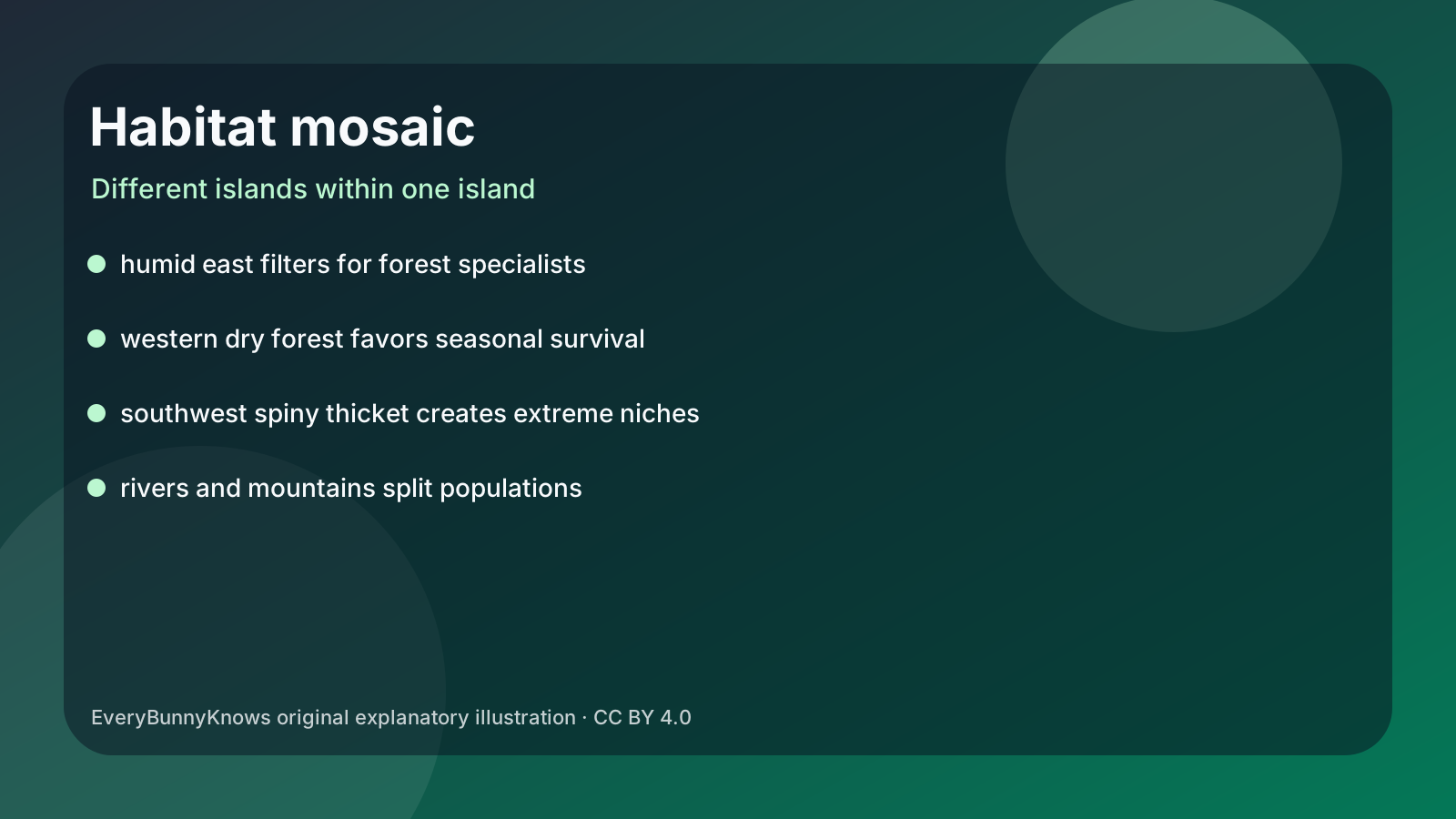
Habitats make the story sharper. The humid east supports forests where vertical movement, fruiting cycles and canopy structure matter. Western dry forests reward seasonal survival and flexible diets. The southwest’s spiny thicket, with drought-adapted plants and harsh water limits, filters animals and plants differently again. Madagascar is therefore not one laboratory bench, but many small experiments running side by side on the same island.
Plants are part of the engine. Baobabs, orchids, succulents and spiny Didiereaceae help create the structure that animals use, while pollinators, seed dispersers and browsers feed back into plant evolution. The famous animals are easier to love, but the laboratory works through whole ecosystems: soil, rainfall, fire, forest edges, fruit, insects and predators.
Scale also matters. Madagascar is large enough for regional climates and mountain barriers to matter, yet isolated enough that many arrivals became founding lineages rather than ordinary migrants. That is why one island can hold both broad patterns and intensely local species.
A reader should also hear the time scale clearly. Madagascar did not produce its famous animals in one sudden burst. Lineages arrived, vanished, split and specialized through changing climates and sea levels, while isolation limited easy replacement from outside. Evolutionary “laboratory” is therefore a metaphor for repeated natural experiments, not a claim that the island was controlled, simple or separate from human history.
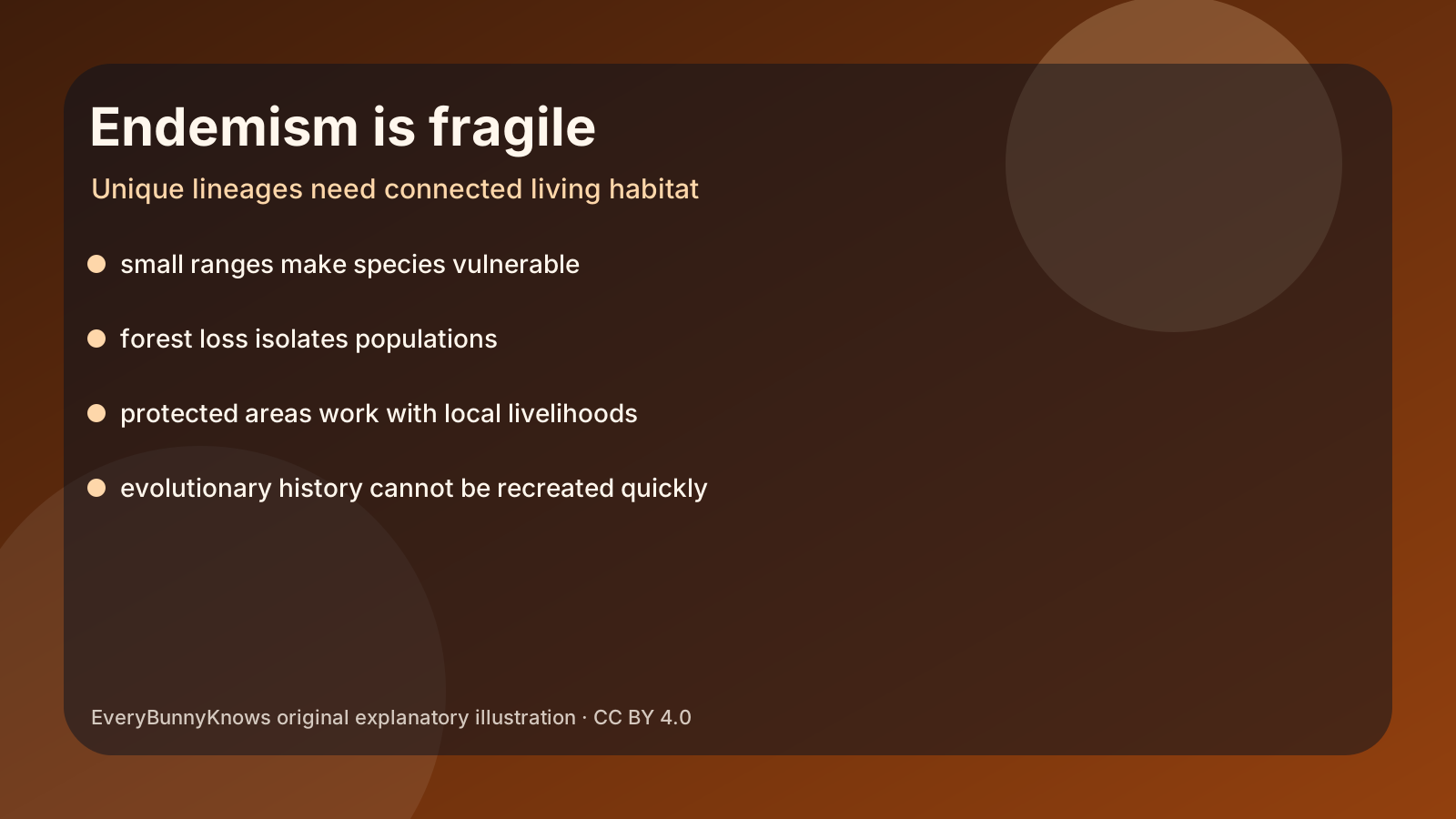
The limits matter because endemism can sound like a guarantee of abundance. It is the opposite. A species that evolved in one forest block, karst outcrop or dry thicket may have nowhere else to go if that habitat is cleared or fragmented. Madagascar’s biodiversity faces pressure from deforestation, fire, mining, hunting, invasive species and climate stress. Protected areas help, but conservation also depends on local livelihoods, land rights, food security and governance; people cannot protect forests if survival pushes them into impossible choices.
Scientific uncertainty remains too. New species are still described, especially among small reptiles, amphibians, invertebrates and cryptic mammals, while genetic work sometimes splits what looked like one widespread species into several local lineages. That means maps of endemism are living documents. They improve with field surveys, museum collections, DNA data and Malagasy expertise.
The hopeful lesson is specific. Madagascar shows how evolution can turn isolation into abundance of form, but it also shows that deep time can be damaged quickly. Protecting connected forests, dry habitats and community-managed landscapes does not just save charismatic lemurs. It keeps an irreplaceable evolutionary library open, with chapters that scientists are still learning to read.