What yeast adds to 3D-printed interior materials
Chalmers researchers have made a baker’s-yeast, cellulose and alginate paste that can be 3D printed and baked into interior elements. The next questions are moisture, fire safety, scale and cost.
Jonah Reed ·
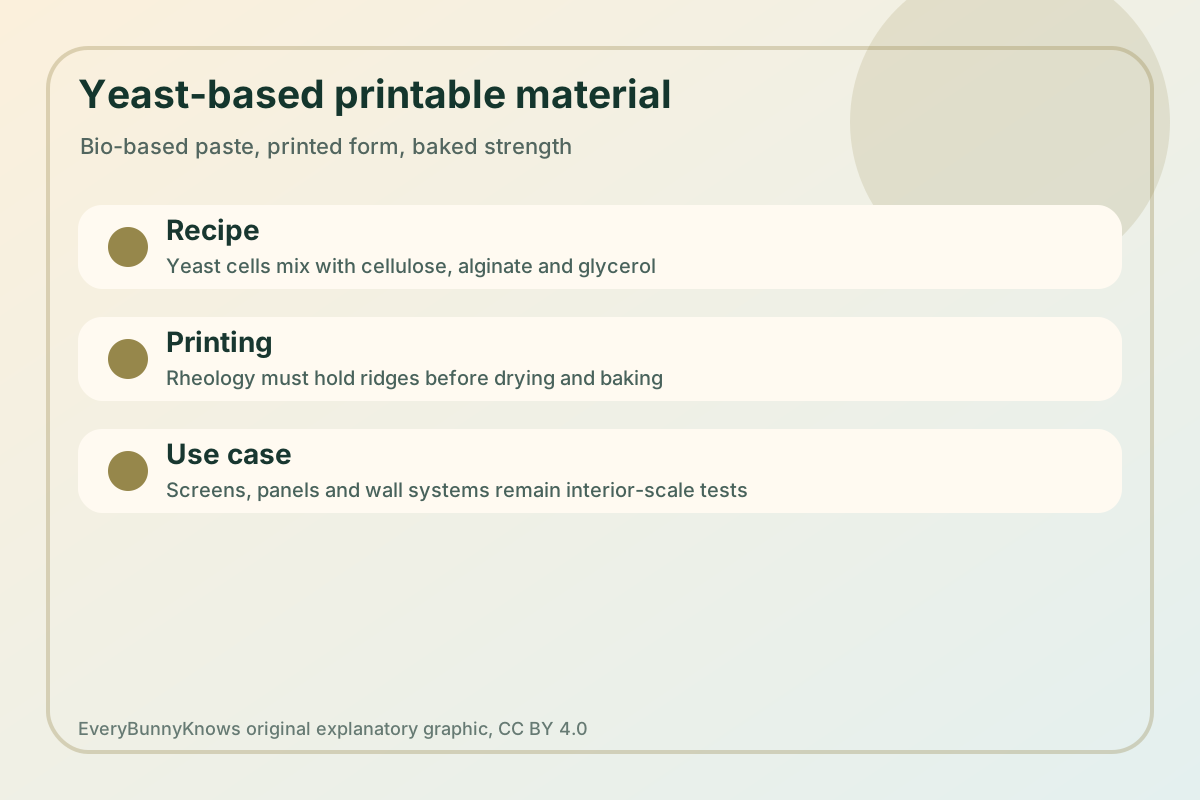
Researchers at Chalmers University of Technology are treating baker’s yeast as more than a kitchen organism. In work reported by the university in June 2026 and described in a Chalmers research publication, the team formulated a fully bio-based paste that can be extruded by a 3D printer and then baked into interior and architectural components. The target is not structural beams or weather-facing façades. It is the quieter world of room dividers, daylight-modulating screens, wall systems and textile-like panels that are often made with plaster, plastics or synthetic fibres.
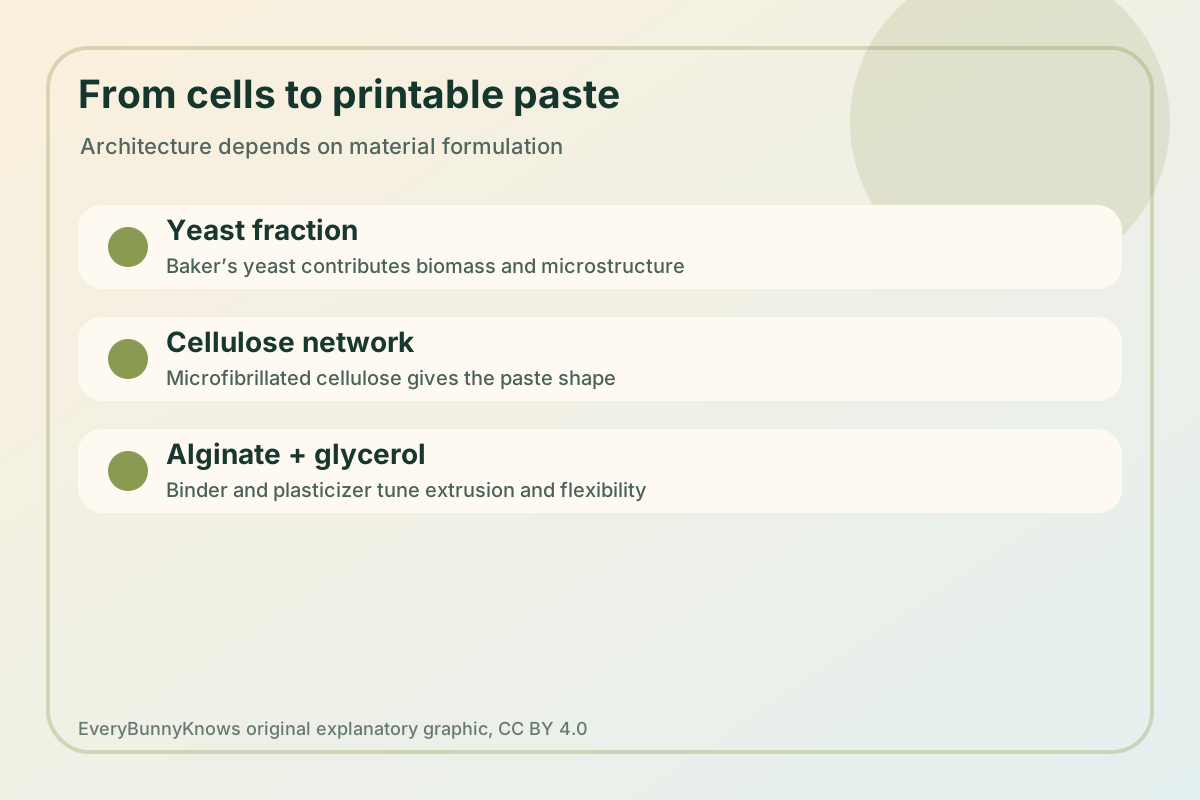
The material is a recipe, not a single magic ingredient. The Chalmers publication describes optimized formulations containing yeast cells, microfibrillated cellulose, sodium alginate, glycerol and water. Yeast contributes renewable biomass and cell-scale structure. Cellulose helps form a network that can hold shape after extrusion. Alginate behaves as a binder, while glycerol can tune flexibility and drying behaviour. For a printer, the crucial property is rheology: the paste must flow through a nozzle under pressure and then stay where it lands instead of slumping into a puddle.
After printing, the pieces are dried and baked, which is why Chalmers framed the work with the phrase “Baked, printed, ready.” Baking is not a decorative step. It changes water content and mechanical behaviour, helping a soft biological paste become a usable component. The researchers examined microscopic structure, tensile properties, rheology and thermal degradation, then connected those measurements to architectural attributes such as texture, light filtering and possible surface patterns.
For readers, the important shift is from “bio-based” as a label to bio-based as an engineering specification. A panel for a restaurant ceiling or a temporary exhibition wall must be printable in repeatable dimensions, dry without warping too much, resist ordinary handling and accept the finish or colour a designer needs. It also has to compete with cheap established products that arrive with known fire ratings, installers and maintenance routines. A yeast material earns attention only if it can meet those boring tests, not because yeast sounds natural.
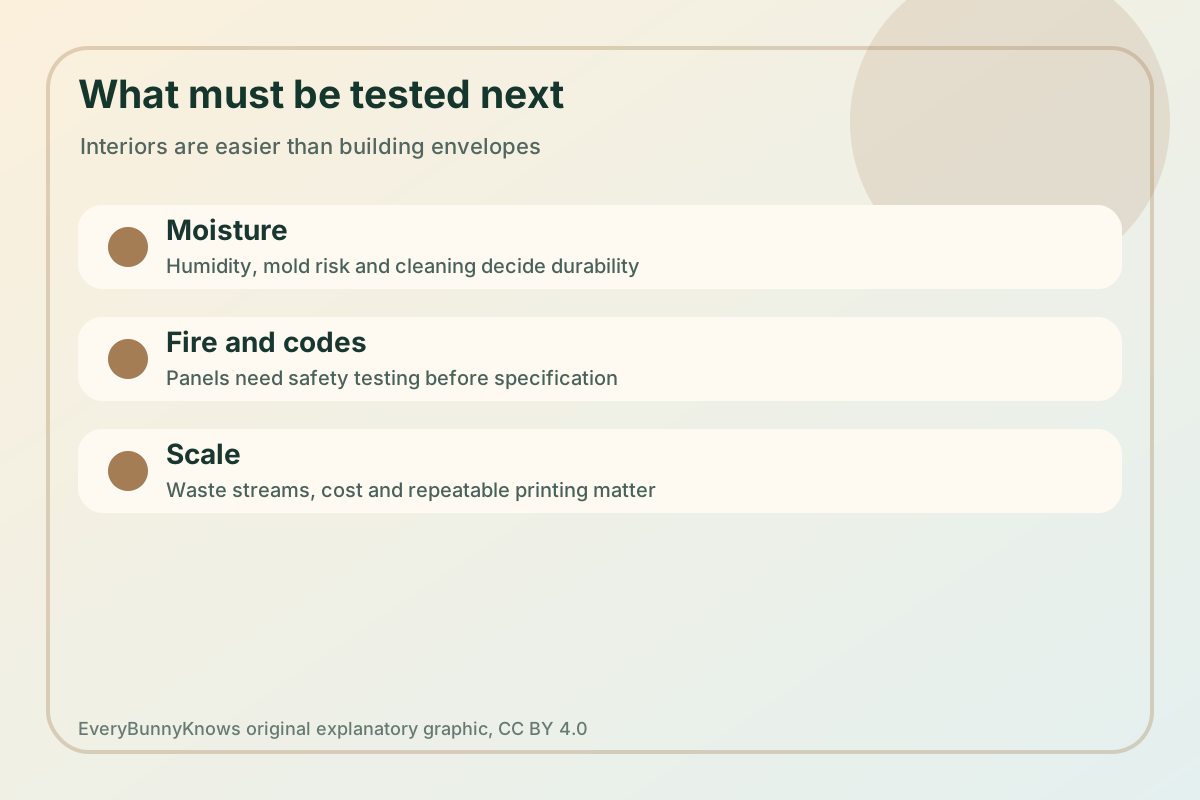
The maturity level is early but concrete: laboratory formulation, printed samples and architectural demonstration, rather than a certified building product. Interior use is a sensible first setting because it avoids rain, freeze-thaw cycles and direct structural loads. Even indoors, however, humidity, microbial stability, cleaning chemicals, abrasion, odour, allergens, fire performance and end-of-life handling need careful tests. A biological feedstock can reduce dependence on fossil-based materials, but it does not automatically solve durability or safety.
The environmental promise is similarly bounded. Yeast can be grown through fermentation and may be linked to industrial side streams, while cellulose and alginate have renewable supply routes. Still, fermentation energy, ingredient sourcing, drying and baking energy, transport, coatings and disposal decide the full footprint. Designers would also need simple repair methods so damaged pieces are not discarded after one scratch or spill. The most honest value of the Chalmers work is that it gives architects a testable material platform. If it scales responsibly, interior surfaces could become a place where digital fabrication and renewable biomass meet without pretending that every building problem has been solved.